Fermented Cold
Yeast & Fermentation
Is lager top- or bottom-fermented? Bottom-fermented. The yeast works at eight to twelve degrees Celsius and sinks to the bottom of the tank after fermentation. This is how Feldschlösschen, founded in 1876, and Basel's Warteck, which brewed the city's first Pilsner, make their beers.
The yeast ultimately traces back to southern Germany. The Dane Emil Christian Hansen isolated the first pure culture of bottom-fermenting yeast in Carlsberg's laboratory in 1883. It was identical to the yeast Carlsberg had received from Munich in 1845. So the fact that Feldschlösschen now belongs to Carlsberg closes a circle, even if it's purely coincidental.
After primary fermentation comes lagering. The young beer rests at temperatures near zero degrees so that yeast, protein, and haze particles settle out and rough off-flavors fade. Hence the name lager beer. How long this takes is up to each brewery, but for lager it typically runs a few weeks.
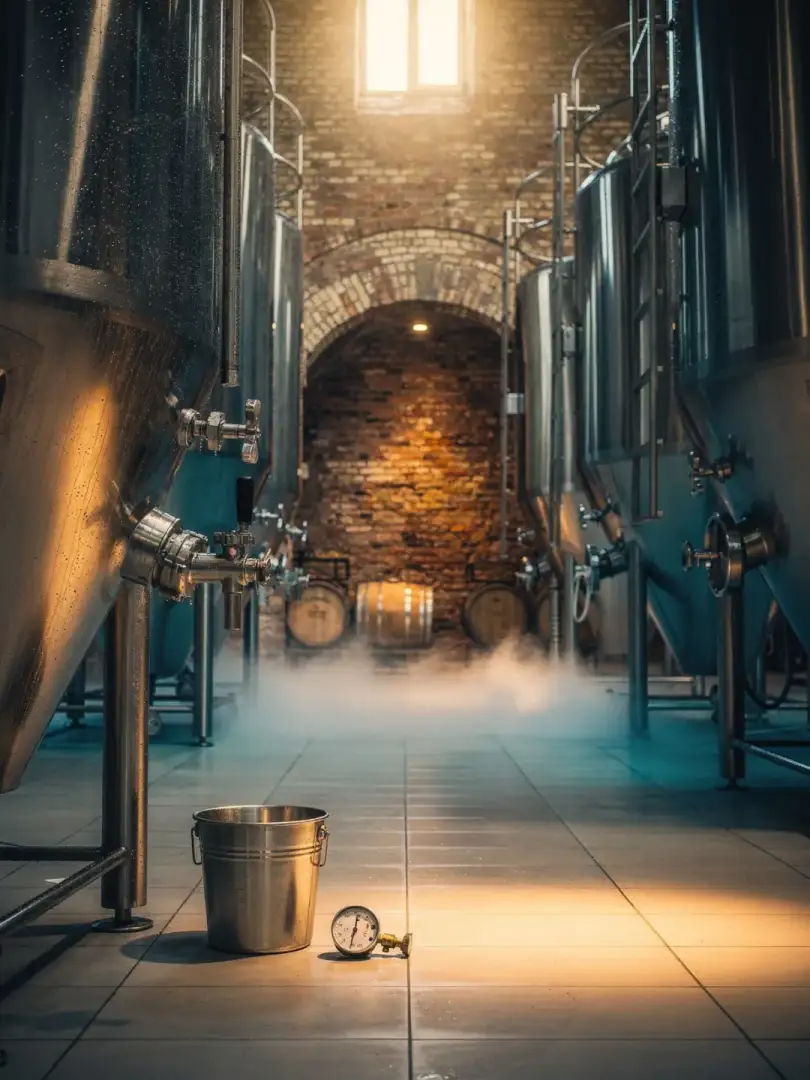
Modern breweries use cylindroconical tanks for this. These are tall stainless steel vessels that taper to a point at the bottom, so the yeast collects there and can easily be drawn off. The tanks stand in bright halls rather than rock cellars. Cooling is done with glycol, an antifreeze agent that circulates through jackets around the tanks.
The flavor stays clean and quiet. A bottom-fermented beer shows almost no fruity esters and lets malt and hops take center stage. Set a Rheinfelden lager next to a top-fermented ale, and the difference is immediately obvious.