Imported, Lightly Dosed
Hops
How bitter is a Swiss lager? Less than many people expect. Typical pale lagers sit at 16 to 22 IBU, the measure of hop bitterness in beer. A German Pils reaches 22 to 40. In lager, the hops are meant to stay in the background and simply round out the malt body.
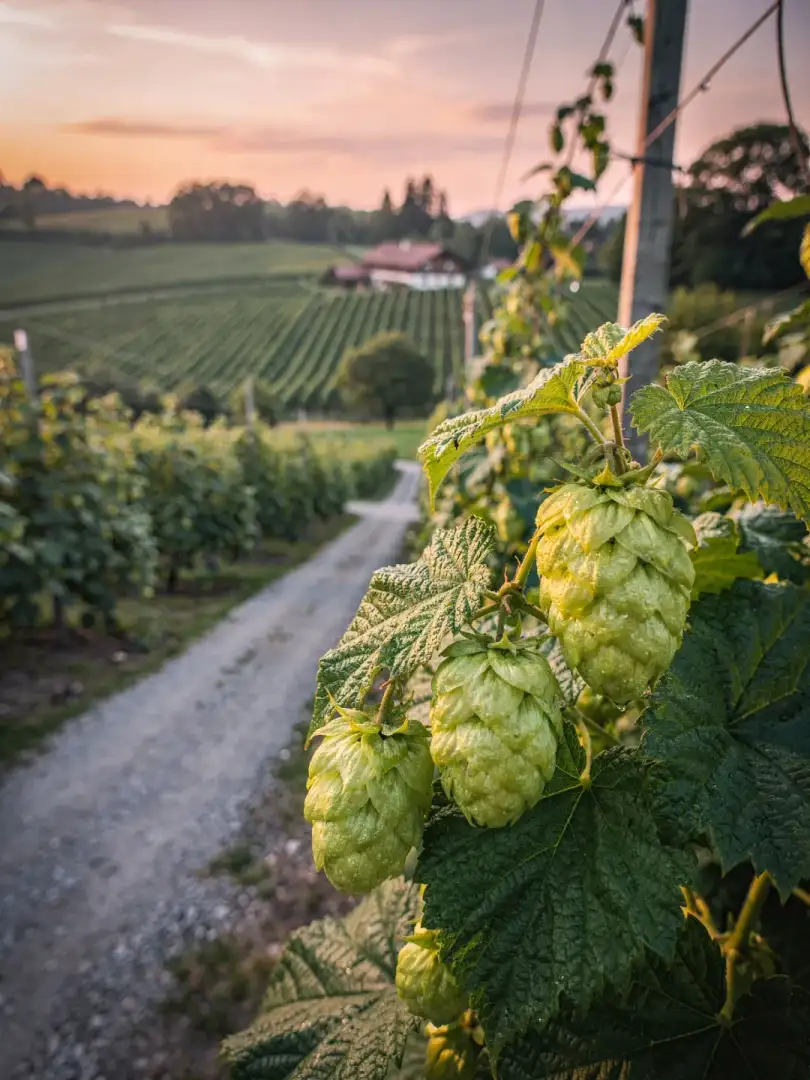
Hops grow only in small quantities in Switzerland. Brewery demand is almost entirely met by imports, most of it from the major European growing regions in southern Germany and the Czech Republic. These areas grow the varieties classic to pale lagers, such as Hallertau Mittelfrüh or Saaz hops.
Hops serve two purposes. The alpha acids in the cones provide bitterness when boiled in the wort. The essential oils contribute aroma, but only come through if the hops are added late or used cold. Classic lagers are dominated by a bittering addition at the start of the boil, with a small aroma addition near the end.
In Rheinfelden, hop aroma stays restrained in the big brands. Those who try Unser Bier or the Ueli Bier from Fischerstube can expect a distinct character that sets it apart from industrial lager.
The fact that hops are bought in isn't unique to this region either. Breweries purchase hops through traders and test every delivery for bitterness and aroma before using it. The Rhine has always been a trade route, and that applies to hops just as much as to barley.