Lager & Helles
Beer Styles
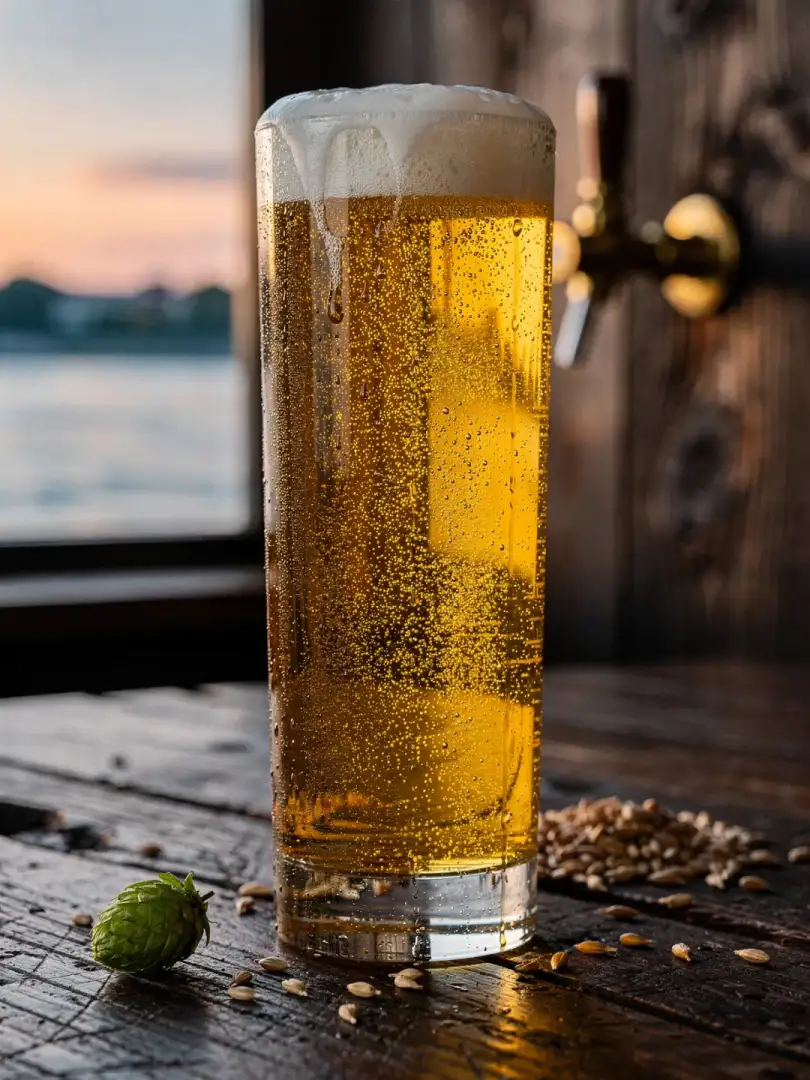
What is a lager beer? A bottom-fermented beer that's cold-stored after fermentation. In Switzerland, "lager" mostly refers to a pale, mild beer without a strong hop note, exemplified by Feldschlösschen Original. For the Swiss, the name evokes a golden-colored beer that's easy to drink and slightly sweet.
As an international style, it's called pale lager. The tasting guidelines (BJCP) define it as 4.5 to 6 percent alcohol and 18 to 25 IBU. Typical traits include a pale body, light hop presence, little fruitiness, and a clean, dry finish.
How does Helles differ from Pils? A Munich Helles is less bitter and maltier. It has only 16 to 22 IBU and 4.7 to 5.4 percent alcohol. Pils is noticeably more bitter. A Swiss lager often falls somewhere in between, but is less bound to a fixed standard, since there's no Swiss style norm for lager.
There's no such thing as a "Basel beer" style. Breweries along the Rhine, whether Feldschlösschen in Rheinfelden or Fischerstube in Basel, brew the same styles found throughout Central Europe: lager, Helles, wheat beer, specialty beers, and, in recent years, craft beers.
Craft means: small batches, hops from the US or New Zealand, often with yeasts from the top-fermenting family. Such beers fill the shelves of small shops in Basel, but they make up the smaller share of the market. The region's everyday beer remains the pale lager.
Pale Lager (International)bottom-fermented
- Original gravity
- 10.5–12.4 °P
- Alcohol
- 4.5–6 % vol
- Bitterness
- 18–25 IBU
- Colour
- 4–12 EBC
Pale gold, lightly malty, little hop character, clean dry finish.