Klosterplan & Schützengarten
Region & History
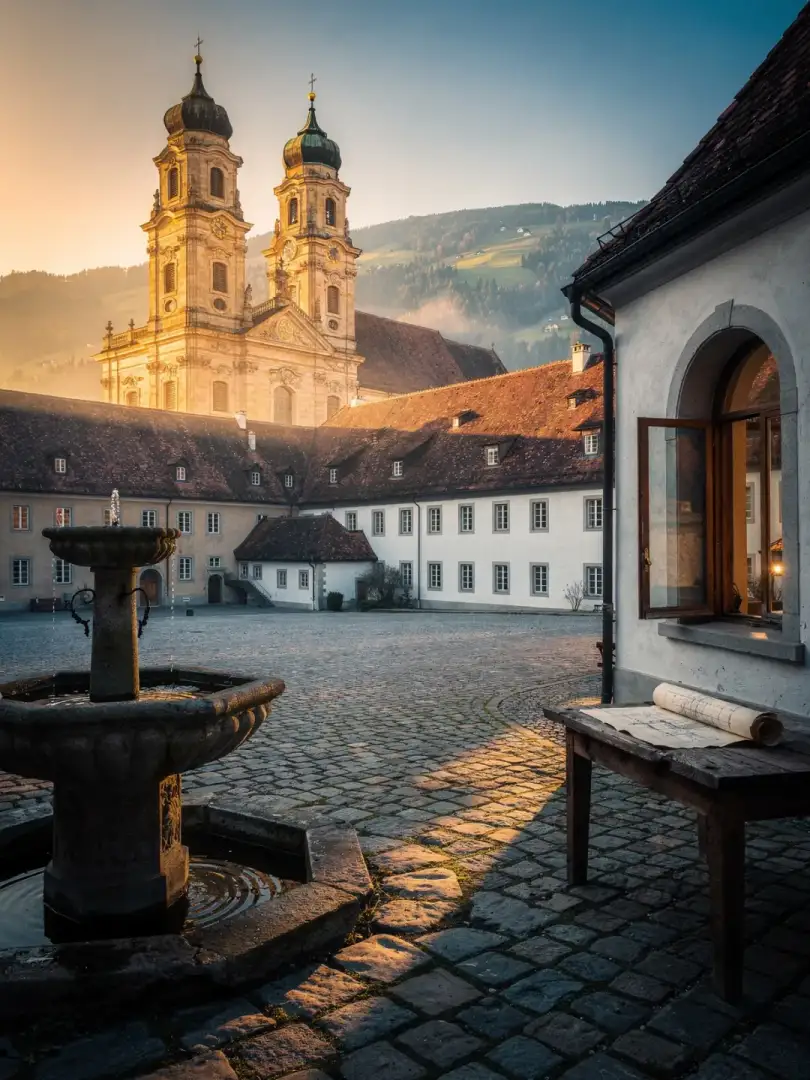
Since when has beer been brewed in Eastern Switzerland? Written traces lead back to the early Middle Ages: the Klosterplan of St. Gallen, drawn around 825, shows three brewhouses. One was meant for the monks, one for distinguished guests, and one for pilgrims and the poor. The complex was never built exactly as shown on the parchment. The plan is considered an idealized design for a monastery, is kept today in the Abbey Library, and yet proves how naturally beer belonged to monastic daily life.
The beer people drink in St. Gallen today comes from a very different world. Johann Ulrich Tobler founded the Schützengarten brewery in 1779 in the tavern of the shooting society in front of the Platzthor, right where people otherwise shot at targets. The brewery itself claims to be the oldest in Switzerland.
The upswing came with Arnold Billwiller, who took over the business from his father in 1878. Under him, output rose from 7,200 to over 100,000 hectoliters. It wasn't until 1993 that specialty beers were added, including a Klosterbräu meant to recall the monks of old.
The situation in Appenzell country is quite different. Johann Christoph Locher bought a brewery in Appenzell in 1886. He came from a brewing family in Oberegg that had already opened a first brewery there in the 1850s, the Kronenbräu. Today, Locher is the last remaining brewery in the canton of Appenzell Innerrhoden and is now run by the fifth generation.
In the Toggenburg, by contrast, there was no local beer for about 30 years, until the St. Johann brewery opened in Neu St. Johann in 2012, in the premises of a former restaurant. There is no EU designation of origin for an Eastern Swiss beer. "Appenzeller Bier" is a brand name of the Locher brewery, not a regional designation.