Alpstein Spring Water
Water & Soil
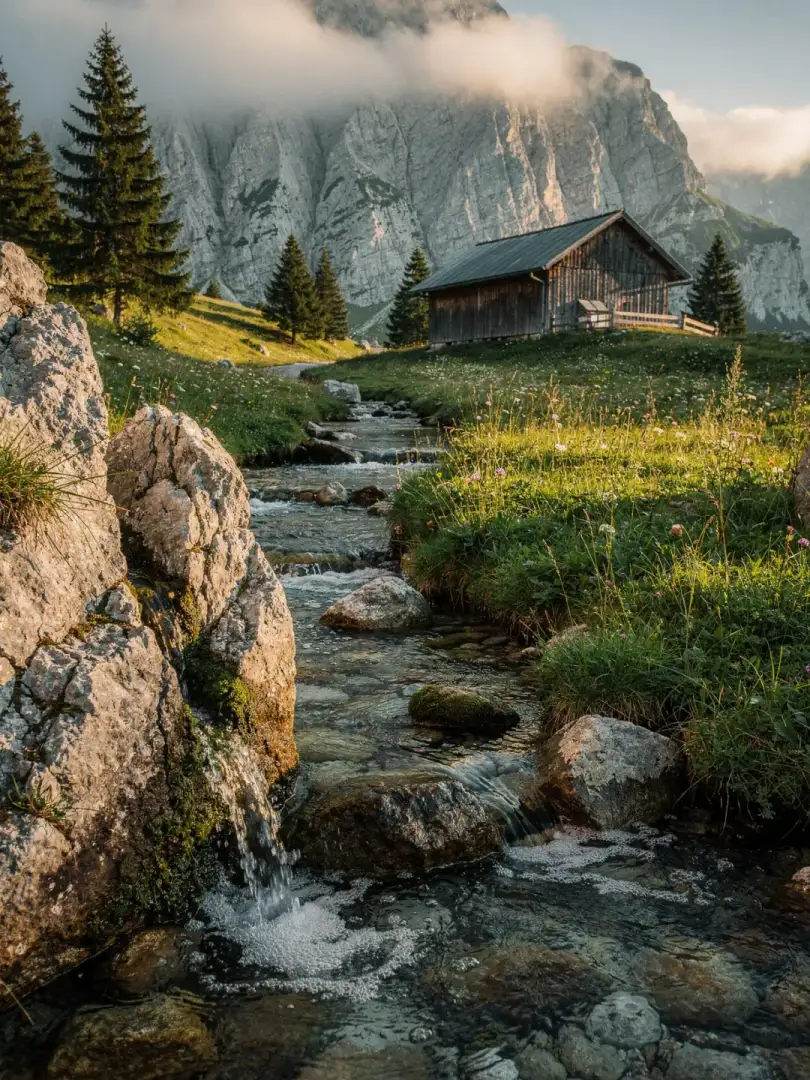
What water is Appenzeller beer brewed with? Spring water from the Alpstein, the limestone massif around the Säntis, which at 2,502 meters is the highest peak in the region. The Locher brewery sits right in Appenzell, at the foot of this massif.
Rain and snow seep there over years, according to the brewery even over centuries, through porous limestone. What emerges below as a spring is clear and so pure that it needs little treatment. Locher itself says the water is of such high quality that it is suitable for brewing almost unchanged.
What does this mean for the beer? Limestone water carries minerals within it, above all calcium and hydrogen carbonate. These determine how the mash behaves during the boil, whether the bitterness comes across as soft or sharp, and how clean a pale lager ultimately tastes. The brewery doesn't name specific hardness levels for its purposes, so we'll stick to the general direction here: a soft, clear beer without hard edges. Anyone drinking a glass of Quöllfrisch in Appenzell is therefore getting a piece of the mountain in the glass, quite literally. The name explains it: "Quöll" is Appenzell dialect for spring.
The landscape shapes the beer in another way too. In the hills around St. Gallen and in the Appenzell Vorderland, it's more humid and cooler than in the Mittelland, and winters are long. Lagering cellars and tanks therefore maintain steady, cool temperatures even without much technology, which suits the slow maturation of a bottom-fermented beer.