Cool and Slow
Yeast & Fermentation
Bottom-fermenting or top-fermenting — that's the first question in brewing. The pale lagers of Eastern Switzerland are bottom-fermented: the yeast works at cool temperatures, usually around 8 to 12 degrees Celsius, and sinks to the bottom at the end of fermentation. Hence the name. Top-fermenting yeasts, by contrast, ferment warmer and rise to the top.
Fermentation for a lager takes about a week, after which maturation follows. It's called lagering because the young beer rests cold in the tank for weeks. During this time, it breaks down secondary aromas that would otherwise taste of butter or green apple, and clarifies naturally.
Schützengarten advertises itself with the nickname of the slow brewer. According to the brewery, their beers are given as much time as possible to mature. Exactly how long depends on the style. Pale lagers need less time than strong bock beers, which often mature for many weeks. Time is the most important ingredient in a lager, and it's precisely this patience that shapes the clean, calm flavor.
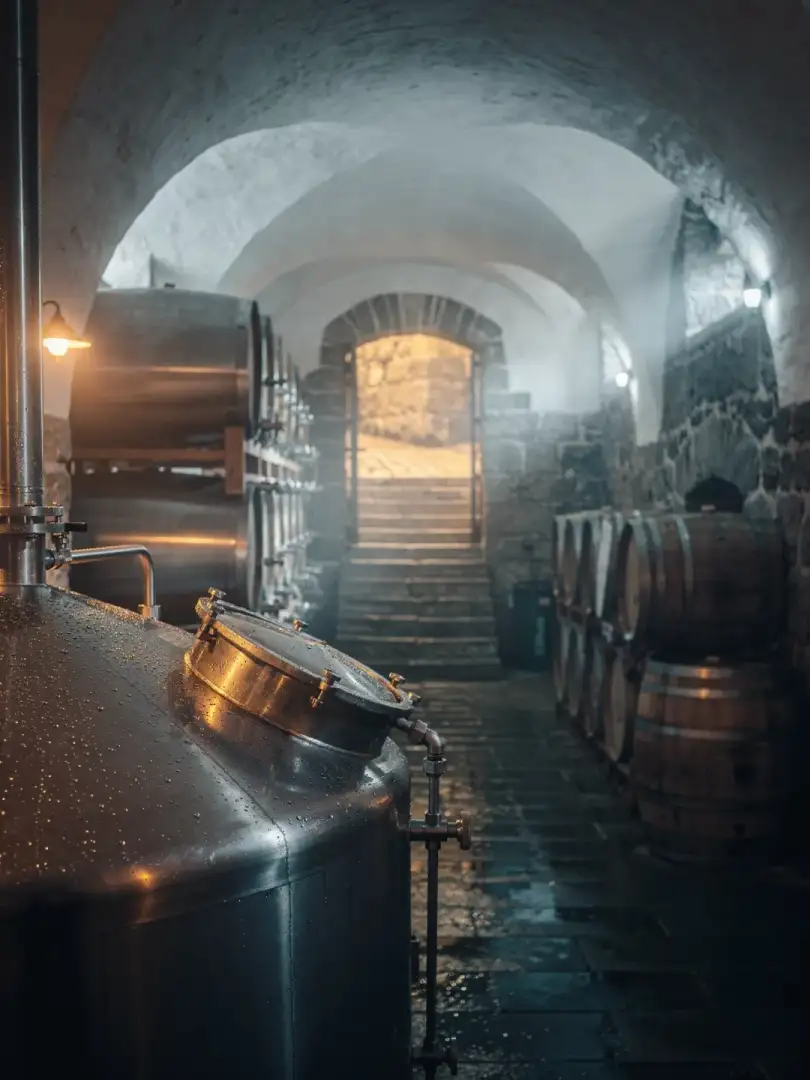
With a naturally cloudy beer like Quöllfrisch, the young beer isn't filtered to brilliant clarity. Yeast cells and fine protein particles remain in the glass, giving it a slight haze. This tastes somewhat rounder and softer than a clear beer, but doesn't keep quite as long. The difference is felt mainly in the mouthfeel. Fermentation and lagering tanks in breweries today are usually made of stainless steel; in the past, they were wooden casks and concrete tanks. What matters isn't the material, but that the temperature stays stable for weeks and the yeast can work cleanly.