Cool and Slow
Yeast & Fermentation
Laško and Union are bottom-fermented lagers. Bottom-fermented means the yeast works at cool temperatures and sinks to the bottom at the end. For lagers, typical values run around 8 to 12 degrees Celsius during primary fermentation, followed by a longer maturation at temperatures close to freezing.
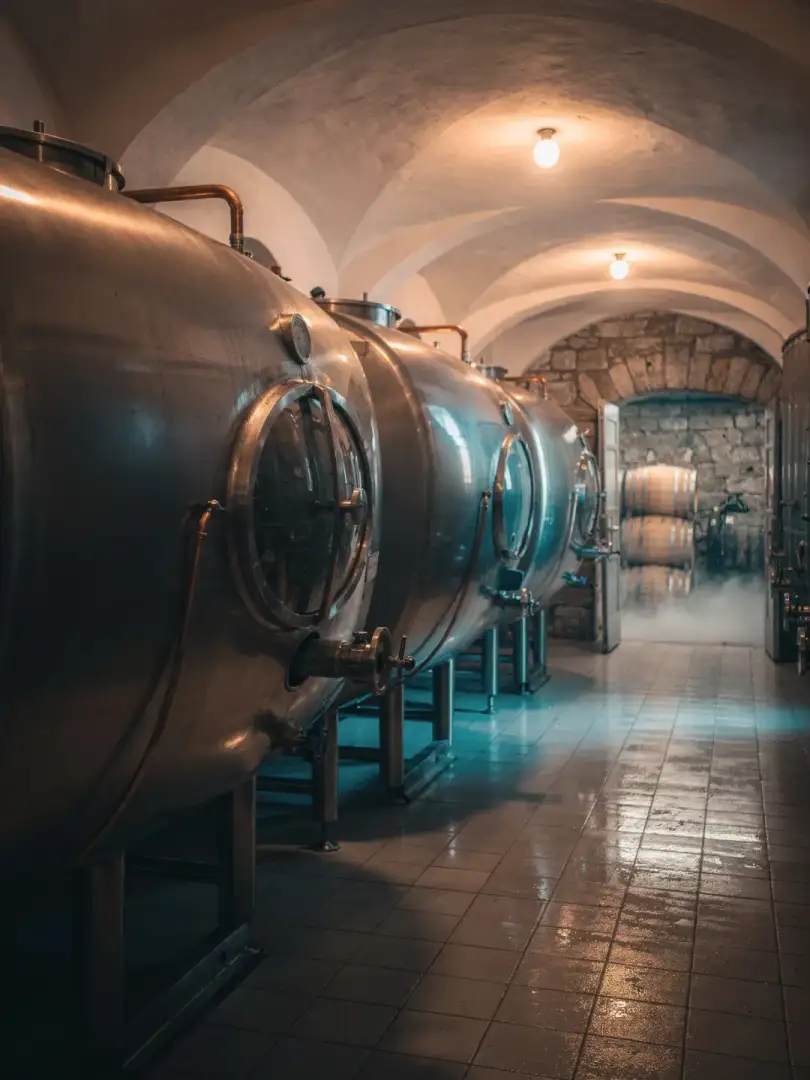
This maturation, the lagering, is what gave the style its name. The beer sits for weeks in a cold tank and grows clear and clean in flavour as it does. Sulphury notes and fermentation byproducts still present in young beer break down during this time. At big brands like Zlatorog, this now takes place in sealed tanks rather than in casks.
Why does a lager taste so smooth? Cool fermentation suppresses the fruity esters that define top-fermented beers like ales or wheat beers. What remains is a flavour in which malt and hops speak for themselves, finishing with a dry, crisp edge.
The yeast strains Laško Union works with are a trade secret. Only the genus is known, lager yeast, considered a hybrid of two species. Pure-culture lager yeast traces back to Emil Christian Hansen, who isolated the first pure strain in 1883 at the Carlsberg laboratory in Copenhagen.
Unfiltered and alive, beer from the country's small breweries is often still cloudy, whereas the Laško and Union brands reach the glass filtered. This keeps it shelf-stable for a long time and tasting the same in every pub. Anyone who wants to experience the difference firsthand should try a fresh beer alongside one that's sat on the shelf a while.