Pale Lager
Beer Styles
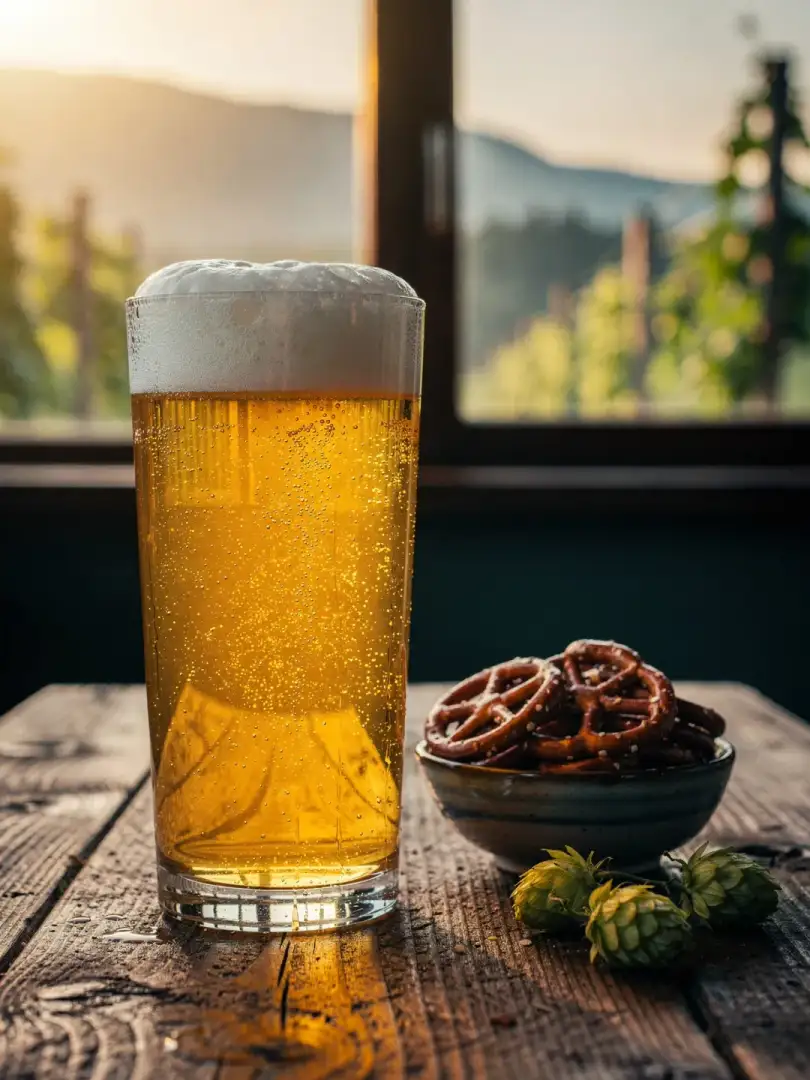
Pale lager is the country's defining style: more than 95 percent of the beer drunk in Slovenia is, by observers' estimates, lager. It's golden yellow, clear, carries a white foam crown, and tastes of grain with a distinct but not harsh bitterness.
Zlatorog, Laško's best-known brand, is classed as a Czech-style lager. The name means Golden Horn, and refers to the legend of the chamois said to live in Slovenia's mountains. You'll spot it on the label, and in the glass you'll mostly taste the hop bitterness.
Union aims for something similar. Both brands are pale lagers that differ only in nuance, say in hopping and body. What usually sets them apart from a German Pilsner is a somewhat milder bitterness. A Czech Pilsner, by contrast, has more malt body and a broader, rounder middle.
The profile below follows the international style guidelines for pale lager, not any single brand. It helps with placing things in context: the ranges show the frame within which a Laško or Union sits.
How much alcohol does a beer like this have? It's usually between 4.5 and 6 percent alcohol, with the original gravity (the sugar content of the wort before fermentation) at roughly 10 to 12 degrees Plato. That's lighter than a bock and sits close to a Pilsner or Helles familiar from Germany. That's exactly where the appeal lies: the beer is made for quenching thirst, not for a long evening by the fire. The colour also stays pale and the foam crown white, with no roasted notes getting in the way.
Pale Lager (International Pale Lager)bottom-fermented
- Original gravity
- 10.5–12.4 °P
- Alcohol
- 4.5–6 % vol
- Bitterness
- 18–25 IBU
- Colour
- 4–12 EBC
Golden yellow and clear, grain on the nose, mild bitterness, a smooth, dry finish.