Pale Malt
Malt & Grain
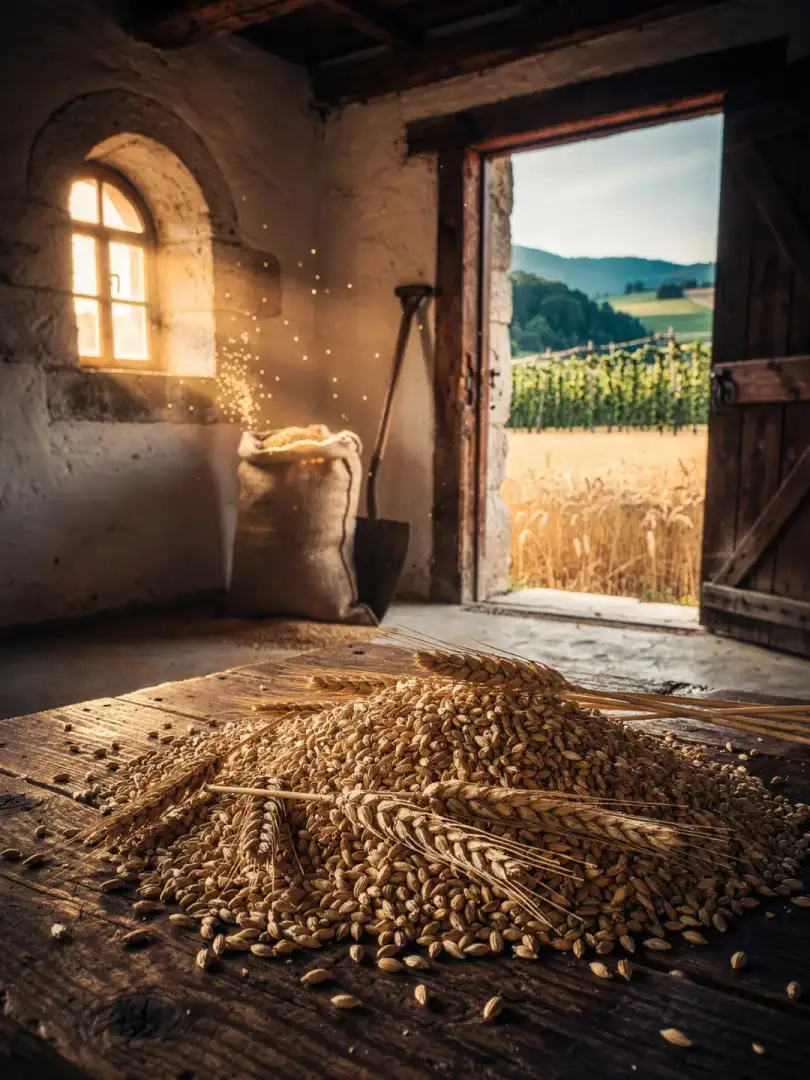
A Union or Laško tastes of bread and fresh grain, not caramel or smoke. Behind that lies a pale malt type, the kind needed for Pilsner: barley that's been germinated and then dried at low heat. The kiln, the malthouse's drying oven, is run deliberately gently so the malt stays pale.
Barley is the foundation of nearly every lager. Which varieties and maltsters supply Laško Union, the brewers don't disclose in detail. For a pale lager, the grist, meaning the mix of malts in the mash, consists at its core of pale barley malt. Because almost nothing else goes into the mash, any flaw in the malt shows up immediately in the glass, which is exactly why choosing the barley matters so much.
What matters most for the style is what's absent. The region's pale lagers aren't sweet, roasty, or heavy. The malt supplies the body's base, the wort (the boiled, still unfermented malt liquid) is balanced with hops and then fermented. The character comes almost entirely from the interplay of barley, hops, and the cool fermentation covered in the next section.
Dark malts are certainly known in the region too. But they mainly appear at the smaller breweries that have sprung up alongside the Laško and Union brands in recent years. Anyone trying a darker beer will instantly notice the roasted notes that the pale Zlatorog so deliberately avoids.