Barley from overseas
Malt & Grain
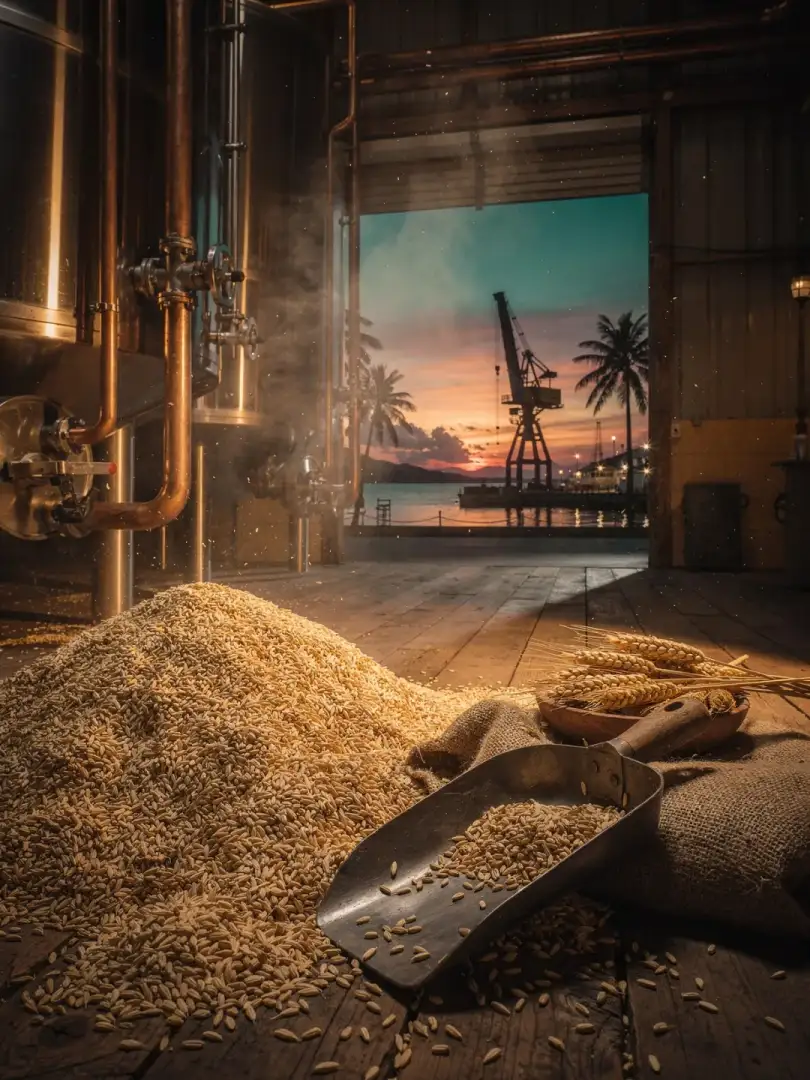
How do you brew beer in a country where barley barely grows? Thailand solves the problem with imports. Barley needs cool, dry summers, and the tropics don't offer that. The malt for pale Thai lagers like Singha and Chang therefore comes from temperate growing regions and arrives by ship.
Malt is made by letting barley germinate in water, then halting the sprouting with heat in a kiln. In the process, the grain becomes rich in sugar and gains aroma. For pale malt the heat is kept low; for dark malt it's raised higher, and the colour shifts from straw-yellow to brown.
Singha states that it uses only barley malt, with no added sugar or other grains. That's the brewery's own claim, and it fits with a classic pale lager. For lagers elsewhere in the world, it's common to replace part of the malt with rice or corn to make the beer lighter. What recipes the other Thai brands use remains the companies' own business.
A look at rice is still worthwhile. It shapes what's on the table, though not the beer itself: sticky rice, jasmine rice and rice noodles are the usual sides served alongside lager.
The result in the glass is a pale, light beer. The malt stays in the background, offering a touch of bread crust and sweetness but no roasted notes. That's exactly what makes it so practical in a country where people want something cold with every meal. Anyone looking for darker malt aromas is more likely to find them among Bangkok's small craft brewers.