The Sour Styles
Berliner Weisse, Gose, and Sour Beer
Sour beer results when, alongside yeast, lactic acid bacteria or wild microbes also ferment. The best-known German examples are Berliner Weisse and Gose; then there's Flanders Red Ale aged in wood and newer styles like Catharina Sour. The sourness is intentional, not a flaw.
What Is a Sour Beer? Bacteria as Co-Brewers
For a long time, sourness in beer was seen as a sign of spoilage. For certain styles, it's the goal. The main culprits are lactic acid bacteria, which convert sugar into lactic acid, just as in yogurt or sauerkraut. Some breweries let them work alongside the yeast. Others sour the wort beforehand in the kettle and then boil it to kill off the bacteria. This kettle souring is fast and highly predictable.
The opposite approach involves beers that age for months in wooden barrels. Wild yeasts like Brettanomyces and various bacteria live in the wood, producing not just lactic acid but also a bit of acetic acid and complex, leathery or fruity aromas. These beers are more complex but require time and experience. For the brewery, the microbes pose a risk, since they can migrate into other beers. Many operations therefore keep hoses, tanks, and barrels for sour beers strictly separate from the rest of the brewhouse.
Berliner Weisse: The Light Sour Beer
Few beers are as light as Berliner Weisse. According to the BJCP, it has only 7.1 to 8% original gravity and 2.8 to 3.8% ABV; in Germany it's therefore sold as a Schankbier (low-strength draft beer). It's brewed with wheat and barley malt, barely hopped at 3 to 8 IBU, and fermented jointly by yeast and lactic acid bacteria. The result is pale, sparkling, and lemony sour.
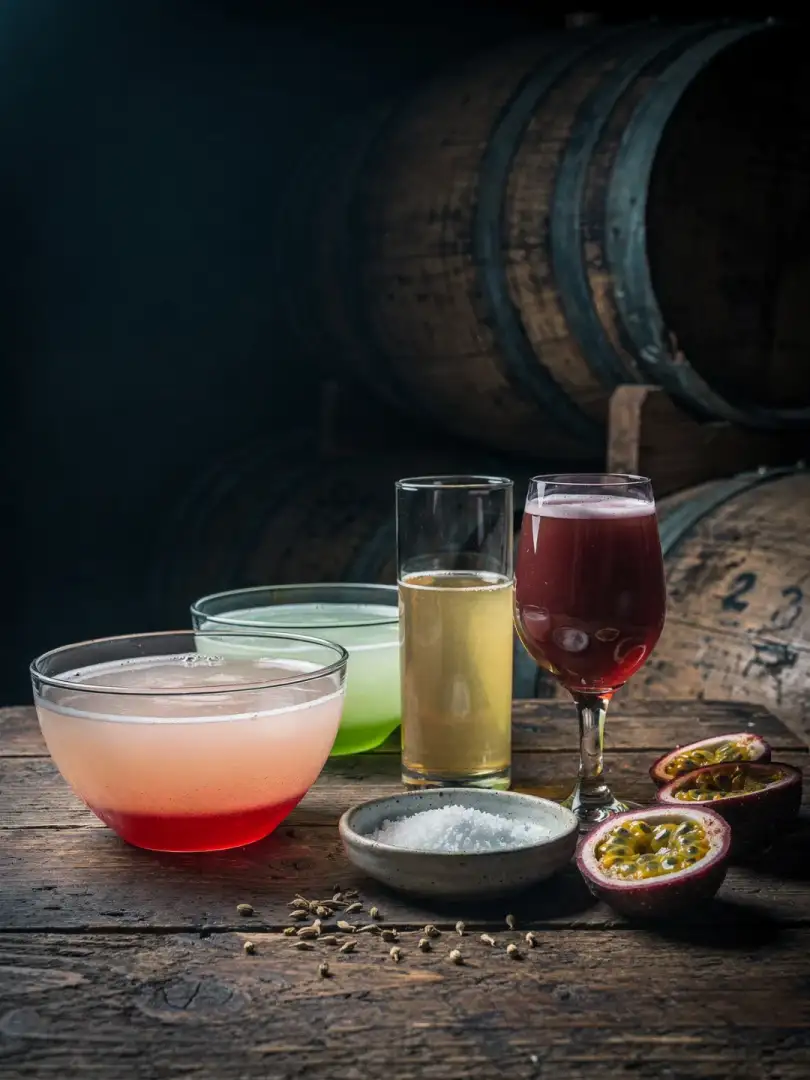
It's best known served mit Schuss, meaning with raspberry or woodruff syrup, red or green, in a wide bowl. Drunk straight, it reveals its true character. Berliner Weisse has no EU protected designation of origin. Good examples show, besides the lemon, a hint of bread dough and fresh grain.
What Is a Gose? Salt and Coriander
Its origin lies in Goslar in the Harz region, with the name usually derived from the small river Gose. From the 18th century onward it became established around Leipzig, Halle, and Dessau, hence the name Leipziger Gose. It's brewed top-fermented, lightly soured with lactic acid, and seasoned with salt and coriander. You don't taste the salt as salt; it rounds out the acidity and makes the body seem fuller.
At 4.2 to 4.8% ABV, Gose is stronger than a Berliner Weisse, but at 5 to 12 IBU it's just as low in bitterness. Because salt and coriander aren't among the permitted ingredients under German beer law, it's classified as a specialty beer requiring an exemption. A first mention from 1397 is often cited but isn't reliably documented. In the 20th century, Gose nearly disappeared for a time. Today breweries in Leipzig, Goslar, and well beyond are brewing it again.
Flanders Red Ale and Oud Bruin: Sourness from Wood
In West Flanders, Flanders Red Ale ages in large oak barrels. The result is reddish-brown, 20 to 33 EBC, with 4.6 to 6.5% ABV and aromas of cherry, red currant, and balsamic, since alongside lactic acid, some acetic acid also forms. Young and long-aged batches are often blended. The style was made famous by Rodenbach in Roeselare. As of October 1, 2026, Vlaams roodbruin bier / Flanders Red Ale is listed as a Protected Geographical Indication in the EU register.
East Flemish Oud Bruin is darker and maltier, 33 to 43 EBC, with less acetic character and more caramel and dried fruit. Both differ from Lambic because fermentation begins with deliberately added cultures rather than spontaneously from the air.
New Sour Beers: The Catharina Sour
The newest style family comes from Brazil. In the state of Santa Catarina, Catharina Sour emerged, a light, kettle-soured wheat beer with fresh fruit like passion fruit or guava. The BJCP lists it at 4 to 5.5% ABV and 2 to 8 IBU. It shows that sour beer isn't a museum piece but keeps evolving. Brewers in many countries are taking similar paths, combining Gose or Berliner Weisse with fruit. If you're trying sour beer for the first time, it's best to start with a light, fruity version and then work your way up to the barrel-aged beers.