Brewing in the Kitchen
Brewing Beer at Home: What's Possible and What's Allowed
Home brewing is legal in Germany. Up to 200 liters a year for personal consumption is exempt from beer tax, though you must notify the relevant main customs office before you start. Selling the beer is not allowed. Brewing can be done with malt extract, with grain in a pot, or using automated brewing systems.
Is Home Brewing Legal? Customs Office and Tax Rules
Many hobby brewers don't realize that beer is a tax matter in Germany. Under Section 41 of the Beer Tax Ordinance, beer that home and hobby brewers produce solely for personal consumption and do not sell is tax-free up to 2 hectoliters per calendar year — that's 200 liters.
This exemption, however, doesn't apply automatically without registration. Home brewers must notify the relevant main customs office in advance of the start and location of production, along with the expected annual brewing volume. This can be done informally or using the customs administration's form. Anyone brewing more than 200 liters must declare tax. Anyone wishing to sell their beer needs a proper brewery with all the obligations of a licensed food business.
Home brewers have more freedom when it comes to the Reinheitsgebot. Under Section 9(8) of the still-applicable Beer Law, the ingredient rules don't apply to them. So experimenting with cherries, coriander, or coffee doesn't break the law. Brewing, by the way, is something entirely different from distilling: anyone distilling alcohol is subject to separate, much stricter regulations.
Extract, All-Grain, or Automated Brewing System: Which Method Suits You?
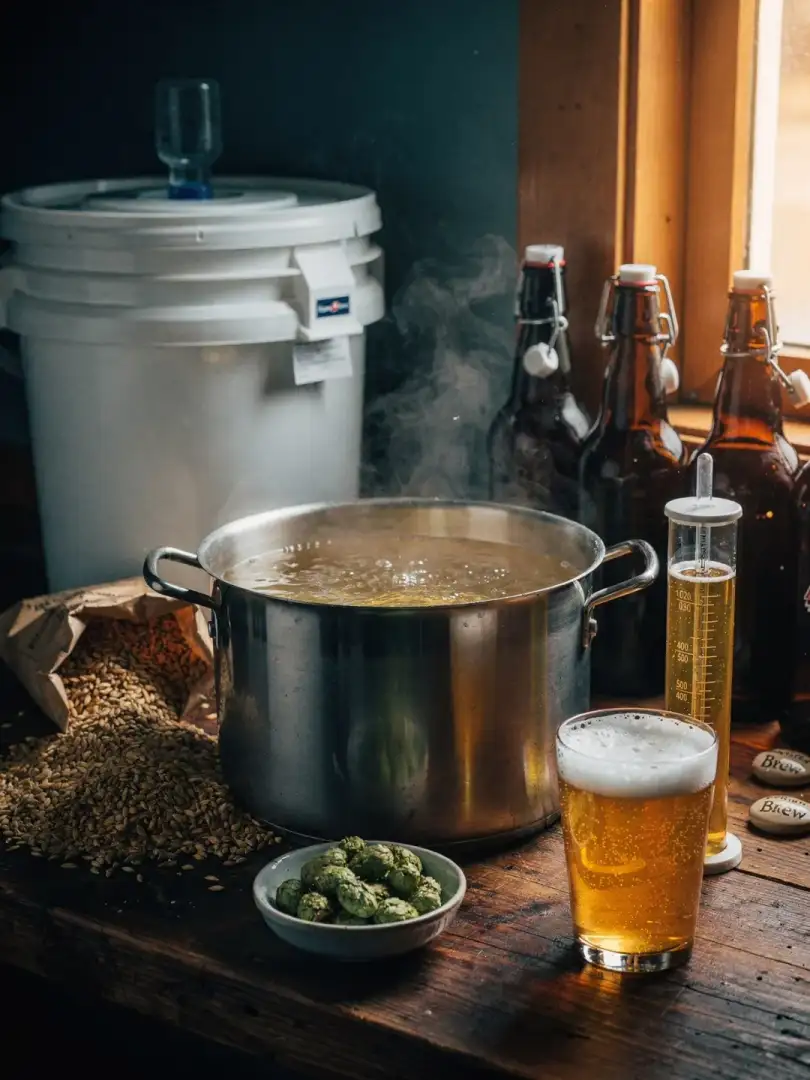
The simplest way to start is brewing with malt extract. Here, a manufacturer has already mashed the grain and concentrated the wort into syrup or powder. At home, you simply dissolve the extract in water, boil it with hops, cool it, and ferment it. There are even ready-made kits where the extract is already hopped. This method usually succeeds, but leaves little room for creativity.
With all-grain brewing — that is, brewing with whole malt — you handle every step yourself, from milling to mashing, lautering, and boiling. A large brew kettle and a lauter bucket with a perforated bottom are enough to get started. This is where you learn the most about mash rests and original gravity. Automated brewing systems with pumps and controllers handle temperature management for you, striking a middle ground between the two approaches.
Hygiene and Fermentation: Where Home Brewing Most Often Goes Wrong
Most failed batches don't fail because of the recipe, but because of cleanliness. Everything that comes into contact with the wort after boiling must be cleaned and sanitized. Otherwise, wild microbes outcompete the yeast, and the beer turns sour, musty, or solvent-like.
Fermentation temperature is just as critical. Fermenting a lager in a warm kitchen produces a fruity, often messy result. For beginners, top-fermenting styles like Pale Ale or Weissbier are a better choice, as they ferment well at room temperature. Bottom-fermenting beers need a cool cellar or a converted refrigerator.
Caution is needed with bottle conditioning. If too much sugar goes into the bottles, or if beer is bottled before fermentation has truly finished, pressure can build up too much, and bottles can burst. Measuring with a hydrometer or refractometer over several days shows whether the sugar has really fermented out.
Brewing Together: Community Brewhouses and Zoigl
If you don't have the space, you can team up with others. The Beer Tax Ordinance attributes beer that home brewers produce in non-commercial community brewhouses to their individual households. In the Upper Palatinate, this tradition lives on in Zoigl beer. There, eligible citizens brew in a shared communal brewhouse and ferment the beer at home, serving it in turn from their own front rooms.
Many towns today offer brewing courses, clubs, and hobby brewer meetups. These let you learn faster than on your own, and experienced brewers will often taste your first results with you. That's often the best training your palate can get.