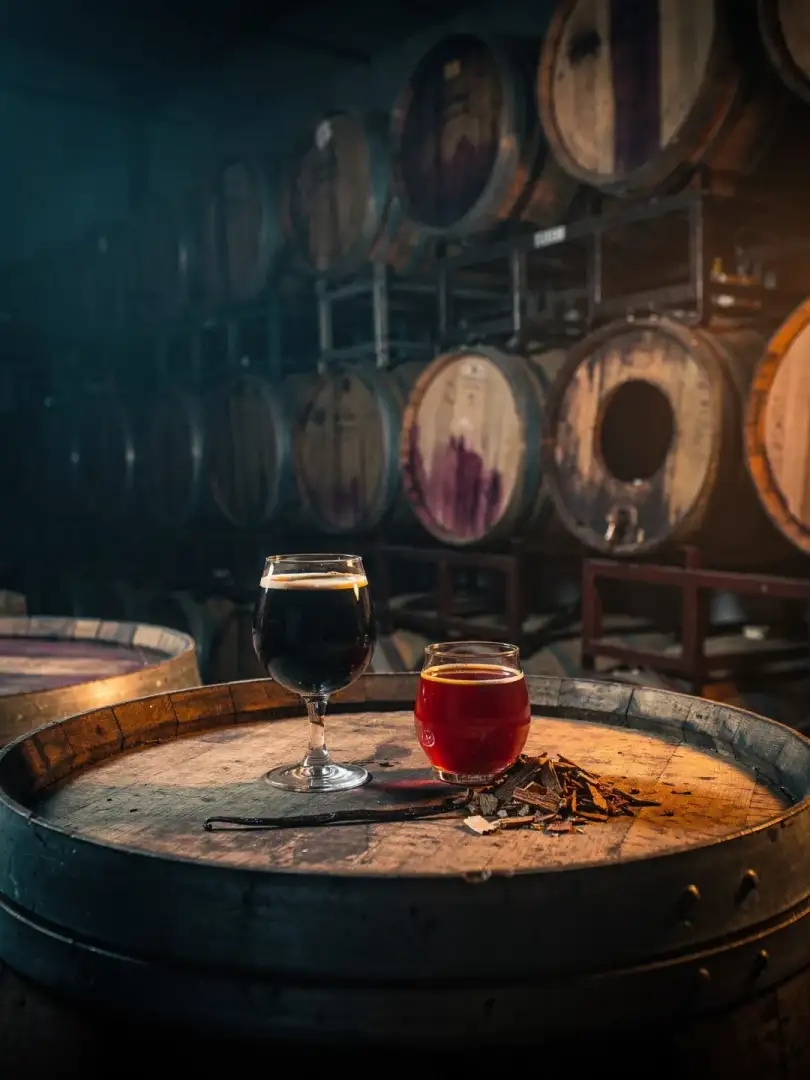
Beer in Wood
Barrel Aging: Beer in Bourbon, Wine, and Whisky Casks
Barrel-aged beer rests for weeks to years in wooden casks that previously held bourbon, wine, or whisky. The wood imparts vanilla, coconut, and tannins, residual spirit character lingers, and oxygen slowly matures the beer. The technique became famous through Goose Island's Bourbon County Stout.
Who brewed the first beer in a bourbon barrel?
The best-known story leads to Chicago. Brewmaster Greg Hall of Goose Island wanted to brew something special for his brewery's thousandth batch and got used bourbon barrels from the distillery Jim Beam. A very strong stout aged inside them. Goose Island dates the first batch to 1992. The brewing log has since been lost, though, and Hall himself calls the year an estimate—research points more toward 1995.
The impact is undisputed. Bourbon County Stout became the template for an entire category known in English as barrel-aged beer. The brewery has belonged to AB InBev since 2011 and still releases the beer every year, now in several variants. Beer shop coolers around the world today stock barrel-aged stouts, barley wines, and porters from breweries of every size.
Why do craft beers age specifically in bourbon barrels?
Under US law, bourbon must age in new, charred oak barrels. Each barrel is therefore used only once for bourbon, after which it's worthless to the distillery but cheap for brewers to acquire. Charring caramelizes wood sugars and releases vanillin, the main aroma compound in vanilla. Oak also contributes whisky lactones, aromatic compounds with coconut notes, along with tannins that make the beer taste drier.
Strong beers almost always go into the barrel. According to the BJCP, an Imperial Stout runs 8 to 12 percent alcohol with 50 to 90 bitterness units, and an English Barley Wine 8 to 12 percent. Such beers can stand up to the wood and spirit character, whereas a light lager would be overwhelmed. Their high alcohol content also protects them from spoilage over months. During aging, a small amount of oxygen passes through the wood, rounding out the beer and adding notes of dried fruit, similar to a port wine.
What does a wine barrel do to beer?
Wine barrels contribute less vanilla but more fruit and acidity. The wood often harbors microbes unwanted in normal beer: the wild yeast Brettanomyces, which can smell of leather, barnyard, or ripe pineapple, as well as lactic acid bacteria. Brewers use this deliberately to create sour, layered beers. They fill a finished ale into a red wine barrel and let the microbes work for months.
A classic example comes from West Flanders. There, Flanders Red Ale ages in large wooden vats called foudres and is often later blended with younger beer. According to the BJCP, it runs 4.6 to 6.5 percent alcohol, with a reddish-brown color and a wine-like acidity. Rodenbach in Roeselare, now part of Swinkels Family Brewers via the Palm brewery, is the best-known producer. Since October 1, 2026, 'Vlaams roodbruin bier / Flanders Red Ale' has been registered as a protected geographical indication in the EU.
Whisky Barrel, Rum Barrel, and More: What Should I Look for in Barrel-Aged Beer?
Scottish distilleries frequently age their own whisky in used bourbon barrels. A beer from such a whisky barrel therefore often tastes more mildly of wood, though it can carry smoke if a peated whisky was previously stored in it. Rum barrels impart molasses and spice, dessert-wine barrels bring honey and raisin. How strongly this character comes through depends on aging time, barrel size, and how many times the barrel has already been used.
Good labels specify the barrel type, aging time, and vintage. Many of these beers continue to evolve in the bottle when stored cool and dark. They're usually served in small pours at 12 to 14 degrees Celsius in bulbous glasses, allowing the aroma to open up. Their alcohol content matches that of a dessert wine, and they should be treated the same way: as a beer to sip slowly rather than drink casually.