Beer in the Pot
Cooking with Beer: Braising, Baking, Beer Batter
When cooking with beer, malty beers with low bitterness work best, since hop bitterness intensifies as the liquid reduces. Alcohol evaporates more slowly than you'd think: according to a USDA measurement, about a quarter of it remains in the pot after an hour of braising.
Which Beer Is Best for Cooking?
During cooking, water evaporates, and everything non-volatile becomes concentrated — including salt, sugar, and hop bitterness. An IPA that tastes pleasantly bitter in the glass can turn a sauce unpleasantly harsh after an hour in the braising pot. The first rule, then, is to use malty, mildly hopped beers for braising and reducing, such as dunkel, märzen, bock, dubbel, or an oud bruin.
Hop aromas like citrus and pine, on the other hand, fade quickly in the heat. If you want them to come through in a dish, add the beer shortly before serving, or use it cold — in a vinaigrette, for instance. Roasted malt stays stable and darkens sauces. The acidity of a sour beer helps with deglazing and adds freshness, much like a splash of wine or vinegar would.
Carbonnade, Beer-Braised Roast, and Welsh Rarebit: Classics with Beer
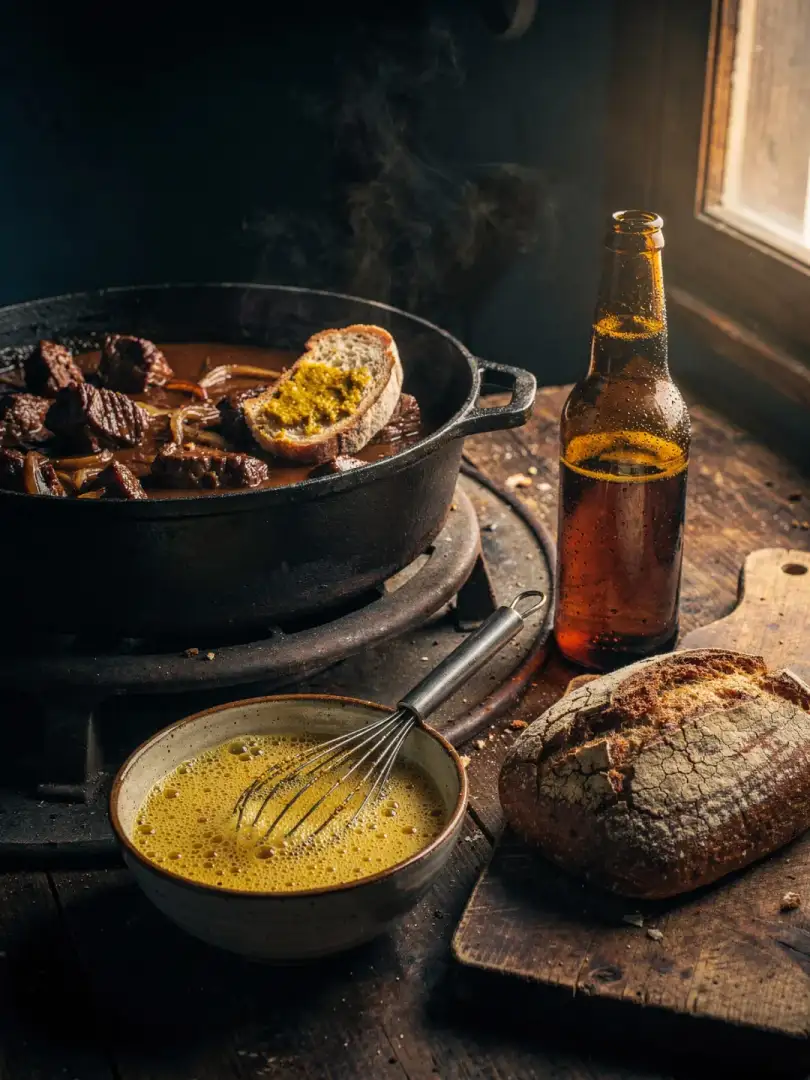
Flemish carbonnade is the best-known beer-braised dish. Beef is browned with onions, then braised for hours in dark beer, often with a slice of mustard-spread bread that dissolves into the sauce and thickens it. In Flanders, cooks favor a tart, malty oud bruin or a dark abbey beer for this. The light acidity keeps the sauce lively, while the malt adds depth.
In Bavaria, dunkel takes on a similar role with roast pork: a splash of beer while basting helps form the crust and lends the sauce a malty note. In Britain, Welsh rarebit is made from melted cheddar, mustard, Worcestershire sauce, and ale, poured over toasted bread and grilled until bubbling. In Ireland, stout finds its way into beef stew and fruitcake. What all these dishes share is that beer serves as a seasoning rather than the main event: a single glass is usually enough for a whole pot, and the same beer that went into the sauce often ends up on the table too.
Beer Batter, Bread, and Baking with Beer
A beer batter for fish and chips, onion rings, or apple fritters turns out airier and crispier than one made with water. Carbonation leaves fine bubbles when fried, and alcohol evaporates faster than water, so the crust dries out more quickly. A cold, fizzy helles or pilsner works best, stirred in just before frying.
In bread, beer replaces part of the water. Dark beer lends crust and crumb malty flavor and color, while wheat beer adds a light fruitiness. Spent grain, the leftover malt residue from the brewhouse, also finds its way into some breads, adding fiber and bite. In cakes and brownies, a stout deepens the chocolate flavor without pushing itself into the foreground.
Does the Alcohol Cook Off When Cooking with Beer?
No, not completely. The USDA measured in 1992 how much alcohol remains in dishes after cooking. When alcohol is stirred into a dish and then baked or simmered, about 40% remains after 15 minutes, about 25% after an hour, and about 5% after two and a half hours. So a dish briefly deglazed with beer still retains a fair amount.
Because beer has less alcohol than wine or spirits and is usually added in small amounts to large pots, the alcohol content per portion tends to stay low. Still, it's not zero — something to keep in mind for children, pregnant women, people who avoid alcohol, and before driving. If you want to play it safe, cook with non-alcoholic beer, which in Germany can contain up to 0.5% ABV, or with a beer labeled 0.0. It still delivers malt flavor and works just as well in the braising pot or the batter bowl.