Chili and Curry
Beer with Spicy Food: Curry, Chili, Thai
Beers with low bitterness, moderate alcohol, and a touch of malt sweetness pair best with spicy food — think wheat beer, helles, märzen, or a pale Mexican lager. Hop bitterness, high alcohol, and heavy carbonation, on the other hand, intensify the burn of chili.
Why Does Chili Burn More with Beer?
The heat of chili comes from capsaicin. It triggers the same nerve receptors on the tongue that sense heat, and the brain interprets the signal as burning. Capsaicin barely dissolves in water but dissolves readily in fat and alcohol. A sip of cold beer therefore only cools briefly. After that, the alcohol spreads the capsaicin around the mouth, and the fire returns, sometimes stronger than before.
Two more amplifiers lurk in the glass. Hop bitterness and spiciness feed off each other: a bitter beer makes chili taste hotter and the beer taste harsher. Carbonation irritates the mucous membranes further, so a lot of fizz can fan the flames. What helps is sweetness. Residual malt sugar left in the beer after fermentation tames the heat much like yogurt in a lassi or coconut milk in a curry.
Is IPA a Good Beer for Curry?
The name India Pale Ale practically invites curry pairings, and on many menus the two sit side by side. But the name has little to do with the dish's origin: IPA was a pale, heavily hopped export beer that found success mainly in India, not a beer brewed for Indian cuisine. On the palate, the pairing is tricky. An American IPA with 40 to 70 IBU, or a double IPA with up to 100 IBU and 10% ABV, will send a spicy vindaloo into overdrive.
There is one exception. Hop varieties from the US or New Zealand smell of mango, passion fruit, and citrus, and that fruitiness pairs well with coconut, lime, and coriander. If you want to try it, go for a hazy IPA — cloudy, soft, and usually less bitter than a classic West Coast IPA — paired with a mildly spiced dish. When real heat is involved, the rule of thumb still holds: favor malt and fruit in the glass over bitterness.
Thai, India, Mexico: Which Beer Suits Which Cuisine?
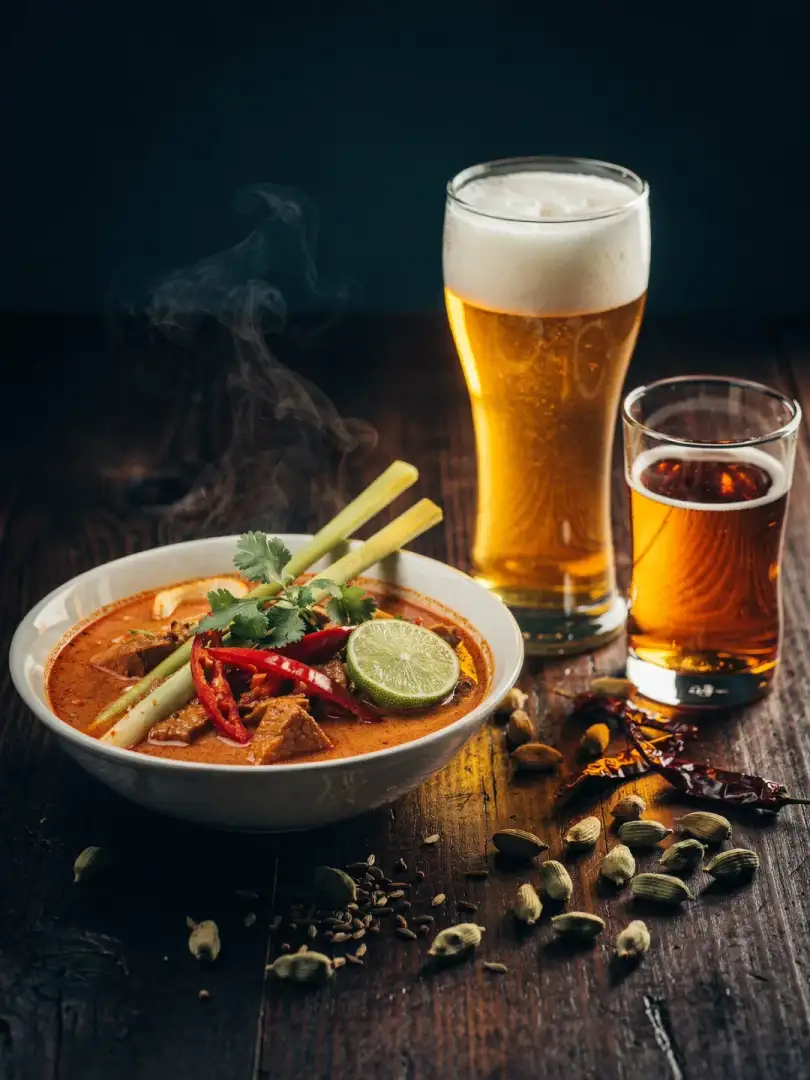
Thai cuisine combines heat with sweetness, acidity, and herbs like lemongrass and Thai basil. A witbier with coriander and orange peel picks up on these herbal notes, while a wheat beer with banana and light sweetness tempers the spice. A helles also works well with a red curry in coconut milk: it's lightly hopped and lets the flavors shine instead of competing with them.
Indian dishes seasoned with garam masala, cumin, and cardamom pair well with malty, full-bodied beers such as a märzen or a Vienna lager. Their caramel notes complement roasted spices and tandoori dishes. In Mexico, a pale lager with low bitterness and plenty of refreshment is the classic match for tacos, lime, and coriander. For mole, the dark sauce made from chili, nuts, and chocolate, a porter with its roasted notes is a fitting partner.
Sichuan Pepper, Wasabi, and Kimchi: A Different Kind of Heat
Not all heat is chili heat. Sichuan pepper tingles and slightly numbs the lips, while wasabi and horseradish shoot up the nose and fade quickly. Sichuan dishes pair well with a malty, not-too-fizzy lager or a dunkel that picks up the oil and roasted notes from the wok. For sushi with wasabi, pale, dry lagers with low bitterness remain the safe choice.
Fermented foods like kimchi bring together acidity, garlic, and chili. Here, a saison with dry, peppery yeast character is a good partner, as is a gose, whose acidity and salinity mirror the ferment. For all spicy dishes, the rule is to keep the alcohol content low. A 5% beer pairs better with curry than a 9% one, and a glass of water on the table cools more reliably than any beer.