Belgian Monastic Styles
Dubbel, Tripel, Quadrupel: What's the Difference?
Dubbel is dark and malty, Tripel is pale and potent, and Quadrupel is dark and even stronger. All three are top-fermented Belgian strong beers rooted in monastic brewing tradition, produced by both Trappist and secular breweries alike. The names describe strength and color, not origin.
What is a Dubbel?
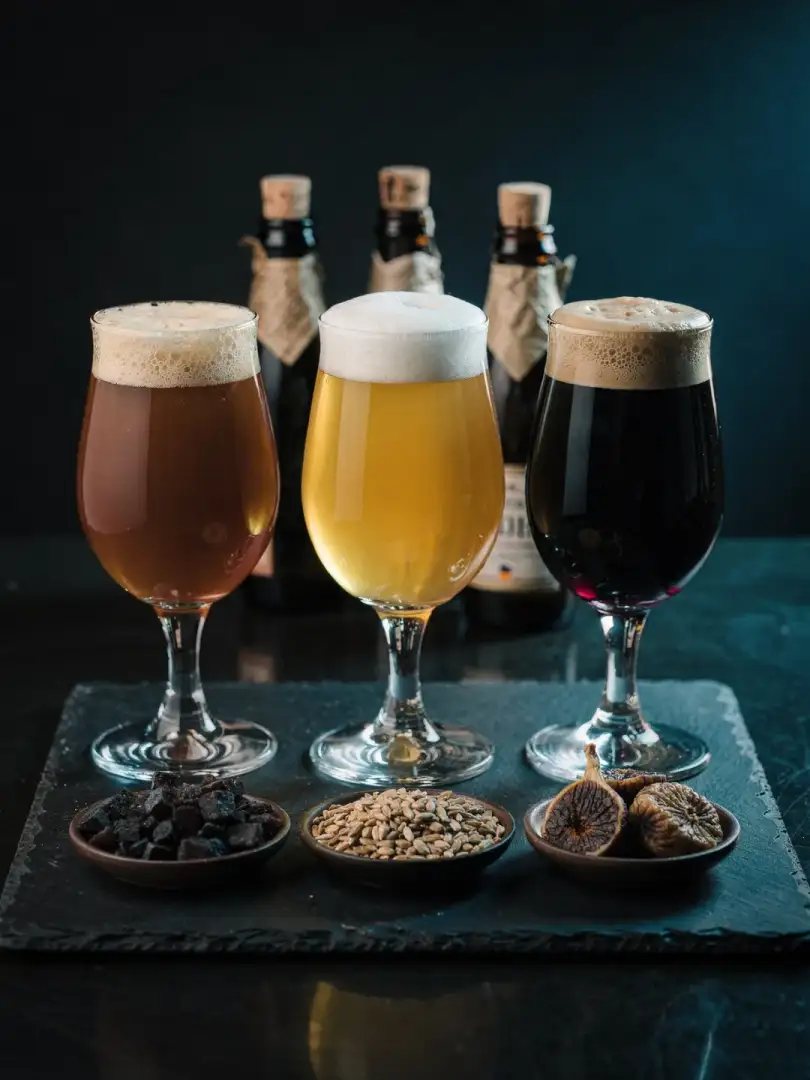
In the glass, a Dubbel glows chestnut brown to reddish, with a creamy, light brown head. On the nose you'll find raisins, plums, caramel, and a hint of chocolate. The BJCP style guidelines call for 15.2 to 18.2 degrees Plato original gravity, 6 to 7.6% ABV, and 15 to 25 bittering units. The hops stay in the background.
The dark color comes from two sources. Specialty malts bring roasted and caramel notes, while dark sugar syrup contributes color and a dry sweetness. Add to this a Belgian top-fermenting yeast. It produces esters, fruity aromatic compounds, and spicy phenols reminiscent of clove or pepper.
The style's archetype is considered to be the Dubbel from Westmalle Abbey. But abbey beers and breweries far beyond Belgium also brew Dubbels. The name is unrestricted and belongs to no one.
What is a Tripel?
Despite its higher alcohol content, a Tripel is pale, golden yellow, and surprisingly light-bodied. The BJCP framework sets it at 18.2 to 20.5 degrees Plato, 7.5 to 9.5% ABV, and 20 to 40 bittering units. That makes it notably stronger and a bit more bitter than a Dubbel.
The secret to its lightness lies in the sugar. Pale sugar ferments almost completely into alcohol without leaving residual sweetness. This makes the beer feel dry and lively rather than heavy. Pale Pilsner malt provides the light color, while the yeast contributes notes of citrus, pear, and white pepper. Vigorous carbonation lifts the aromas.
Closely related is the Belgian Golden Strong Ale. It's similarly pale and strong, at 7.5 to 10.5% ABV, but is usually brewed even drier and hoppier. A Tripel, by contrast, has more yeast-driven spiciness. Westmalle is also considered the archetype for Tripel.
What is a Quadrupel?
The BJCP guidelines don't recognize Quadrupel as its own style. They classify such beers under Belgian Dark Strong Ale: 18.2 to 25.9 degrees Plato, 8 to 12% ABV, dark color. The name Quadrupel was popularized by the Dutch Trappist brewery La Trappe with a beer of the same name. Other breweries later adopted it.
In terms of flavor, a Quadrupel amplifies the Dubbel. More malt, more dark sugar, more alcohol. Typical notes include figs, dates, toffee, and a warming, almost liqueur-like finish. Well-known monastic examples include Westvleteren 12 and Rochefort's strongest beer. Beers like these can continue developing in the bottle for years.
They're not served ice cold. At twelve to fourteen degrees Celsius, the fruit and malt character opens up best; too cold, and the beer turns dull and overly alcoholic. A small glass is enough, since a Quadrupel often has more than double the alcohol of a Pilsner. It pairs better with robust cheese, game dishes, or a chocolate dessert than with simple thirst-quenching.
Where do the names come from, and what is a Patersbier?
Why these beers are called Dubbel and Tripel isn't definitively settled. A common explanation points to crosses that brewers once used to mark barrels by strength. This isn't documented, though. What is certain is that the names express a scale of strength and don't indicate an exact doubling or tripling.
At the bottom of that scale sits the Patersbier. Trappist monks traditionally brew it for their own table, lighter and hoppier than the beers sold commercially. The BJCP guidelines list it as Belgian Single, with 11 to 13.3 degrees Plato and 4.8 to 6% ABV. Westvleteren Blond and Westmalle Extra belong to this type.
Nearly all beers in this family undergo bottle conditioning. Before bottling, the brewery adds a bit of sugar and fresh yeast, which produce carbonation inside the sealed bottle. A fine layer of yeast sediment settles at the bottom. If you want a clear pour, tip the bottle gently and leave the last sip behind. A bulbous chalice glass concentrates the aromas nicely.