Beer Without Gluten
Gluten-Free Beer: Sorghum, Millet, Buckwheat
In the EU, gluten-free beer may contain no more than 20 milligrams of gluten per kilogram. It's brewed either from gluten-free grains such as sorghum, millet, rice, or buckwheat, or from barley malt whose gluten is broken down by enzymes. For people with celiac disease, the difference between these two approaches matters.
What Is Gluten, and Why Is It in Regular Beer?
Gluten is a group of storage proteins found in wheat, barley, rye, and spelt. During baking, it holds the dough together, hence the old term "gluten protein." In barley, the corresponding protein is called hordein. Oats naturally contain little gluten but are often contaminated with other grains.
During brewing, the gluten content drops significantly. Part of the protein precipitates out when the wort is boiled, and another portion settles with the yeast. Nevertheless, regular beer made from barley malt usually still contains measurable amounts, which vary widely depending on style and recipe. For people with celiac disease—an autoimmune condition in which gluten damages the lining of the small intestine—this is enough to cause harm. What they can tolerate should be discussed with a doctor and the relevant celiac disease associations.
Two Paths to Gluten-Free Beer
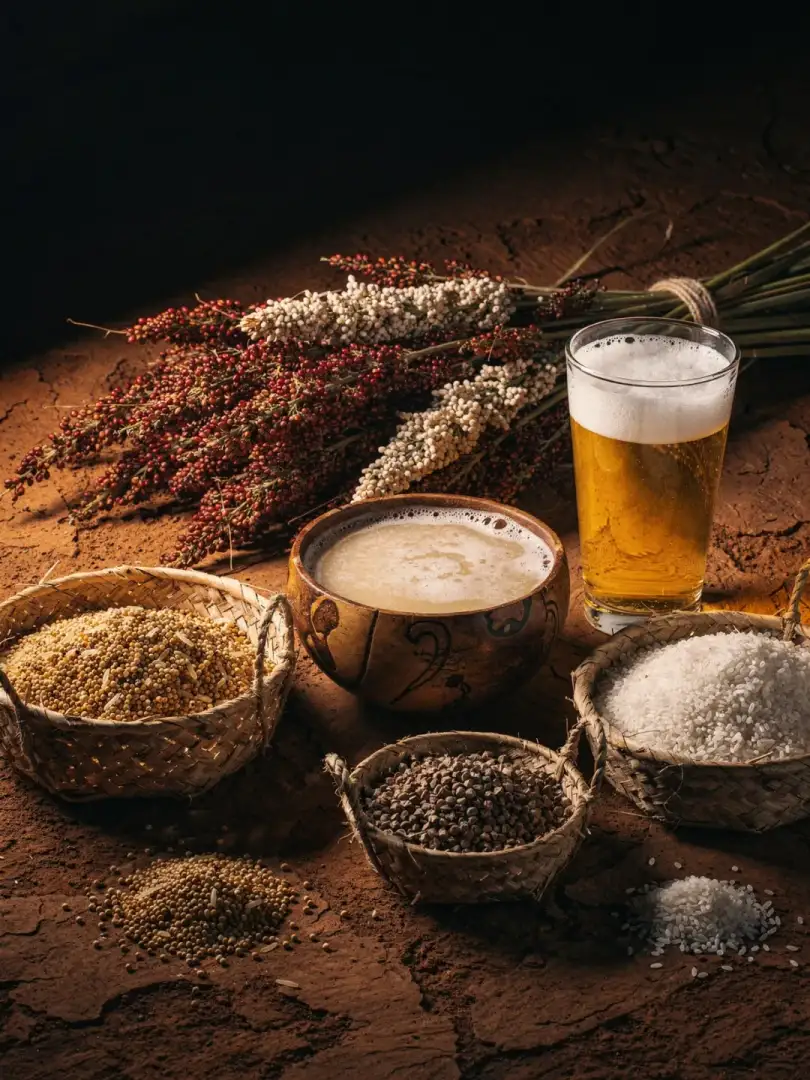
The first path avoids gluten-containing grains entirely. Brewers use sorghum, along with millet, rice, corn, or pseudocereals such as buckwheat, quinoa, and amaranth. These grains can be malted, but they produce fewer enzymes than barley, and their starch only gelatinizes at higher temperatures. Many recipes therefore rely on added enzymes along with sugar or syrup. The flavor differs noticeably from barley malt beer.
The second method starts with ordinary barley malt. During fermentation or maturation, an added enzyme breaks down the gluten fragments. If the measured value falls below 20 milligrams per kilogram, the beer may be sold as gluten-free in the EU. Barley must then be highlighted in the ingredients list, as it's classified as an allergen. If the value is no more than 100 milligrams, the beer can carry the label "very low gluten content." Experts point out that broken-down gluten is difficult to measure accurately. Some celiac associations therefore advise caution with this method.
Sorghum Beer in Africa: Tradition and Industry
Sorghum grows where it's too hot and too dry for barley. In many African countries, people have brewed beer from it for generations, such as Umqombothi in southern Africa or Pito in Ghana. These beers are often cloudy, tangy, and drunk fresh, sometimes while still fermenting. Alongside yeast, lactic acid bacteria are also at work in them.
Large breweries rely on sorghum too. Nile Breweries in Uganda, now part of AB InBev, launched Eagle Lager, a sorghum-based beer, in 2002 to replace imported barley with local grain. According to the company, more than 20,000 smallholder farmers supply the grain. However, such a beer is only gluten-free if no barley malt is used in the recipe. This needs to be checked for every individual product.
What Does Gluten-Free Beer Taste Like, and What Should You Look For?
Sorghum beer often comes across as slightly tangy and fruity, sometimes a bit thin, since it lacks the deep malty character of barley. Buckwheat brings nutty, earthy notes, while rice and millet stay fairly neutral. Many breweries compensate with more hops, which is why gluten-free pale ales and IPAs often turn out more successful than gluten-free lagers. Beers made using the enzyme method, by contrast, taste almost identical to their conventional counterparts, since they're brewed from the same malt.
When shopping, it's worth checking two things. The "gluten-free" label confirms that the threshold is being met. The ingredients list reveals which method was used: if barley malt is listed, the gluten was broken down enzymatically. The crossed-grain symbol is licensed by celiac societies — it's not a legal requirement.
A common misconception concerns lagers made with corn or rice. Since both grains are gluten-free, some people assume such beers are safe. In reality, though, these beers are usually made predominantly from barley malt and therefore do contain gluten. The same applies to pale, light beers, where a low original gravity says nothing about gluten content. The only reliable indicator is the "gluten-free" label itself.