Big Players and Specialists
Maltings: Who Makes the Malt for Brewers
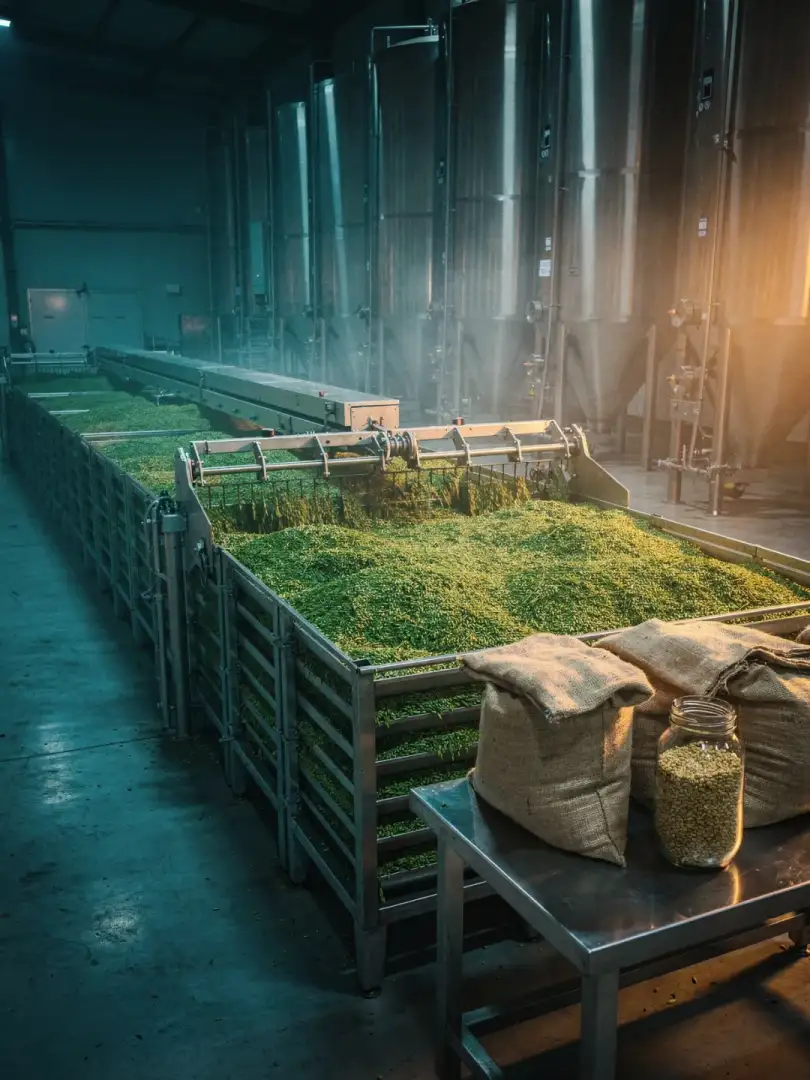
Maltings produce the malt that nearly every brewery buys rather than malting it themselves. A handful of large companies supply a major share of the world's demand for pale base malt. Alongside them are specialty maltsters who produce caramel, smoked, and roasted malts for a wide range of styles. The diversity on the beer shelf depends on them.
Why Do Breweries Buy Their Malt?
In the past, monasteries and brewhouses did their own malting. Many old breweries had their own malting floor and kiln. As breweries grew during the 19th and 20th centuries, the two trades split apart. Malting requires a lot of space, a lot of energy, and specialized expertise, and it's a seasonal business tied to the barley harvest. Specialized maltings were able to deliver more consistent quality in large volumes.
Today, a brewery receives a certificate of analysis with every delivery. It lists figures such as color in EBC, extract (how much soluble material can be obtained from the malt), as well as protein content, moisture, and degree of modification. The brewmaster adjusts recipes based on these figures. Breweries with their own malting facilities have become rare. A well-known example is Schlenkerla in Bamberg, which produces its own beechwood-smoked malt.
The Major Malting Companies
The global malt market is highly concentrated, and many large maltings belong to agricultural cooperatives. According to trade press reports, the French group InVivo, through its Soufflet Malt division, became the world's largest malting group after acquiring United Malt Group in 2023. Trade publications cite a capacity of roughly 3.6 million tons of malt per year. Close behind are Boortmalt, which belongs to the French cooperative Axereal and took over Cargill's former malting business, as well as Malteurop.
These figures represent capacity, not actual sales volumes, and they shift with plant closures and acquisitions. Boortmalt, for instance, recently reduced its capacity by almost a tenth. For the beer drinker, this means that a large share of the pale base malt in lagers around the world comes from just a few hands. Differences between beers then arise mainly from recipe, hops, yeast, and process.
How good a malt year turns out depends on what happens in the field. In hot, dry summers, the protein content of barley rises, and batches with the right specifications become scarce. Maltings then buy from other countries or blend batches to maintain their analytical values. When barley prices rise, maltings feel it first, with breweries following after some delay. For beer lovers, this usually stays invisible, since maltsters do everything they can to deliver a consistent malt year after year.
Specialty Maltsters: Caramel, Smoke, and Roast
Alongside the big players, there are maltings that focus mainly on specialty malts. The best known in Germany is Weyermann in Bamberg. In 1879, Johann Baptist Weyermann expanded his father's grain trading business to include a malt roastery, which initially produced malt coffee. Today, the family runs the company in its fourth and fifth generation, supplying caramel, roasted, smoked, and wheat malts to many countries.
Similar houses exist in many countries, such as Castle Malting in Belgium, Simpsons, Crisp, and Thomas Fawcett in the UK, or Briess in the US. With the rise of small breweries since the 1980s, demand for such malts grew sharply. Small regional maltings are now emerging too, processing barley from the surrounding area and putting the grain's provenance front and center.
Buying Malt: What's on the Bag and What It Tells You
Every malt bag lists at least the variety and the color. For brewers, this is the most important point of reference: a Munich malt at 15 EBC behaves differently than one at 25 EBC, and a caramel malt at 120 EBC brings different flavors than one at 30. Maltings also provide guidance on proportions and suitable styles for each malt.
Home brewers today get access to the same malts as breweries, just in smaller bags and milled on request. Unmilled malt keeps for many months if stored dry and cool, while milled malt should be used soon, as it absorbs moisture and loses aroma. The malting company is almost never listed on the beer label. Anyone wanting to know where the malt comes from has to ask the brewery.