Today's Law
Beer Law Today: What's Permitted in German Beer
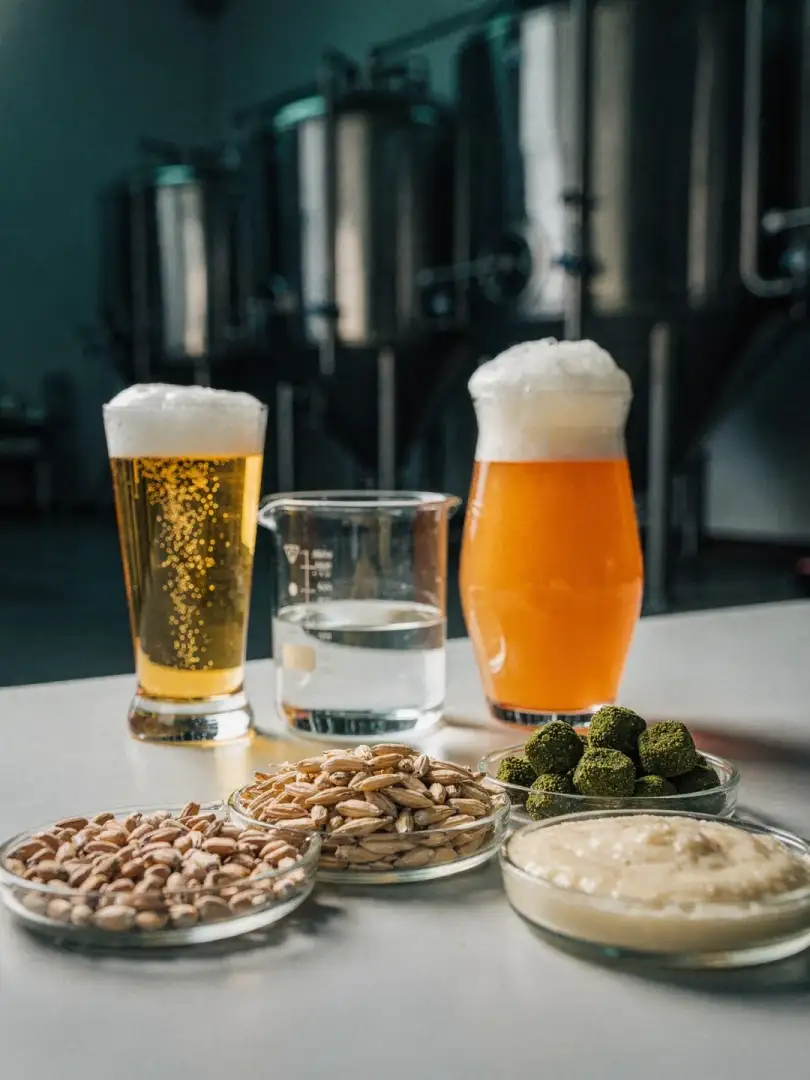
Today, the still-applicable Sections 9, 11 and 18 of the Provisional Beer Law, along with the Beer Ordinance, govern what German beer may contain. For bottom-fermented beer only barley malt, hops, yeast and water are permitted. Top-fermented beers are allowed more — except in Bavaria.
Does the Reinheitsgebot Still Count as Law Today?
There is no law actually named Reinheitsgebot. The rules are found in the Provisional Beer Law, last revised in 1993. The law itself was repealed effective 7 September 2005, when food law was reorganized. However, three of its sections — Sections 9, 11 and 18 — remain applicable under a transitional law. The most important is Section 9, which sets out the ingredients.
Two ordinances come on top of this. The Implementing Ordinance to the Provisional Beer Law of 1993 regulates details of production. The Beer Ordinance of 2 July 1990 stipulates that a beverage may only be called "Bier" if it has been brewed according to these rules. That sounds convoluted, and it is. What matters for beer drinkers is the outcome: the old ingredient rule lives on as part of food law, under its modern name.
Bottom-Fermented Beers: Only Barley Malt, Hops, Yeast, Water
For bottom-fermented beer such as Pils, Helles, Export, Märzen or Schwarzbier, Section 9(1) permits only four ingredients: barley malt, hops, yeast and water. Under the law, malt means any grain that has been artificially induced to germinate. Bottom-fermented means the yeast ferments at cool temperatures and ultimately settles at the bottom of the tank. Wheat malt, sugar or corn are taboo in these beers.
The law does allow a few aids, though. Instead of whole hop cones, the brewer may use hop powder or hop extract. Clarifying agents are permitted if they work mechanically or by adsorption — that is, by binding turbidity-causing particles — and are then completely removed from the beer again. For dark color, coloring beer may be used, a very dark beer that itself consists only of malt, hops, yeast and water. A Schwarzbier thus stays within the bounds of the four ingredients.
Top-Fermented Beers: Wheat Malt and Sugar, but Not in Bavaria
Top-fermented beers such as Weissbier, Kölsch, Alt or Berliner Weisse ferment warmer, and their yeast traditionally rises to the top. For these, Section 9(2) opens the door a little wider. Other malt is permitted, such as wheat or rye. Added to this are technically pure cane, beet, invert or starch sugar, and coloring agents made from them. Without this rule, Germany would have no wheat beer and no rye beer.
Bavaria makes an exception here. There, even for top-fermented beers, the rule is: no sugar — a consequence of the 1924 sugar ban, which the Implementing Ordinance secures. A Hefeweizen from Bavaria thus contains wheat and barley malt, hops, yeast and water, and nothing else. A Kölsch binds itself additionally and voluntarily: the Kölsch Convention prescribes brewing according to the Reinheitsgebot.
What does this mean for the styles? Pils and Helles share the same four ingredients. Their difference lies in hops and malt: the Pils is more bitter and leaner, the Helles more malt-forward and softer. Kölsch and Alt are legally permitted more, but are usually brewed only from malt, hops, yeast and water anyway. What separates them is malt color, hop quantity and yeast strain, not the law.
Exceptions: Special Beers, Imported Beer, Home Brewers
Anyone wanting to add coriander, cherries or salt to their beer needs authorization. Under Section 9(7), the responsible state authority may permit deviations in individual cases, for so-called special beers, for export beer, and for experiments. According to the Brewers' Association, this is possible in every state except Bavaria. Malt or hop substitutes remain banned even then. Leipzig's Gose with salt and coriander is one such special beer.
Imported beer has been its own case since 1987. That year, the European Court of Justice ruled against Germany in Case 178/84: the ban on selling beers made with other recipes restricted the free movement of goods. Today, Section 1(2) of the Beer Ordinance states that an import may be called "Bier" if it is permitted to be sold as beer in its country of production. A Belgian witbier with orange peel can therefore legally sit on a German shelf. Home brewers are exempt from the ingredient rules.