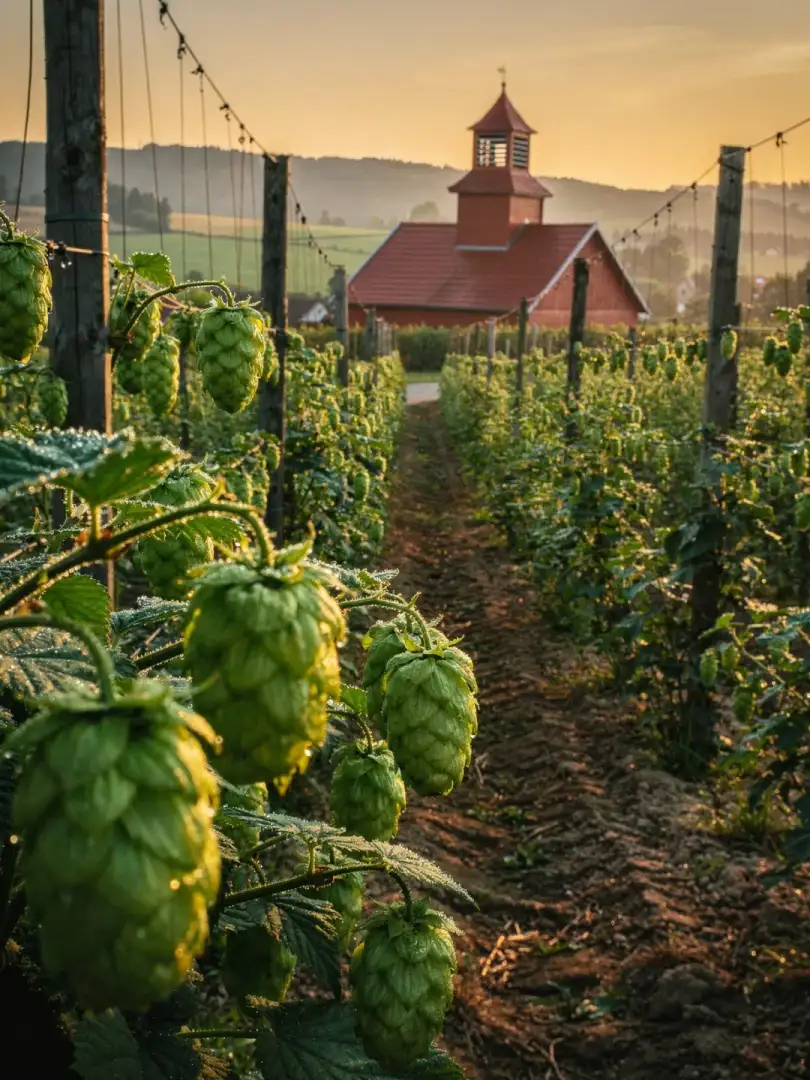
Saaz from Žatec
Hops
Hops barely grow around Pilsen; they come from Žatec, known in German as Saaz. The town lies in northwestern Bohemia, and its hops are called Saaz. According to the brewery, Josef Groll used them exclusively, and at Pilsner Urquell they remain the brand's signature to this day. The name Žatecký chmel has been a protected designation of origin (PDO) across the EU since 2007.
The classic variety is Saaz Late, known in Czech as Žatecký poloraný červeňák. It's an aroma hop, meaning it works more through delicate spice than raw bittering power: herbal, floral, with a touch of hay and citrus peel.
Two properties of hops come together in Pils. Bitterness comes from alpha acids, which only become soluble once the wort is boiled. Aroma comes from essential oils, which evaporate quickly. That's why brewers add hops in several portions, the first early on for bitterness, later ones just before the end of the boil for aroma.
How bitter is a Czech Pils? The style guideline for Bohemian Pils calls for 30 to 45 bitterness units, or IBU. That's more than a Helles, yet thanks to the soft water, it doesn't come across as harsh. A given brand may fall above or below this range; the number on the label or brewery's website counts more than any rule of thumb.
For anyone wanting to see Saaz hops firsthand, Žatec is the place to go. How they're grown and harvested there is covered in the Saaz Land region. Here it's enough to know that a Pilsner beer would taste quite different without this hop.