Barley, dark malt
Malt & Grain
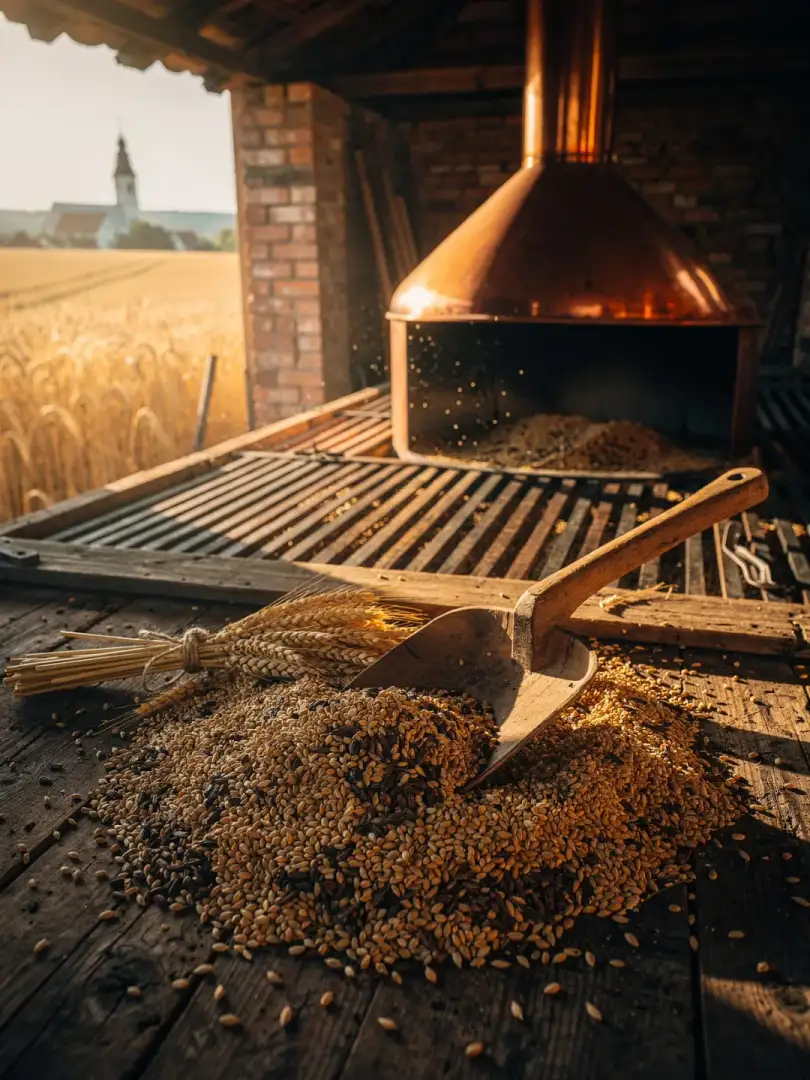
The dark lager from U Fleků owes its color to the malt. Barley is soaked, allowed to germinate, and then dried in a kiln, a heated drying chamber. The longer and hotter the malt sits there, the darker and sweeter it becomes, right up to roasted notes reminiscent of bread, caramel and cocoa.
The style standard for Czech dark lager calls for a color of 33 to 69 EBC (a measure of beer color). That ranges from deep amber to nearly black-brown. Precisely because of this range, the beer is considered not heavy but full-bodied and surprisingly drinkable.
In Czech breweries, malt is traditionally mashed using the decoction method. A portion of the mash is removed, boiled separately, and then returned to the rest. This raises the temperature in stages and gives the beer a round, slightly sweet malt character. How exactly each brewery proceeds depends on the house.
At Staropramen and the small house breweries alike, everything begins with barley. Maltsters turn it into malt, which then arrives at the brewhouses as a finished product. The composition of the grist, meaning the mix of malts in the brew, remains each house's own decision.
For pale beers like Czech lager, brewers turn to lightly kilned Pilsner malt, which brings a clean grain aroma and a golden hue. Dark beers additionally receive caramel or roasted malt. The interplay is the whole art: too little feels flat, too much makes the beer bitter and dry.