Ale Yeast, Funk, Barrels
Yeast & Fermentation
Pale ale, IPA, and most of the city's other beers rely on top-fermenting yeast. It ferments warm, usually between 18 and 22 degrees Celsius, and rises to the surface as it works. Ale yeasts also produce esters, fruity aroma compounds that round out the beer. Unlike lager, ales don't need a long cold-conditioning period.
Yeast converts sugar into alcohol and carbon dioxide. The higher the original gravity—the sugar content of the wort before fermentation—the more alcohol results: by style guidelines, an American pale ale starts at 11.2 to 14.7 degrees Plato, an American IPA at 13.8 to 17.1. Brewers often harvest some of the yeast after fermentation and reuse it in the next batch.
American ale yeasts tend to be restrained so the hops can take center stage. With hazy IPA, it's the opposite: yeast and hop oils are deliberately kept in suspension, giving the beer its cloudy, juicy, fruity character.
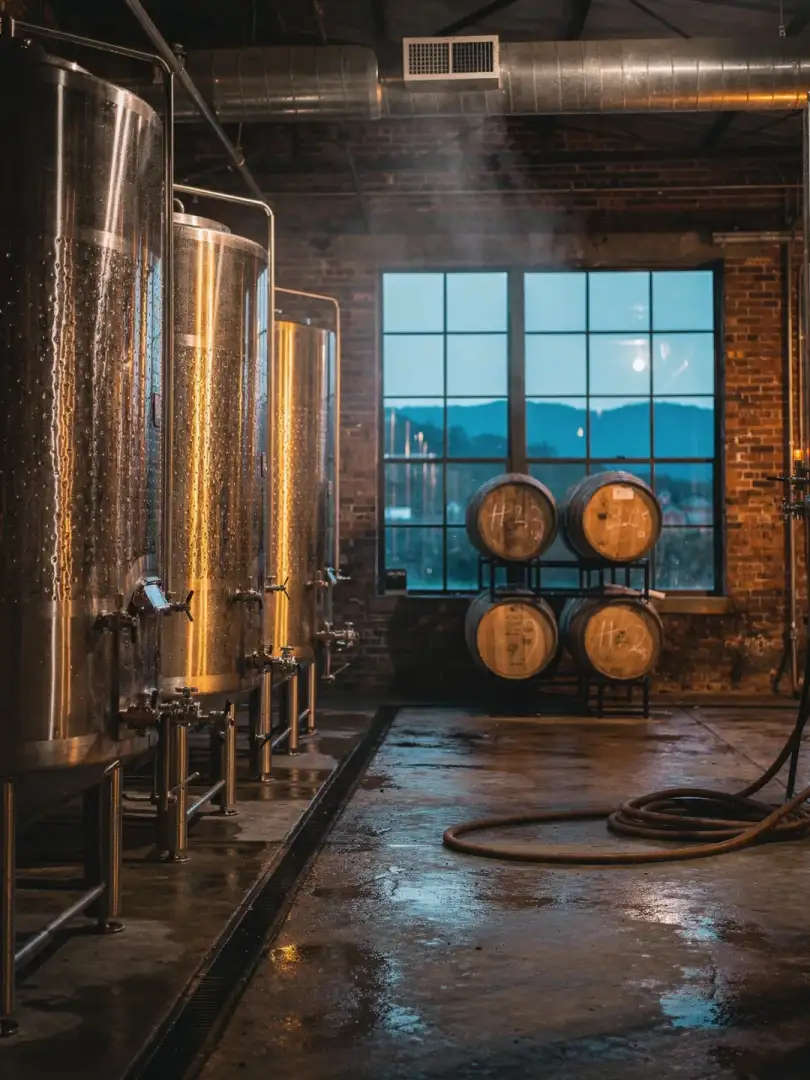
One exception is Wicked Weed's Funkatorium. According to press reports, it was the first dedicated sour beer taproom and barrel-aging facility on the East Coast. In the wooden barrels, lactic acid bacteria and the yeast genus Brettanomyces work alongside the brewer's yeast. They sour the beer and give it aromas reminiscent of leather, barnyard, or dried fruit.
Barrel-aged beers like these take time, often months, and every blend tastes different. The city's larger breweries, by contrast, rely on stainless steel tanks: clean, consistent, and easier to control.