Caramel and Oats
Malt & Grain
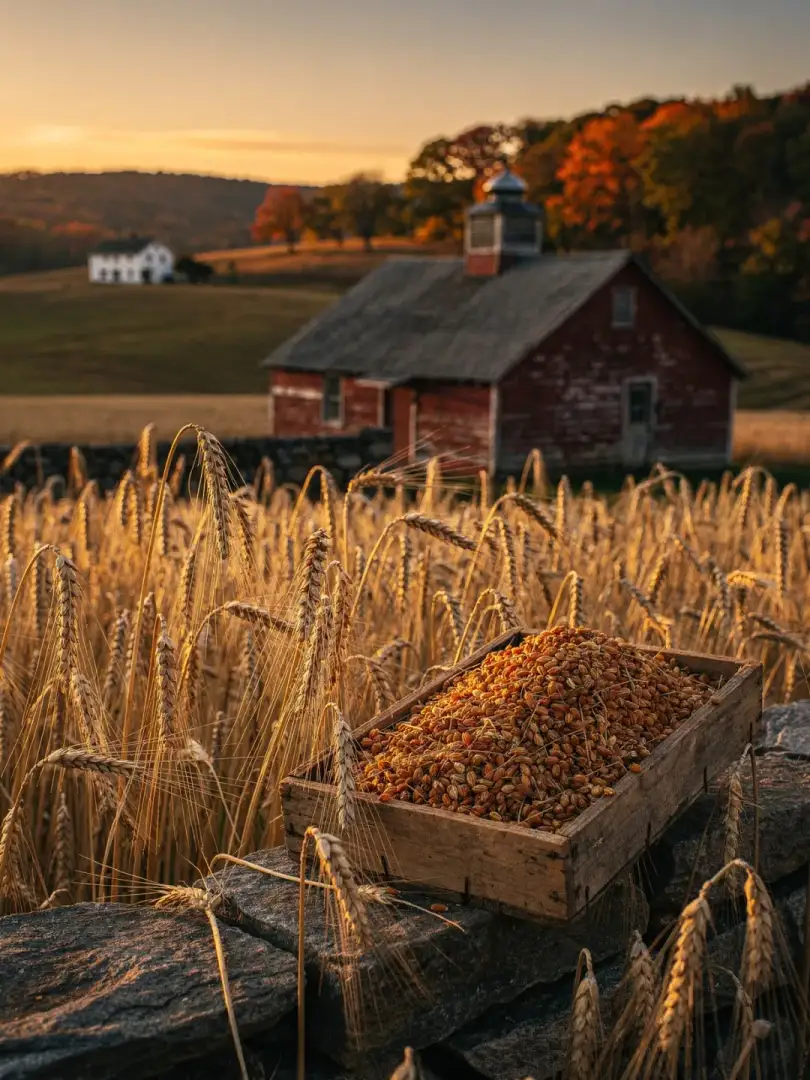
What malt goes into Boston Lager? According to the brewery, it's two-row barley malt along with caramel malt. Two-row means the ear carries two rows of kernels, as opposed to six-row barley, which brings more protein. The caramel malt gives the beer its amber color and a mild sweetness.
Caramel malt is made by heating the germinated grain while it's still moist, before it's dried. The sugar in the kernel liquefies and caramelizes, which is why the beer later tastes of toffee and bread crust. More caramel malt means more sweetness, but too much can make a lager taste sticky.
Massachusetts itself grows very little brewing barley. Even back in colonial days, malt was mostly an import, and brewers supplemented it with local corn. Today, most of the malt still comes from maltsters outside New England.
The hazy beers from Trillium and Tree House rely on different ingredients. Alongside barley malt, the mash often includes wheat malt and rolled oats. The oats are unmalted, contributing protein and cell material that make the beer fuller and softer on the palate while adding to the haze.
That explains the difference in the glass. A clear lager lives on its malt, while a hazy IPA uses malt and oats more as a foundation for the hops. Even small shifts in the ratio of caramel malt or oats noticeably change a recipe, and these are exactly the dials Boston brewers adjust with every new batch. When tasting a beer, you first notice how much malt and how much grain character it carries.