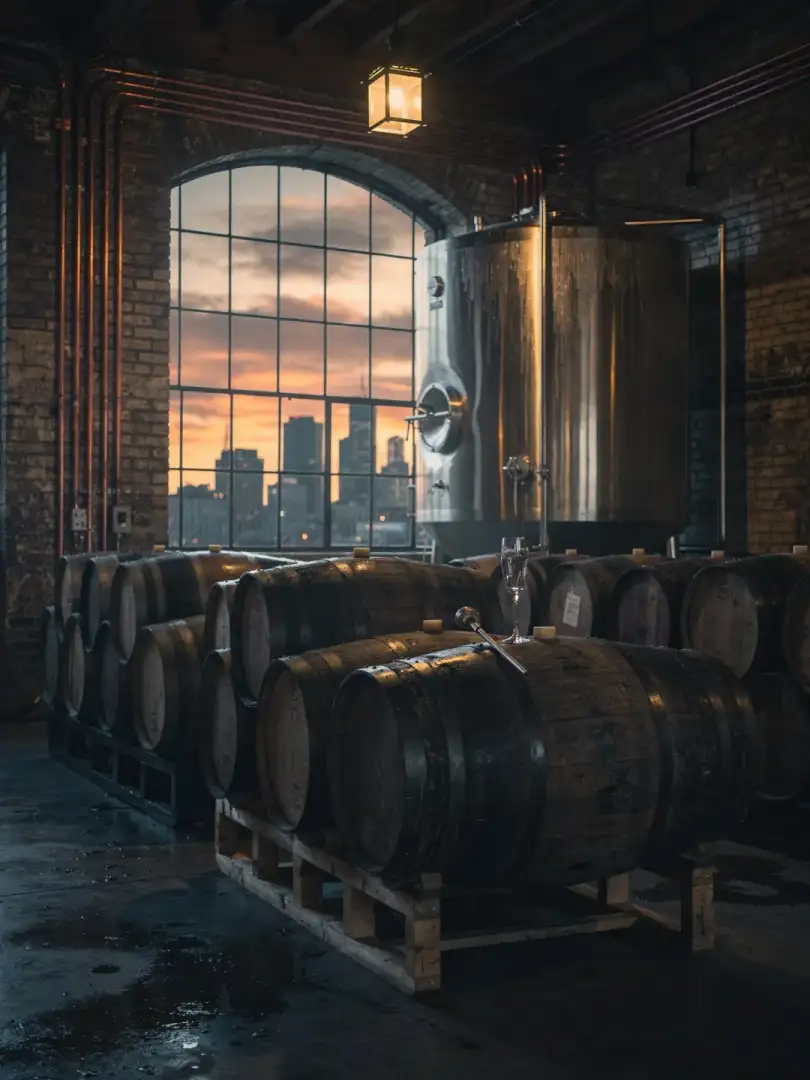
Ale Yeast, Bourbon Barrel
Yeast & Fermentation
Top-fermenting or bottom-fermenting? In Chicago today it's almost always top-fermenting yeast, working at room temperature, usually between 64 and 72°F (18–22°C). It ferments malt sugar quickly, settles on the surface, and contributes light fruity aromas. A pale ale or IPA doesn't need months of cold conditioning—after one to two weeks, the beer is ready to drink.
Old Chicago brewed differently. The German breweries of the 19th century fermented their beer with bottom-fermenting yeast at just a few degrees above freezing and lagered it cold for weeks, true to the name lager. That's what the ice cellars were for. Only with refrigeration technology did this process become possible year-round, and for many decades the American lager style dominated.
One distinctive feature of the city is the wooden barrel. Anyone making bourbon—American whiskey distilled from corn—must age it, under US regulations, in new oak barrels charred on the inside. Afterward these barrels are empty but still saturated with vanilla, caramel, and whiskey notes. Breweries buy them used and fill them with strong beer.
During barrel aging, an imperial stout like Goose Island's Bourbon County Stout rests in wood for several months. The barrels sit in warehouses that run cold in winter and warm in summer. As the seasons change, the beer moves in and out of the wood, picking up flavor along the way. Depending on the barrel, each vintage turns out a little different, even with an identical recipe.
Strong beer demands a lot from yeast. With high original gravity—meaning a lot of dissolved sugar in the wort—the brewery must pitch plenty of healthy yeast and manage fermentation carefully, since yeast struggles under high alcohol levels. Otherwise the beer stays sweet and cloying or develops off-flavors. This applies just as much to bourbon-barrel stout as to any strong beer.