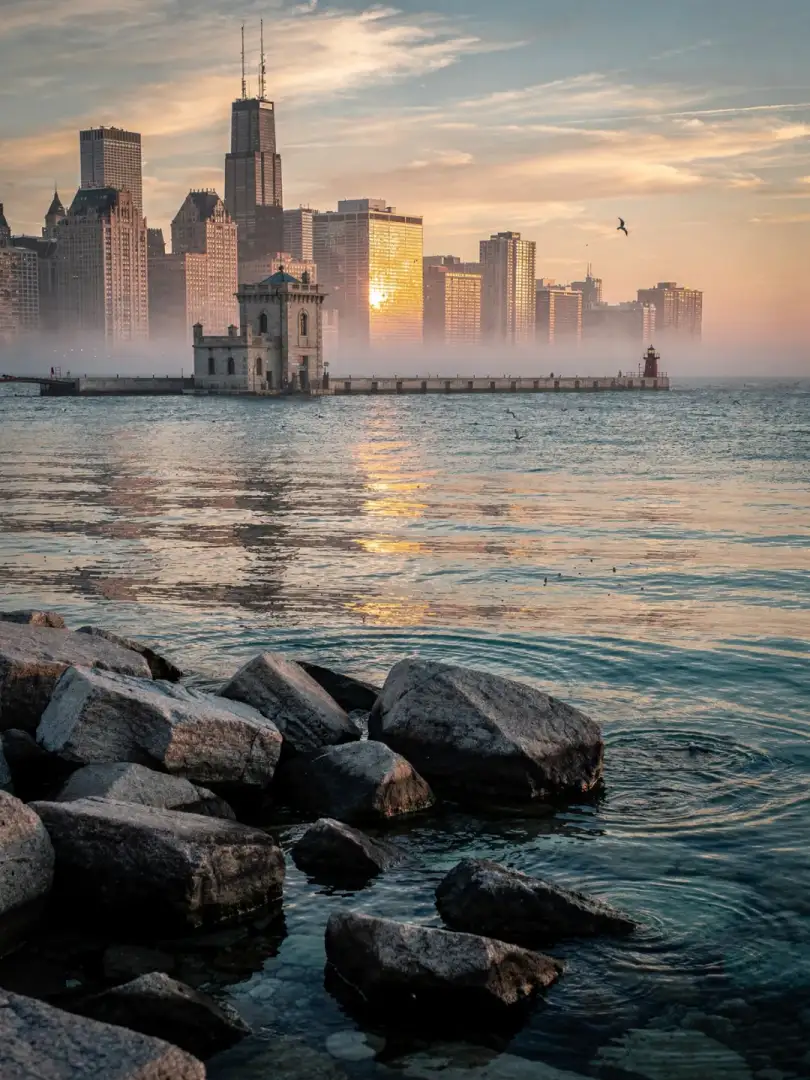
Lake Michigan, Ice Houses
Water & Soil
What water is Chicago beer brewed with? Lake Michigan, since the city draws its tap water from the lake and treats it at municipal waterworks. Goose Island itself, the island in the north branch of the Chicago River that gave the brewery its name, sits right in the middle of this water system. The lake is the reason breweries settled here in the first place: fresh water was abundant, and ships carried barley and hops right up to the docks.
For a long time, though, things flowed the wrong way. The city's sewage ran through the Chicago River into the very lake people drank from. It wasn't until the river's flow was reversed via a new canal, completed in 1900, that waste was diverted away from the drinking water supply.
Climate set the rhythm. Chicago has cold winters and hot, humid summers, and bottom-fermented beer needs cool temperatures. So brewers cut ice blocks from the lake in winter and stored them in heavily insulated ice houses well into spring. That ice cooled the fermentation cellars where the barrels sat. Only with the arrival of refrigeration machines did brewers become independent of the weather.
Today, lake water shapes the flavor less than you might think. Most breweries treat their water themselves, stripping out minerals or adding specific salts to fine-tune it for pale ale, IPA, or stout. A stout can handle more carbonate, since dark malts bring their own acidity, while a pale, bitter ale calls for a different balance.
The ground beneath the city is flat and clay-rich, with no rock cellars like those found in Franconia. That's why aging in Chicago still happens above ground: barrels mature in halls and warehouses rather than in caves. This becomes important during barrel aging, as the seasons work their way through the wood.