Prairie, Exchange, Corn
Malt & Grain
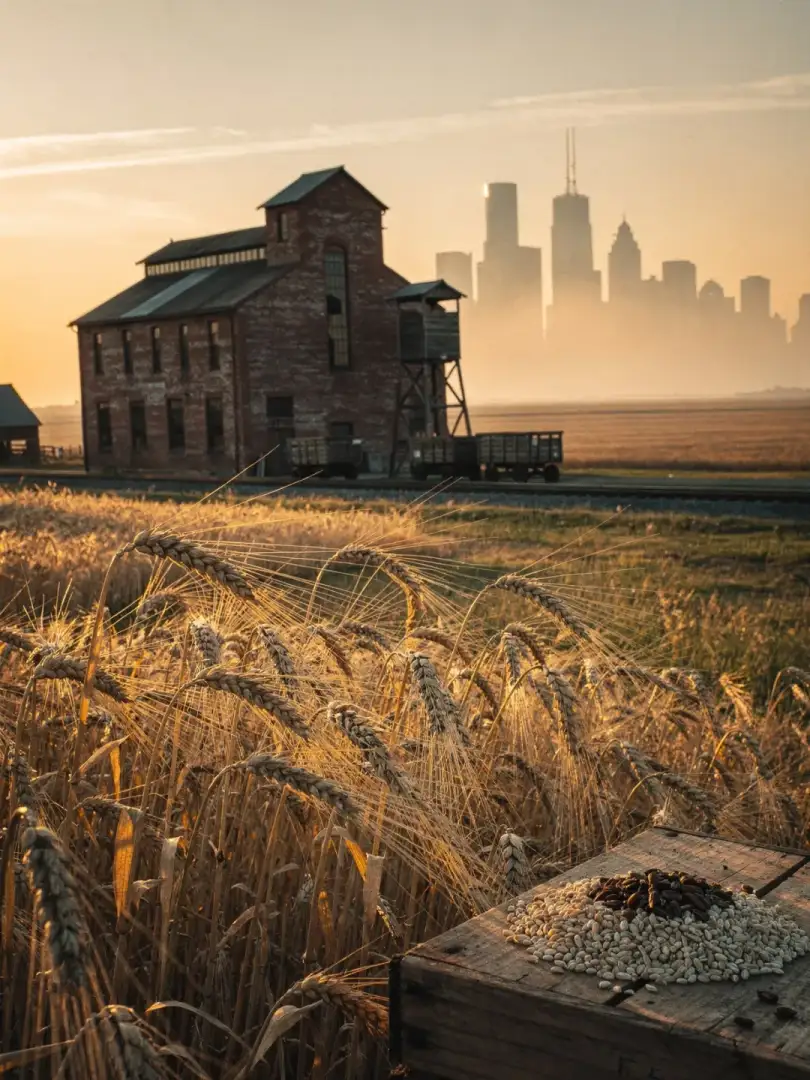
Chicago was where prairie grain was traded. The Chicago Board of Trade was founded here in 1848, where barley, wheat, and corn were bought and sold. For brewers, that meant short distances to barley, and the city also attracted major maltsters, such as Wacker & Birk, which combined brewery and malthouse in one operation.
Six-row barley grew predominantly across the American Midwest. It has six rows of kernels on each ear, and the grains are richer in protein and enzymes—substances that convert starch into sugar. This proved useful when part of the malt was replaced with corn or rice, and it's exactly how the pale, light lager of Chicago's old big breweries came about.
The new breweries work on a different principle. For pale ale and IPA, they use a very pale base malt along with a touch of caramel malt for color and sweetness. Maltsters in neighboring Wisconsin, such as Briess in Chilton, supply malt in a wide range of roast levels. An imperial stout needs a lot of it, since starch converts to sugar and sugar to alcohol—high starch content demands plenty of malt.
The dark color and cocoa and coffee notes of a stout come from roasted malt. During kilning—the drying and heating of germinated grain—temperature and duration determine whether a malt tastes of biscuit, caramel, chocolate, or coffee. Roasted barley and chocolate malt give stout its deep color without brewers needing to add sugar.
Wheat plays a supporting role in Chicago. Goose Island's 312 Urban Wheat Ale, named after downtown's old area code, is a top-fermented wheat beer in which part of the malt bill is wheat.