Sourced In, Cascade
Hops
Hops barely grow in Colorado; the country's major hop fields lie farther northwest. According to the 2025 BarthHaas report, the US cultivated 17,057 hectares and supplies about 40 percent of the world's alpha acid, the bittering compound in hops. The center is Washington's Yakima Valley, with Oregon and Idaho adding to the total. Brewers in Colorado buy their hops from there.
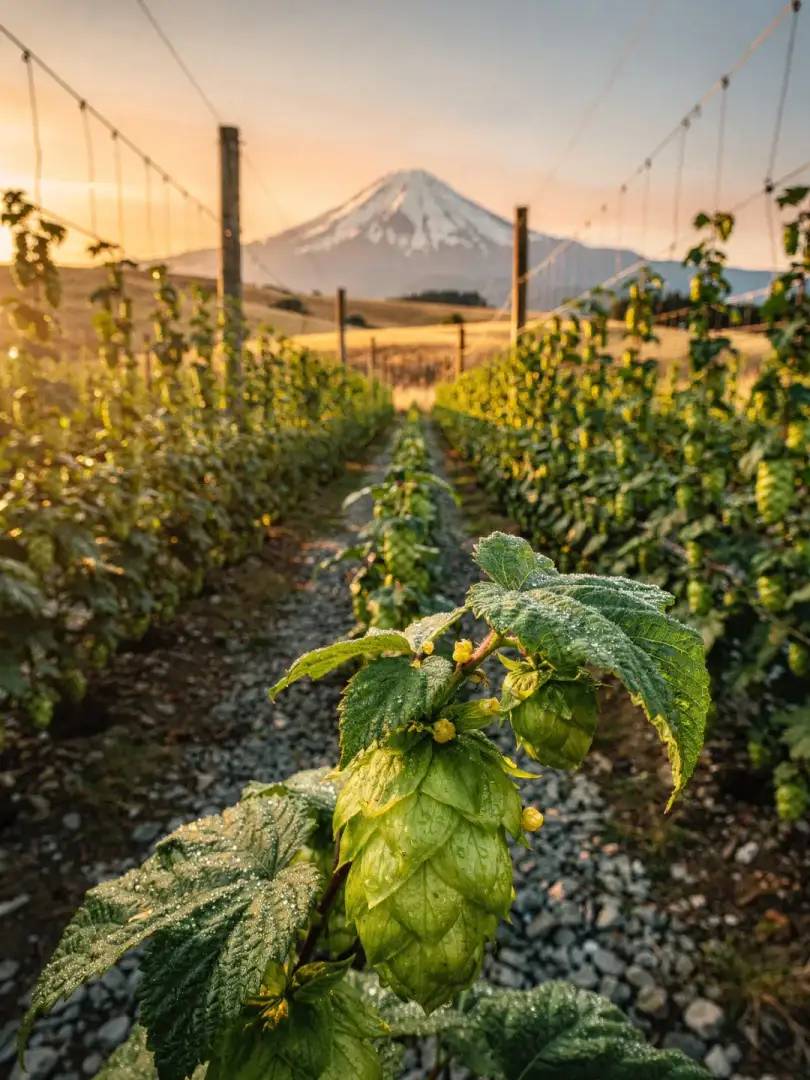
Hops are the cone of a climbing plant grown in rows along tall wires. In the brewery, they give beer bitterness and aroma. The bitterness comes from alpha acids that transfer into the wort during the boil. The aroma comes from essential oils, preserved through a short boil or late addition. Bitterness is measured in IBUs, International Bittering Units, determined through lab analysis.
Coors Banquet and other American lagers are lightly hopped. The BJCP style guidelines, set by the American competition organization for beer judges, list 8 to 18 IBU for American lager. By comparison, a German pilsner runs 22 to 40 IBU. Here, brewers are after drinkability, not hop bite.
Craft beers shift the emphasis. An American Pale Ale clocks in at 30 to 50 IBU and shows citrus, pine, and resin. The defining variety is Cascade, released in 1972, which shaped the aroma of countless American ales. Craft brewers in Fort Collins, Boulder, and Denver buy it, like their other hops, from the Northwest.