Cold and Warm
Yeast & Fermentation
Is Brooklyn Lager an ale or a lager? A lager—it's bottom-fermented with a yeast that works at low temperatures. Typical fermentation runs around 8 to 13°C, followed by extended cold storage, during which the beer clarifies and rounds out. The yeast itself is a hybrid, first isolated as a pure culture in Copenhagen in 1883.
After fermentation, many American brewers turn to dry hopping. Hops are added to the cold tank once fermentation is largely complete. This brings aroma but almost no bitterness. How much it shapes a given lager depends on the recipe.
The Belgians in Cooperstown work differently. Saison and dubbel ferment top-down, with yeasts that need warmth. A saison often ferments at 20 to 25°C, which gives it a fruity, spicy character. Belgian brewers frequently bottle-condition many of their beers with fresh yeast or sugar, allowing continued fermentation in the bottle and natural carbonation.
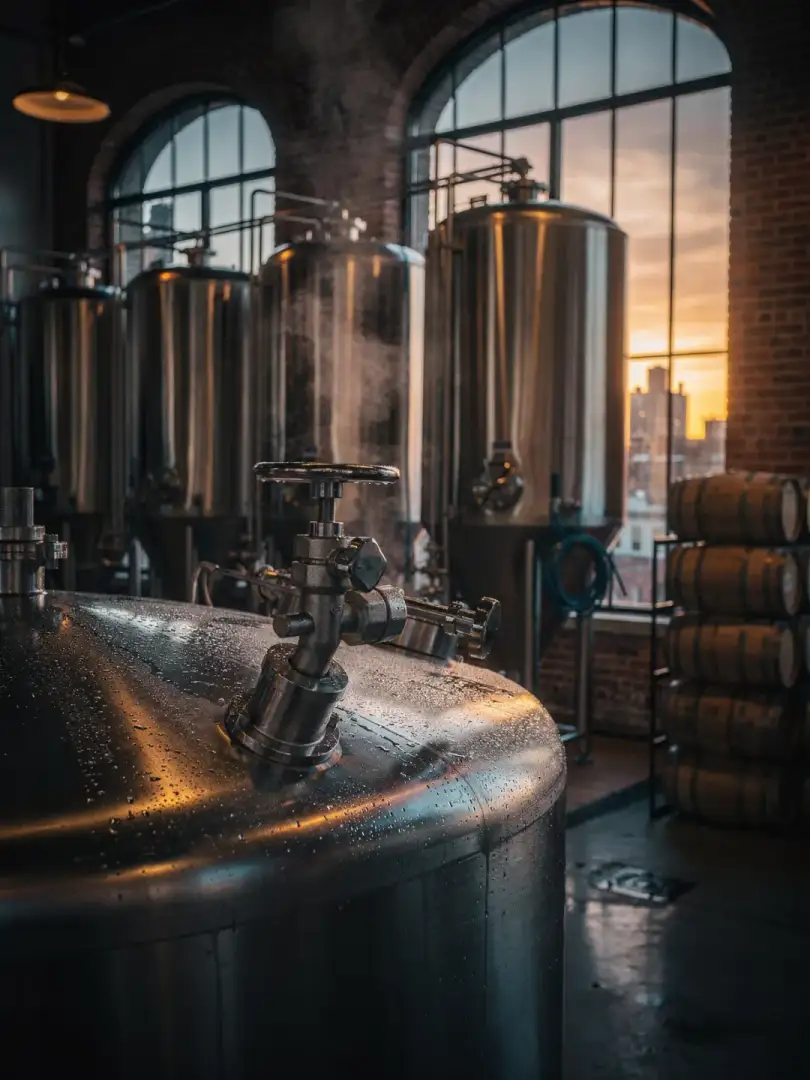
The shared craft here is patience. A lager needs weeks; a strong Belgian beer needs months. Brewers in New York often solve this with banks of stainless steel tanks, since floor space is scarce in the city.
This makes the fermentation cellar something like a factory with two temperature zones: one for cold storage, the other for warm fermentation. The differences show up later in the glass. Anyone touring a brewery in Williamsburg will often see both zones side by side.