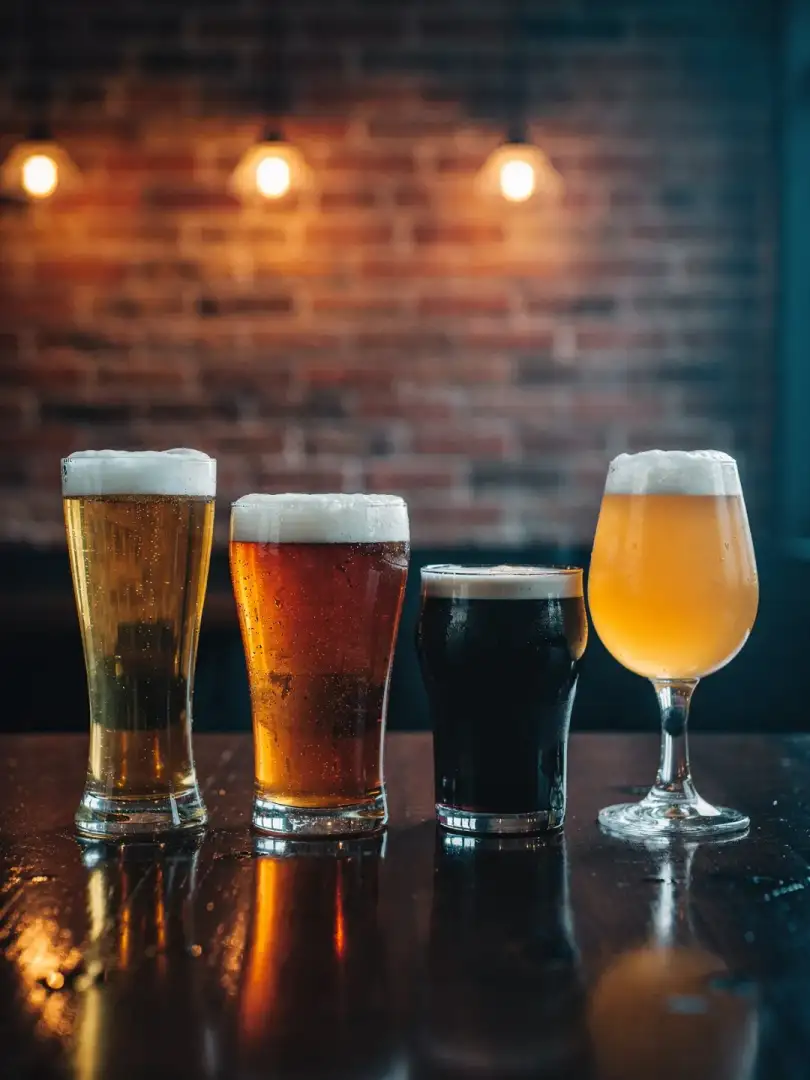
Lager, Saison, Dubbel
Beer Styles
What style is Brooklyn Lager? It sits close to the Vienna lager category: amber-colored, bottom-fermented, with malty aroma and moderate bitterness. Brooklyn Lager doesn't fit neatly into a single style box—the brewery itself calls it an American amber lager. The style arrived in America in the 19th century with immigrants from Central Europe.
The difference from a Bavarian Helles lies in color and malt. A Helles is straw-yellow; a Vienna lager is copper-colored, with caramel and toast notes. Its alcohol content typically falls between 4.7 and 5.5 percent ABV, within the range of a standard full-strength beer. Compared to a Pilsner, it carries less hop bitterness and more malt character.
Why is there so much saison and dubbel in New York? Ommegang helped popularize Belgian styles in the US, since the founders knew them firsthand as importers. Drink a saison in Cooperstown and you're not getting a copy—you're getting an American beer with Belgian roots.
The saison style hails from Wallonia in Belgium, originally brewed on farms. It's top-fermented, dry, spicy, and strongly carbonated. Ommegang brews Hennepin, a saison in the Belgian tradition.
The dubbel comes from Belgian monasteries and is dark, fruity, and soft, with notes of plum, raisin, and caramel. It differs from a tripel in both color and dark malt content. Ommegang Abbey Ale is one example—an abbey beer, not a Trappist beer.
Vienna Lagerbottom-fermented
- Original gravity
- 11.9–13.6 °P
- Alcohol
- 4.7–5.5 % vol
- Bitterness
- 18–30 IBU
- Colour
- 18–30 EBC
Copper to amber, toast and caramel, clean finish.