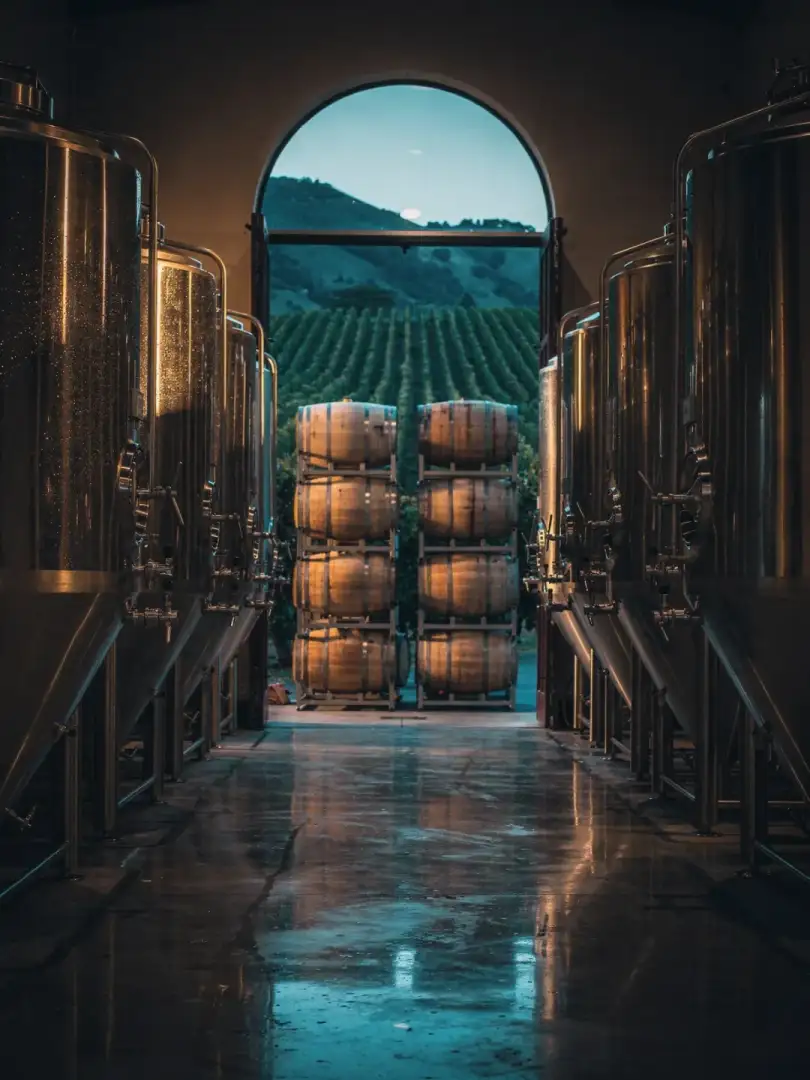
Chico Strain, Wine Barrels
Yeast & Fermentation
Top-fermenting means the yeast works at room temperature and rises to the top during fermentation. Pale Ale, IPA, and Double IPA all ferment this way, usually around 18 to 21 degrees Celsius. This happens faster than with a lager and produces fruity byproducts known as esters.
In these beers, though, the yeast isn't meant to stand out. A clean ale strain is preferred, one that ferments sugar completely and lets the hops take the spotlight. The "Chico" strain, named after the town, is popular among homebrewers worldwide and traces back to Ken Grossman's brewery.
Fermentation takes place in tall, cone-bottomed stainless steel tanks. At the end, the yeast settles into the cone and can be drained off, allowing brewers to reuse it for the next batch. After roughly a week of primary fermentation comes conditioning, which for many IPAs includes dry hopping—a process that takes a few days.
Russian River reveals another side of the region. Some of its beers are aged in wine barrels alongside wild yeasts and lactic acid bacteria. These beers turn sour and complex over time, often aging for more than a year. This isn't spontaneous fermentation like Belgian lambic—the brewer deliberately adds the microorganisms and decides which barrels to blend together later.
All of this demands strict cleanliness. A beer meant to taste of hops, not off-flavors, has little tolerance for sloppy fermentation. That's why hygiene in the fermentation cellars from Chico to Santa Rosa plays a leading role.