Warm, Visible, Fresh
Yeast & Fermentation
Nearly all the region's beers are top-fermented. Top-fermented means the yeast works at warmer temperatures, usually between 18 and 21 degrees Celsius, and collects at the top by the end. Primary fermentation takes one to two weeks, after which the beer conditions in the tank for a few more days.
Pale Ale and IPA are usually fermented with a yeast that contributes little flavor of its own, so the hops can take center stage. Still, the warmth adds a touch of fruit: fermentation aromatics called esters, reminiscent of pear, apple, or apricot, that complement the hops' citrus notes.
It's much the same with American Hefeweizen. It ferments cleaner than a Bavarian Weissbier, with banana and clove usually taking a back seat and the hops getting more room to shine. Widmer Hefeweizen stays cloudy because the yeast remains in the beer rather than being filtered out. How much yeast you see in the glass depends on how you pour it: swirling the sediment in the last sip into your glass gives you a cloudier, fuller-bodied pour.
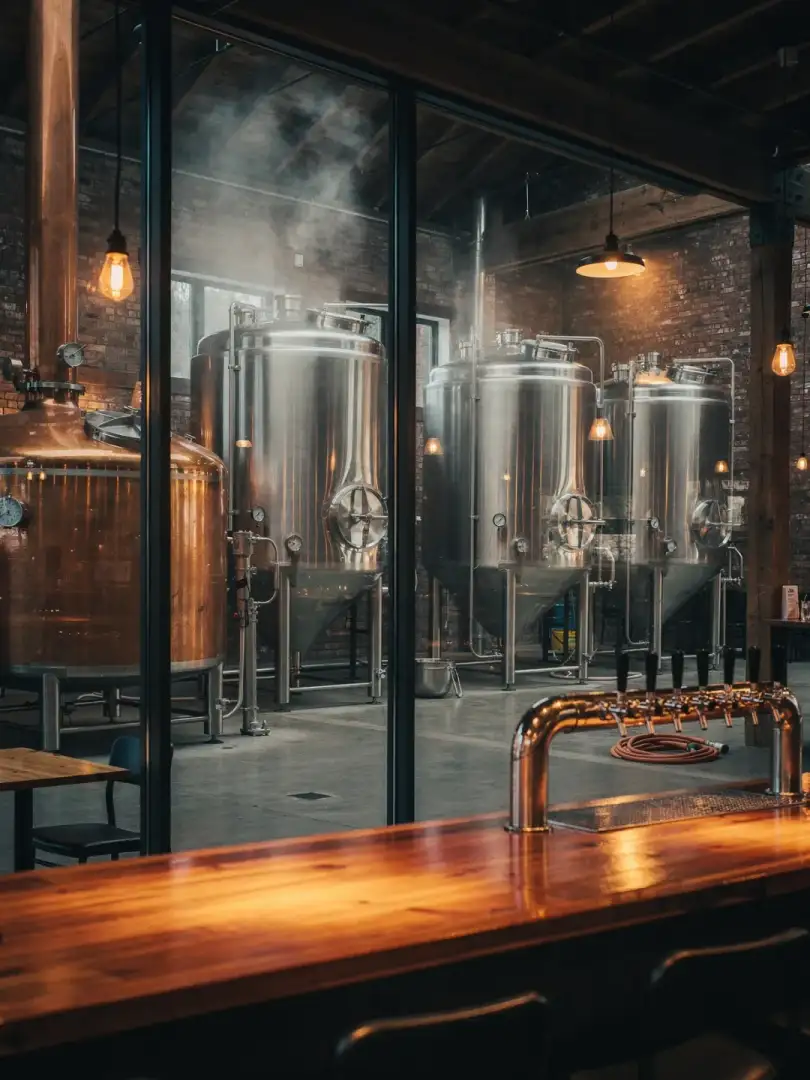
Since the 1985 law, you can often watch the whole process with your own eyes. Behind a brewpub's bar stand bare stainless steel tanks, with the beer flowing straight from them to the tap with no detour. Deschutes' Black Butte Porter is top-fermented just like the Pale Ales, only its malts are darker. At Portland Brewing, the city's third craft brewery, things worked the same way from 1986 on: ale yeast, fermented warm, brief conditioning, quickly into the glass. That's the opposite of the months-long lagering cellars known from Bavaria, and it's why a beer from the brewpub is often only a few weeks old.