Lager, Ale, Bud
Beer Styles
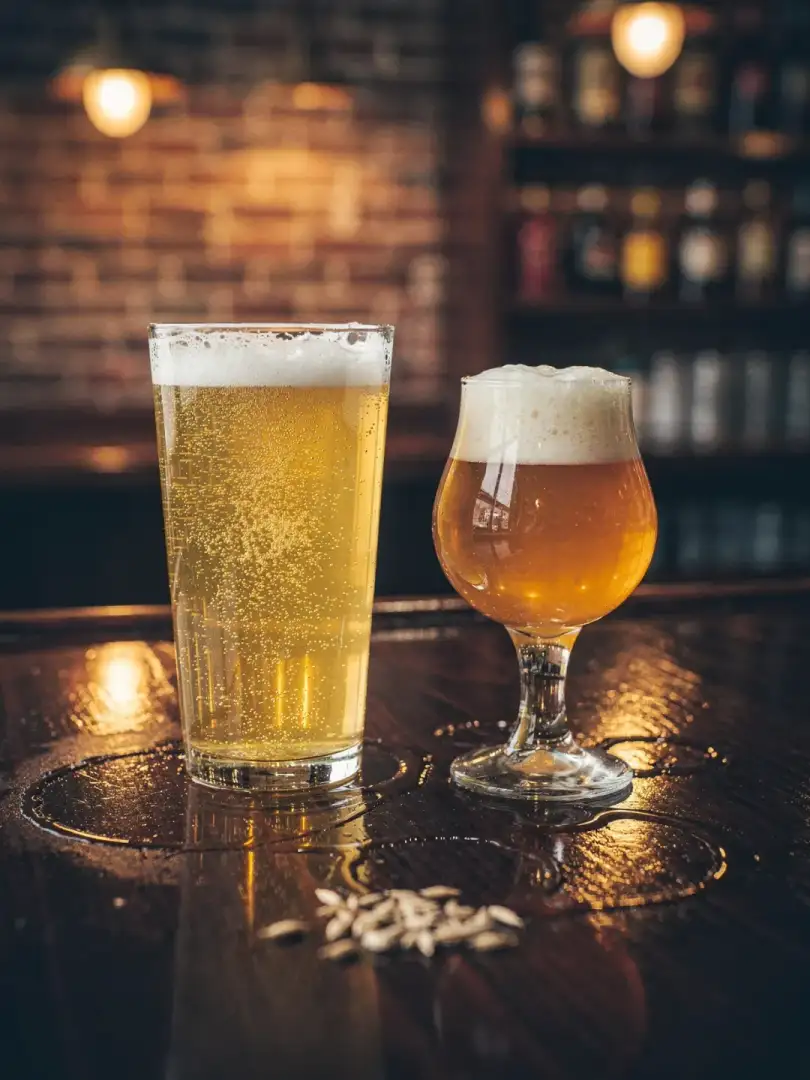
Two styles stand side by side in St. Louis. American lager is pale, lean, and heavily carbonated, with a slightly sweet malt character and almost no hop presence. Budweiser is its best-known example. Per BJCP it falls between 4.2 and 5.3 percent alcohol and 10 to 12.4 degrees Plato original gravity, a measure of dissolved solids in the wort before fermentation. The result is a beer meant for long, easy drinking that won't overwhelm spicy food.
How does this differ from a Pilsner? A German Pils runs 22 to 40 IBU, while an American lager sits at just 8 to 18—the Pils is noticeably more bitter. Pale Ale, meanwhile, is top-fermented, amber-gold, and hoppy: the American answer to English Pale Ale, carrying the aromas of West Coast hop varieties.
The name Budweiser simply means "from Budweis," the Czech town of České Budějovice. The Budějovický Budvar brewery was founded there in 1895; Anheuser-Busch has sold its Budweiser since 1876. The two sides have been fighting over the name and over markets for more than a hundred years.
The EU court ruled that AB InBev holds the right to an EU-wide trademark for Bud, since Budvar couldn't prove use in Austria, France, Italy, and Portugal before 1996. As a result, AB InBev sells under the name Bud in parts of Europe, while Budvar sells in the US under the name Czechvar. The Czech Budějovické pivo is protected as a PGI; the Budweiser from St. Louis is not.
American Lagerbottom-fermented
- Original gravity
- 10–12.4 °P
- Alcohol
- 4.2–5.3 % vol
- Bitterness
- 8–18 IBU
- Colour
- 4–7 EBC
Pale, lean, highly carbonated, minimal hops, a touch of sweet malt.