Pint, Longneck, Cold
Tasting
In the glass, a Budweiser appears straw-yellow, with a thin, quickly fading head and fine bubbles. The first sip is cold and lightly sweet, followed by a dry, almost neutral note reminiscent of bread and rice. Hops are barely detectable, and according to the label the beer runs around 5 percent alcohol.
Anyone looking for a counterpart in St. Louis should try a Schlafly Pale Ale. It smells of citrus and resin, tastes more strongly of malt, and carries a pronounced bitterness that lingers. The Schlafly Hefeweizen, by contrast, shows banana and clove notes familiar from Bavarian wheat beers, while the Oatmeal Stout tastes of coffee and oats.
In the US, beer is usually served in a pint glass, holding 473 milliliters, or 16 US fluid ounces. The bottle, often sold as a longneck, holds 355 milliliters, or 12 ounces. Lager tastes best at 3 to 5 degrees Celsius (37–41°F), while Pale Ale and Stout only reveal their full aroma at around 7 to 10 degrees Celsius (45–50°F).
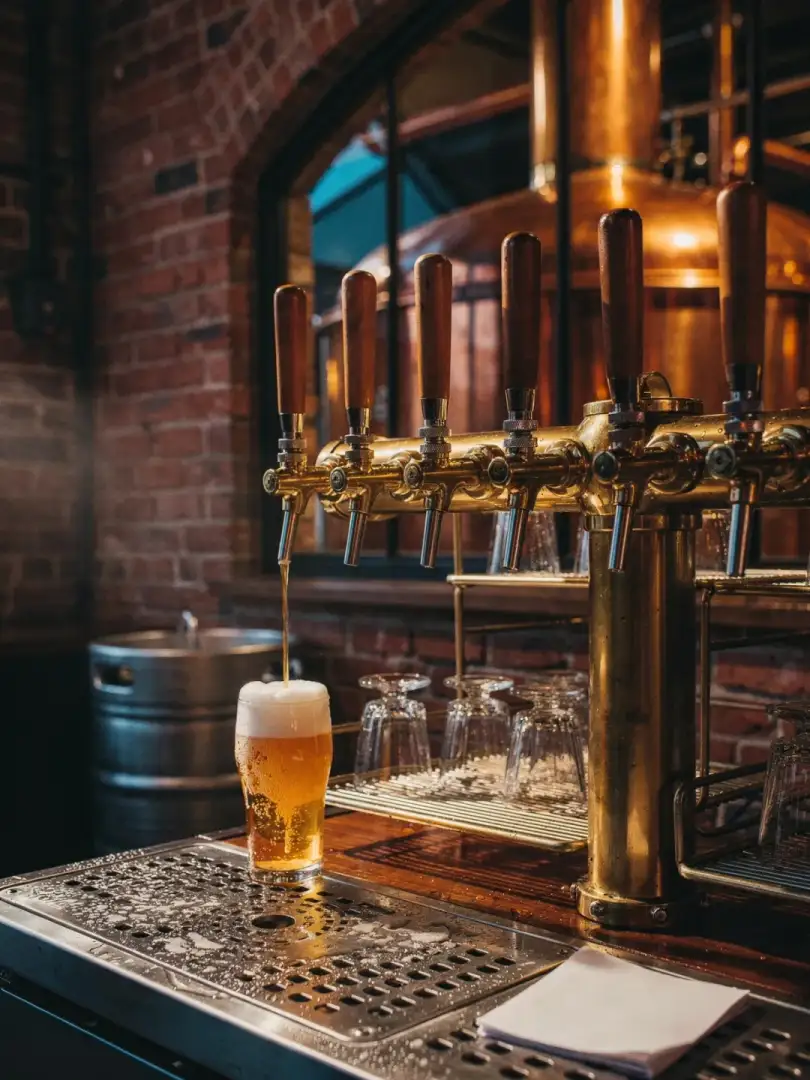
When pouring from the tap, tilt the glass at an angle under the spout so the foam doesn't surge, then straighten it toward the end. The head should sit about two fingers high. Too much foam makes the beer taste flat, too little lets the carbonation escape too fast. At Schlafly's Tap Room downtown, you can compare this difference firsthand.