Dark Lager & Farmhouse
Beer Styles
Is Shiner Bock actually a bock? By name, yes; by style, not really. The brewery itself calls it an American-style dark lager. Under German beer regulations, a true bock must have at least 16 percent original gravity, and Shiner Bock falls well short of that strength. It sits closer to Munich Dunkel, a brown, mild lager with notes of bread crust and light roast.
The name harks back to the settlers' bock tradition: in the southern German-speaking world, bock referred to the strong beer brewed in spring. In Texas, it became a brand name for a dark everyday beer. Judged by German standards, it would be labeled Dunkel. The taste confirms this: the roasted bitterness and intensity you'd expect from a true bock are absent. It's about mildness, not power—which is why it suits long, hot afternoons far better than a heavy doppelbock would.
The second defining style of the Hill Country comes from Belgium and France: the farmhouse ale, closely related to saison. It's top-fermented, dry, fruity-spicy, and often pale. The name recalls farmhouses in Wallonia, where beer was brewed in winter for the summer's harvest workers. Texas has its own farmhouses, but different yeasts and a different climate. Jester King turns this into a house style built on wild yeast and well water.
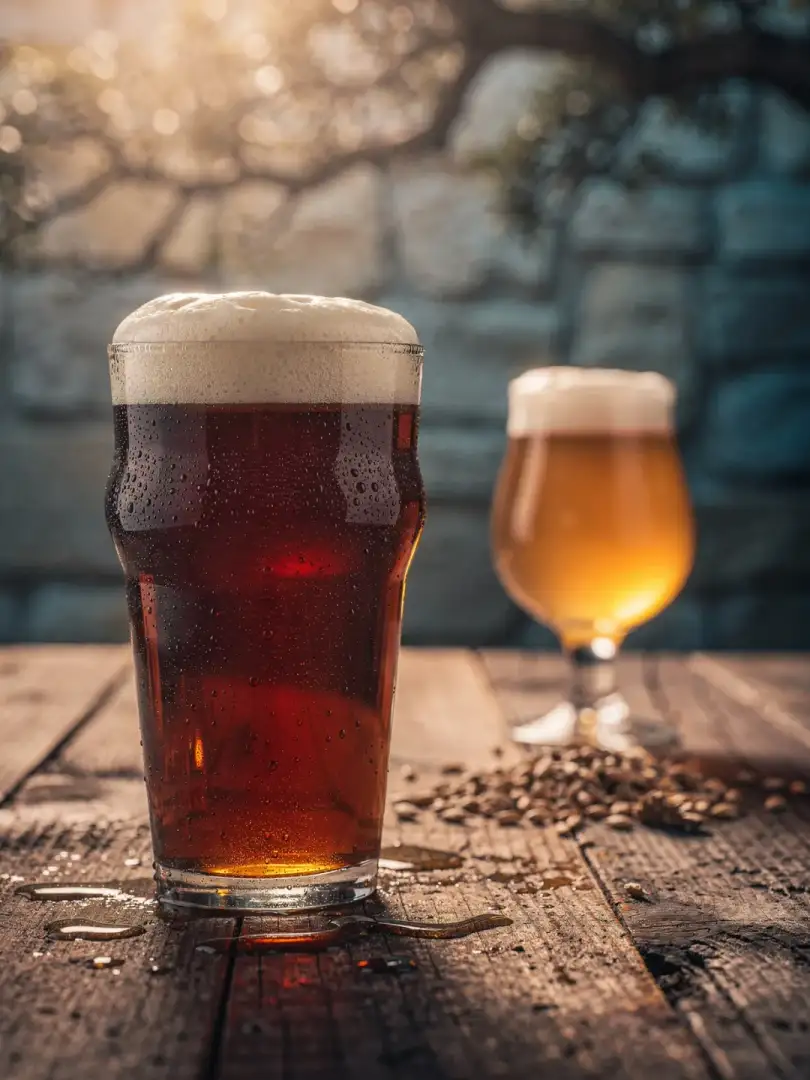
The contrast between the two worlds is striking. The dark lager is smooth, clean, and quiet; the farmhouse ale is lively, dry, and sometimes surprising. Both speak to a sense of home—one rooted in the settlers' origins, the other in the land itself.
Munich Dunkelbottom-fermented
- Original gravity
- 11.9–13.8 °P
- Alcohol
- 4.5–5.6 % vol
- Bitterness
- 18–28 IBU
- Colour
- 33–55 EBC
Brown, bread crust, mild malt, light on hops. A close relative of Shiner Bock.