Citra, Mosaic, Simcoe
Hops
Citra, Mosaic, and Simcoe are the varieties that send American brewers' minds straight to citrus, tropical fruit, and pine resin. All three originated from breeding programs in the Yakima Valley and are trademarked. Yakima Chief Ranches manages them, monitoring the growing acreage through its Footprints program.
Citra emerged as HBC 394 from a 1990 cross and was released by the Hop Breeding Company in 2009. Mosaic followed in 2012, bred from Simcoe and a male Nugget plant. Simcoe itself was developed in the Yakima Chief Ranches program under the late Chuck Zimmerman.
What's the difference between aroma hops and bittering hops? Bittering hops are rich in alpha acid, the compound that transfers into the wort during boiling and gives beer its bitterness. Aroma hops, by contrast, carry essential oils that are added late in the boil or through dry hopping. Citra, Mosaic, and Simcoe are considered dual-purpose varieties that excel at both.
Dry hopping means adding hops to the fermenter once the beer is nearly finished. By this point the beer is cold, so the oils stay locked in while the bitterness barely changes. This is what gives an IPA its intense aroma.
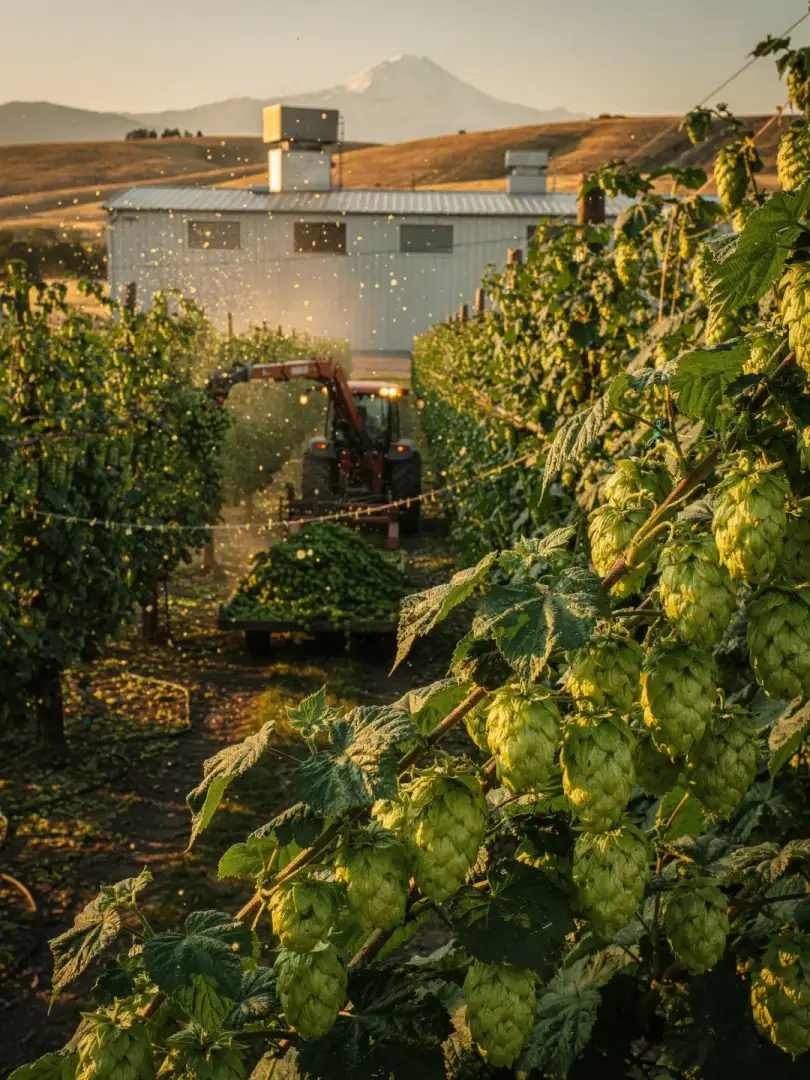
Harvest typically runs from late August into September. The bines are cut down from their trellises; a machine called a topcutter does the job of removing the tops. Machines then strip the cones from the bines, and a kiln dries them at around 54 degrees Celsius (130 degrees Fahrenheit) for seven to eleven hours. Moisture content drops from 40-45 percent down to roughly nine.
A look at global figures puts this all in perspective. According to BarthHaas, US hop acreage stood at 17,057 hectares in 2025, against a global total of 52,660 hectares. The same report puts the US share of the world's alpha acid production at around 40 percent.