Pale Malt
Malt & Grain
In the Yakima Valley, hops cover the fields alongside orchards of apples and cherries. The malt for local beers comes from maltsters that breweries buy from. Brewing here follows the American style, which calls above all for malt that stays out of the hops' way.
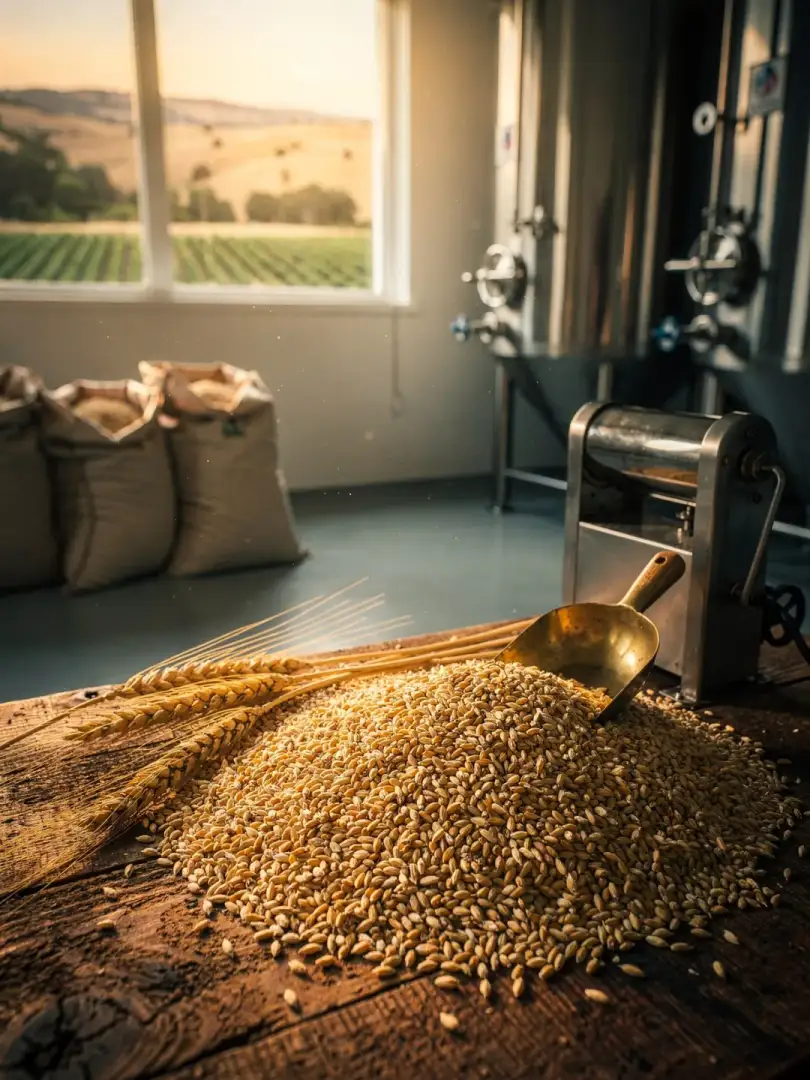
The foundation is pale malt, made from two-row barley. Two-row means the ear carries two rows of kernels; this type of barley yields plenty of starch and little protein. Malting involves letting the grains germinate, then kilning them, meaning drying them in hot air.
A Pale Ale or IPA from the valley tastes of bread, biscuit, or a gentle sweetness, never of smoke or deep roast. This restraint is deliberate: the bitterness and aromas should come from the hops, with the malt simply carrying them along.
A bit of color and body often comes from crystal malts. The damp malt is heated so the sugar inside the kernel liquefies and caramelizes. The result is notes of caramel and toffee that round out a bitter beer.
For hazy IPAs, which pair so well with Citra and Mosaic, wheat malt or oats often join the mix. They make the beer fuller and softer while contributing to the haze. Yeast plays its own role here too, as covered in the fermentation section.
The US has no fixed ingredient law like Germany's Reinheitsgebot. Brewers are free to use corn, rice, oats, or sugar, and big lager breweries often do. The hop-forward brewers of the Yakima Valley, though, generally stick to barley, wheat, and oats.