Copper and Patience
Distillation
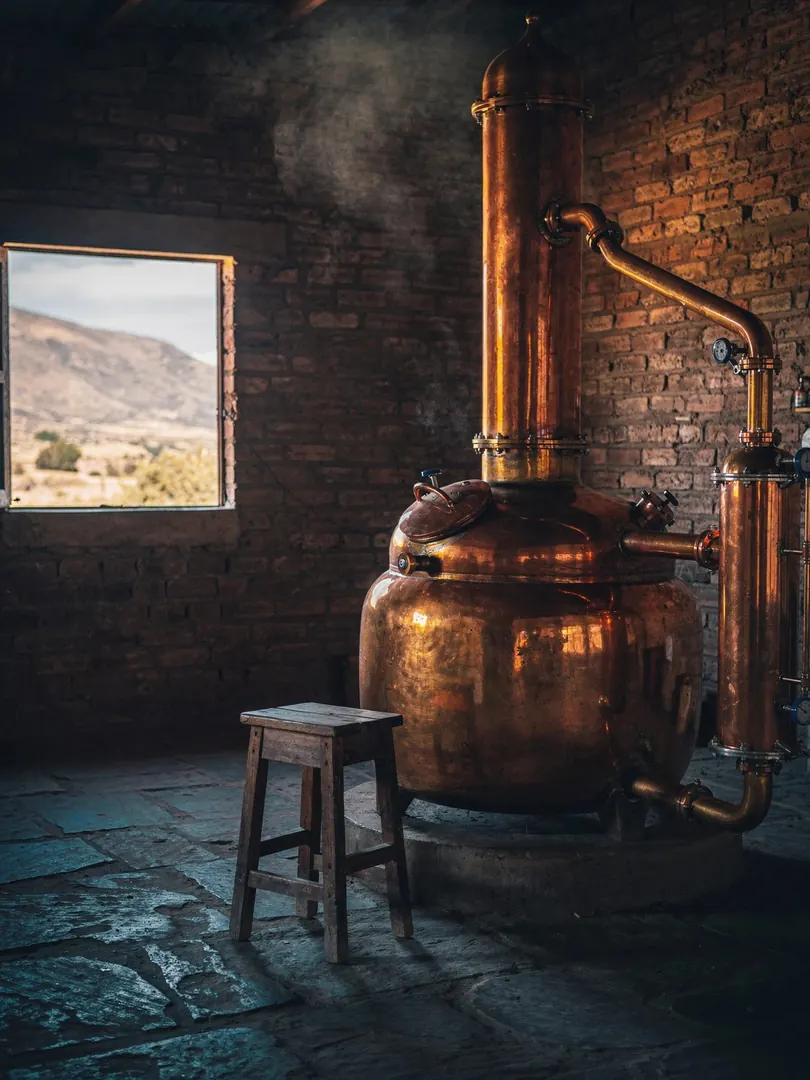
How is Singani distilled? According to common accounts, the wine passes twice through copper stills, similar to Cognac. At Casa Real, reports indicate stills modeled on the Charente style are used. Copper binds unwanted sulfur compounds and lends roundness to the distillate.
The first pass produces a low-proof raw spirit. It's distilled a second time and separated into three parts. The heads, the first drops, smell sharp and contain volatile compounds that are cut away. The heart is the center cut and becomes Singani. The tails, at the end, taste heavy and smoky and are likewise discarded or carried over into the next batch.
The distiller decides by nose and taste when the heart begins and ends. This decision shapes the character far more than any number on a thermometer. With muscat wines, it's especially delicate, since the aroma is very fine and too much tail cut would smother it.
By comparison, Peruvian Pisco is distilled only once, with no water added, and has nothing to do with wood. Singani, in this respect, follows more the path of Cognac, yet remains colorless in the end like a Pisco, since it never sees wood.
One final note: this description explains the process; it is not instructions. In Germany, distilling without a license is prohibited. In Bolivia, the work rests in the hands of houses and master distillers; Casa Real, for instance, has by its own account been family-owned for four generations. The difference between an ordinary and a fine Singani often comes down to precisely where the cut is made between heart and tails.