Wine Comes First
Mash & Fermentation
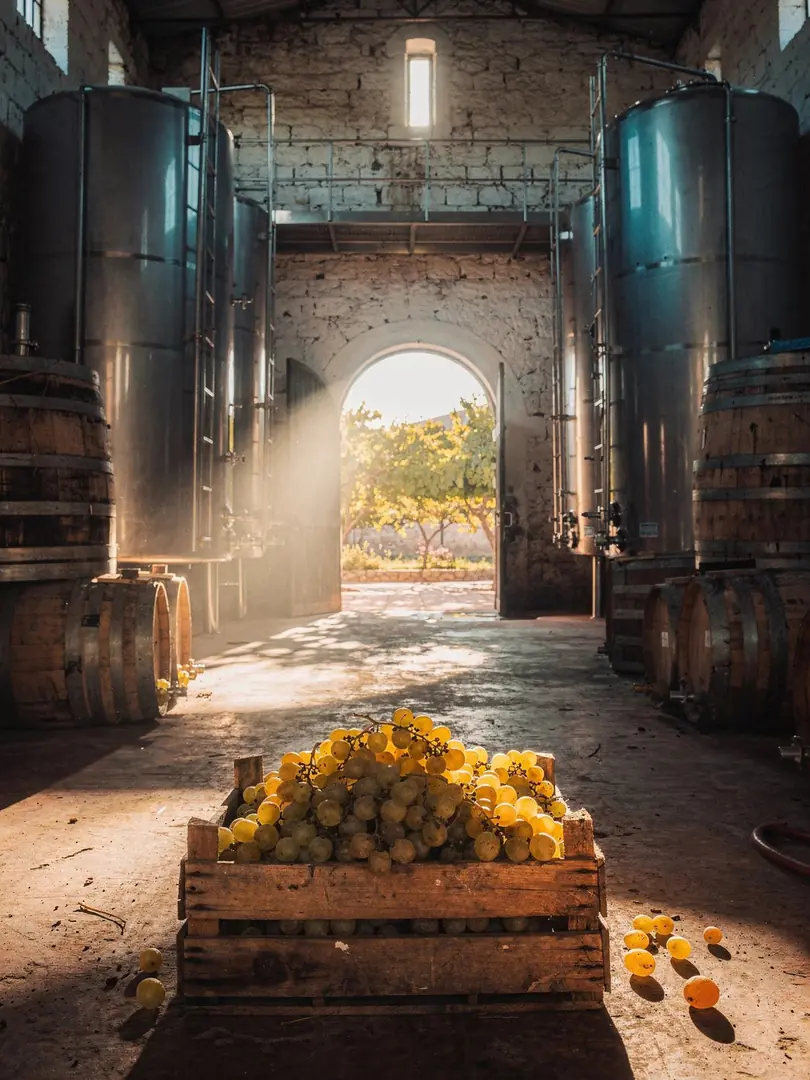
At the start of Singani stands a wine, not a pomace. After harvest, the muscat grapes are crushed and pressed, and the juice flows into tanks. There, fermentation begins, as yeasts convert the must's sugar into alcohol and carbon dioxide. Because no pits or stones are distilled along with it, the brandy stays free of the almond notes familiar from kirsch.
The resulting base wine is the foundation for everything that follows. It needs to retain the muscat aroma, since this fragrance later carries the brandy. Winemakers generally know that cool fermentation preserves more floral character than warm fermentation. In the high altitudes of Tarija, where nights are crisp, this works in the producers' favor.
As with any wine destined for distillation, the base wine isn't a table wine meant for enjoying. From it, a clear brandy will later emerge. How long fermentation takes depends on yeast, temperature, and sugar content. Typically, it concludes within a few weeks.
Once fermentation ends, the wine is ready. It doesn't go into barrels, but simply waits briefly until the distiller has room in the still. Then distillation begins. That this wine will ultimately be distilled rather than drunk is hardly apparent by looking at it. Tasted on its own, it's fresh and floral, with that characteristic muscat fragrance. The distillate later draws out these aromatic compounds and concentrates them.
The principle resembles Cognac: wine becomes a distillate. The difference lies in the grape. While Cognac comes from high-acid, low-alcohol Ugni Blanc wine, muscat wine brings its own sweet, floral fragrance. It's precisely this quality that makes Singani its own distinct brandy.