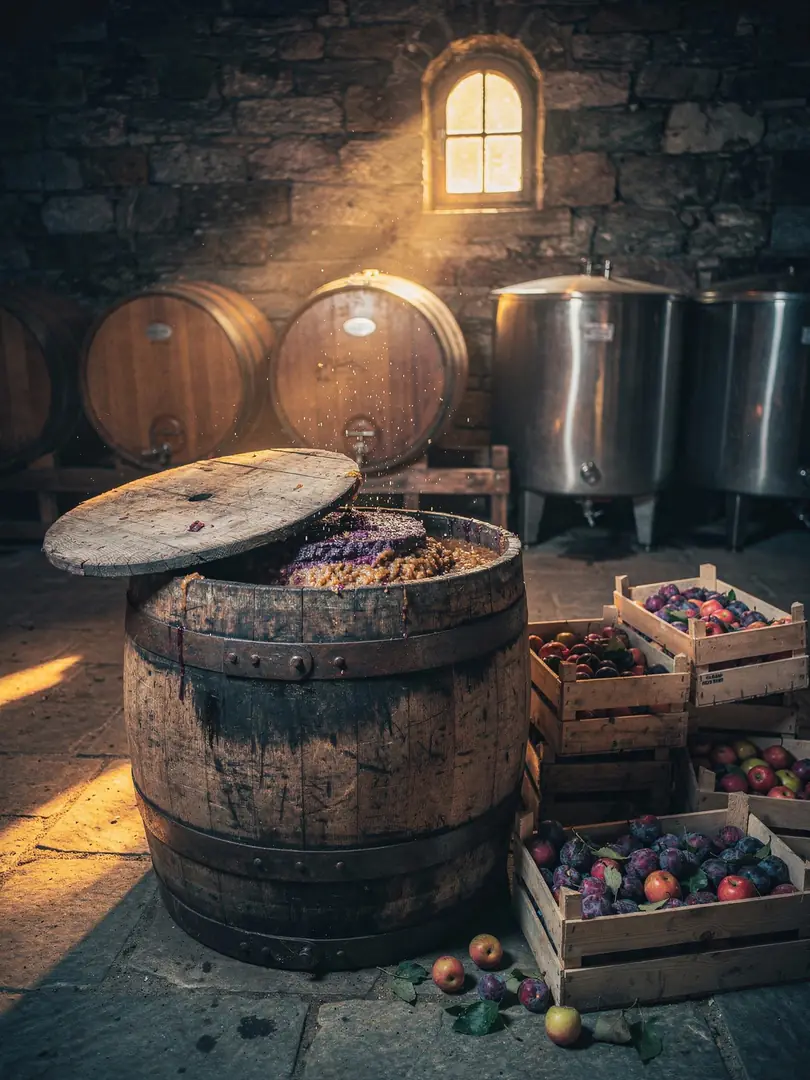
Fermenting in the Cask
Mash & Fermentation
In autumn, the Brennhäusle on the farms fill with the sweet smell of fermenting fruit. The fruit is crushed, and with plums, the pits are kept as intact as possible, since crushed stones release hydrocyanic acid that has no place in the finished brandy. The mash goes into casks or tanks and is usually sealed airtight so fermentation proceeds undisturbed.
Then the yeast takes over: it converts the fruit sugar into alcohol until the mash has only a few percent left. This process also produces methanol. That has nothing to do with poor distilling — it comes from the pectin in the cell walls and is therefore present in every fruit brandy. The EU sets maximum limits: 1,000 grams per hectoliter of pure alcohol, or 1,200 for plums and mirabelles.
With Rossler, the work begins earlier. The washed tubers are crushed and broken down so the inulin splits into fermentable sugar, either using acid or enzymes. Only then can the yeast get to work. The resulting mash smells different from fruit mash — earthier and less fruity.
How long fermentation takes depends on the fruit and the temperature; it usually takes a matter of weeks, and cool cellars stretch this out further. The distiller doesn't rely on the clock but on nose and taste: a mash should neither be distilled too early nor left too long, or it will spoil and the resulting brandy will taste off.
Those with their own fruit but no still of their own bring the fermented mash, as a Stoffbesitzer, to an allowance distillery in the valley. There it's distilled, and the distiller handles the registration and accounting.