Pomace Must Ferment
Mash & Fermentation
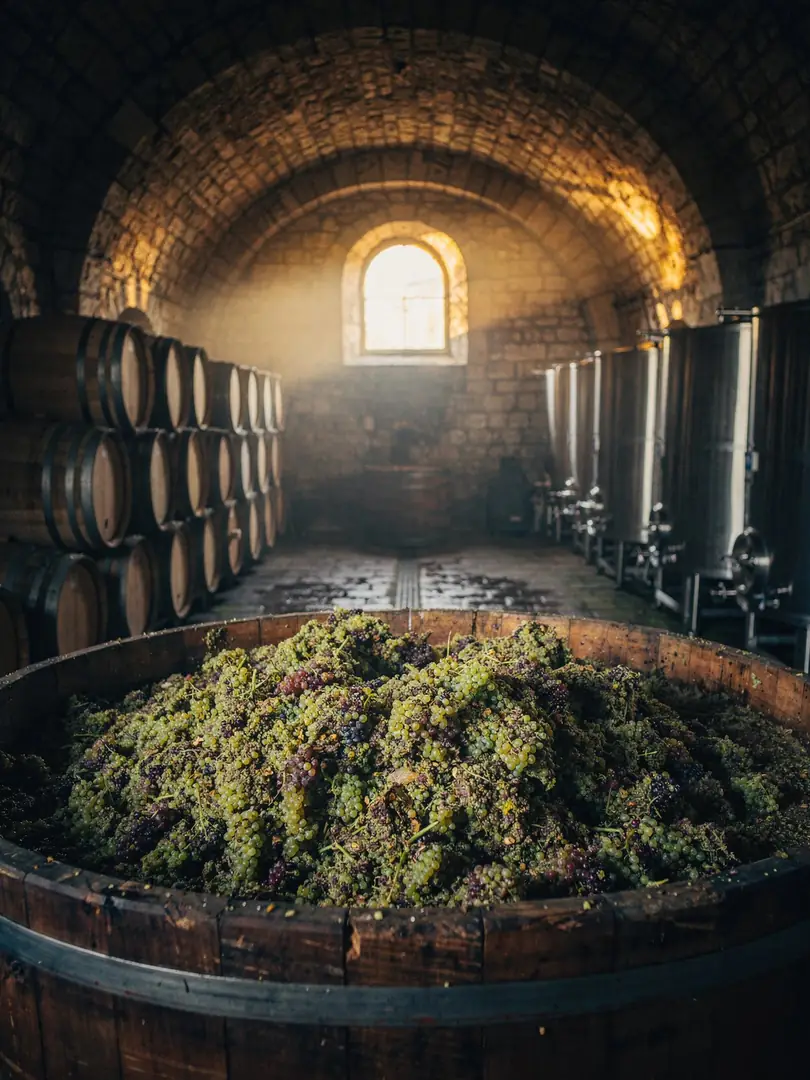
How does pomace become a brandy? First it must ferment, since the law explicitly requires fermented grape pomace for pomace brandy. With red wine, this happens quickly, since the grapes ferment together with their skins. But the Mosel is white wine country, and that's where the particularity lies.
White wine is pressed before it ferments. The pomace that comes out of the press is therefore still sweet, since sugar remains in the skins and the must clinging to them. It has to ferment afterward. For this, it's stored airtight so that yeast can convert the sugar into alcohol without oxygen triggering a vinegar taint.
No mash in the fruit-distiller's sense is created, since pomace isn't crushed. The yeasts present on the skins and in the must work on their own, and the winegrower's main task is to keep everything away from air. Once fermentation is complete, what remains is a solid, slightly tart, winy block that waits as Riesling pomace, ready for distilling.
The lees are a different matter. After fermentation, they settle in the barrel and are separated from the clear wine during racking. This sediment is called trub, lees, or dregs. For lees brandy, the law counts wine, beer, and fruit trub as raw material; for Mosel winegrowers, wine trub is the relevant one, and the resulting brandy is called wine lees brandy. Here too: the trub must be healthy, or the brandy will taste of it.
The law also limits the proportion of trub in pomace brandy: for every 100 kilograms of pomace, no more than 25 kilograms of trub may be distilled along with it, and the alcohol derived from the trub may make up no more than 35 percent of the total alcohol. Anything beyond that would be a different product.