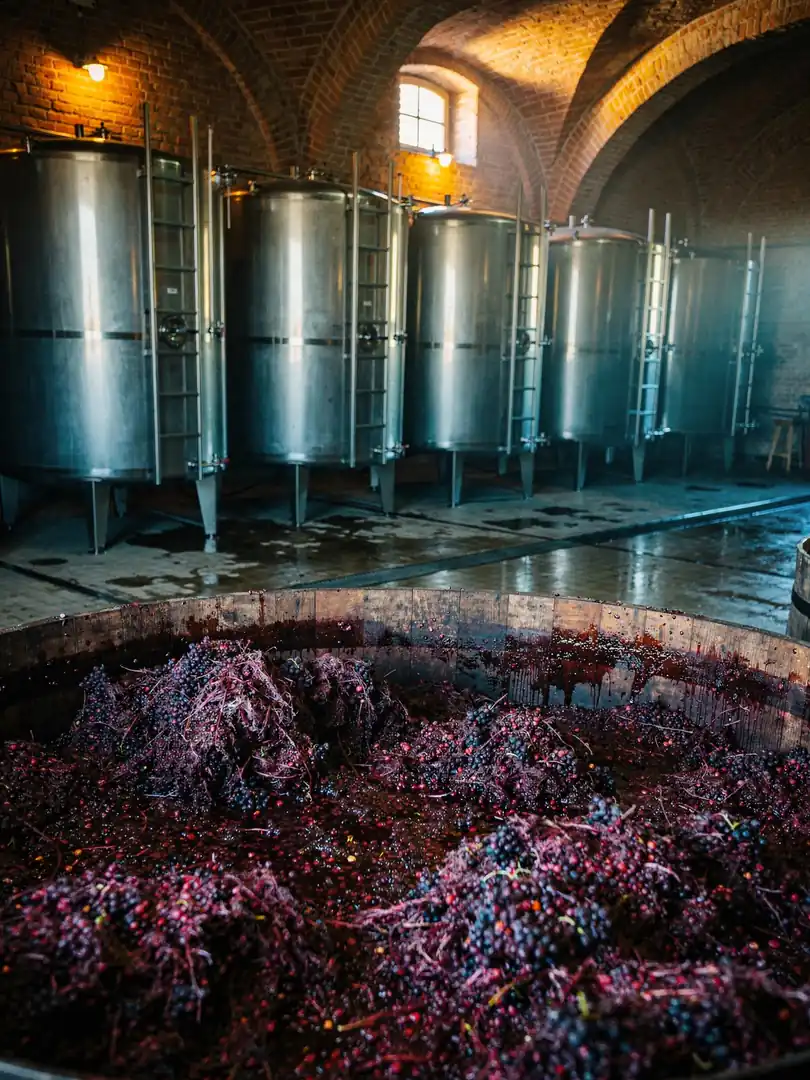
Fermented pomace
Mash & Fermentation
With pomace, the color of the grape determines how much work remains before distilling. Red wine ferments together with the skins: when Nebbiolo, Barbera or Dolcetto are pressed in the Langhe, the sugar has long since turned to alcohol, and the pomace leaves the cellar ready to distill. It can go straight to the distillery or be stored for a while.
It's different with white wine. Moscato Bianco is pressed before fermentation to keep the wine pale and fruity, so the skins retain much of their sugar. This sweet pomace must first ferment before it can be distilled. Distilleries store it airtight in silos or vats so the yeasts can work undisturbed and no oxygen can generate acetic acid.
The law draws a clear line: pomace brandy may only come from fermented grape pomace, and for every 100 kilograms of pomace, no more than 25 kilograms of lees may be added. The proportion of alcohol derived from the lees is also capped, at a maximum of 35 percent of the total alcohol. This clearly distinguishes grappa from a spirit made predominantly from wine lees.
Seeds and stems remain in the mass throughout. They contribute tannins and a bitter note, without which the result would taste flatter, and the pectin in the skins already begins producing a small amount of methanol at this stage. Since this cannot be avoided, pomace brandy is subject to an EU maximum of 1,000 grams per hectoliter of pure alcohol—a limit that applies to every grappa on every shelf.