Steel, Oak, Acacia
Maturation & Storage
Classic grappa bianca never sees wood. After distillation it rests in steel or glass until the sharpness settles, is then brought down to drinking strength with water, and bottled. In shops it typically sits at 40 to 45% ABV; the EU requires a minimum of 37.5%. This is the grappa that tastes young, clear and dry, with the scent of the grape itself. For consistent color from batch to batch, EU rules allow caramel coloring in pomace brandy, though added flavoring or alcohol are not permitted.
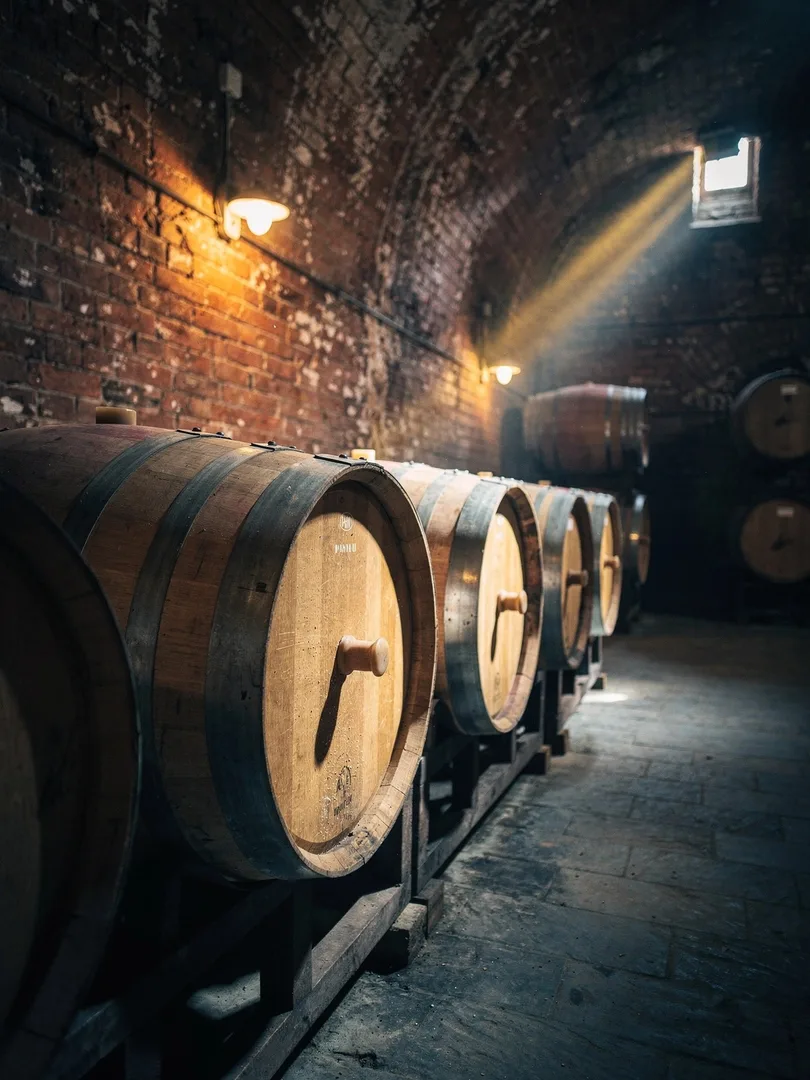
Those held longer go into the barrel. In Piedmont, aromatic pomace brandies from Nebbiolo and Barbera rest in wood, and the spirit changes noticeably: it deepens from straw yellow to amber, loses sharpness, and gains vanilla, spice and a slightly tannic edge. A small portion evaporates through the wood over the years, while the rest is exchanged quietly between barrel and spirit. Oak barrels are the standard, yet Marolo took its own path and, after long experimentation, introduced acacia wood for maturation.
Italy regulates uniformly which age statements may appear on the label: "vecchia" or "invecchiata" requires at least twelve months, while "riserva" or "stravecchia" requires at least 18 months in wood under bonded seal.
As with any aged spirit, the barrel is not an end in itself. An old, spent cask gives up little, while a new one can quickly overwhelm delicate Moscato. That is why Grappa di Moscato generally stays young, while the robust Grappa di Barolo handles wood better. Whisky drinkers will recognize the logic: there, too, it's the match between spirit and cask that matters, not simply the number of years.