Mashing Quickly
Mash & Fermentation
What distinguishes a fruit brandy from a fruit spirit (Obstgeist)? It starts with the mash. For a fruit brandy like Bananenapfel brandy, the distiller crushes the fruit into a thick pulp and lets it ferment without adding any outside alcohol. An Obstgeist, by contrast, is made from unfermented fruit steeped in neutral alcohol and only then distilled.
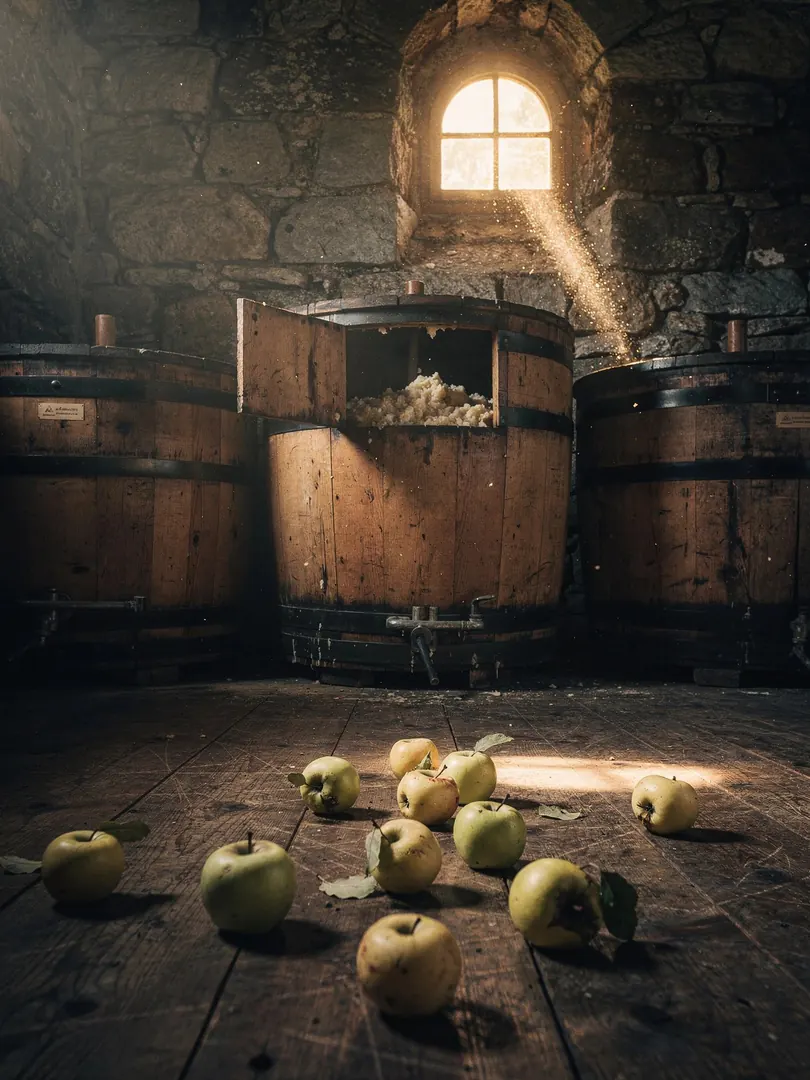
During fermentation, yeast converts the fruit sugar into alcohol. Without this step, there'd be no brandy—just a distillate of juice. Depending on the fruit and temperature, fermentation takes several weeks, during which the mash visibly bubbles and gives off the scent of ripe apple.
With Bananenapfel, time is of the essence. Because the fruit doesn't keep well, it needs to go into the fermentation vessel soon after harvest. Rotten fruit in the mash gives the distillate a musty note that even the best distilling can't remove.
Many fruit distillers acidify the mash and ferment it in sealed vessels to keep unwanted microbes at bay. An airlock lets carbon dioxide escape while keeping oxygen out. The vessel stays closed until the sugar is used up, and only then is the mash ready for the still. Mash that ferments too warm loses aroma, so distillers keep it as cool as possible.
This mash has more in common with fruit wine than you might think. Lavanttaler Apfelwein, another Traditional Food, is made exclusively by farmers in the valley, and the process up to fermented apple juice is identical. Only distilling adds the heat.