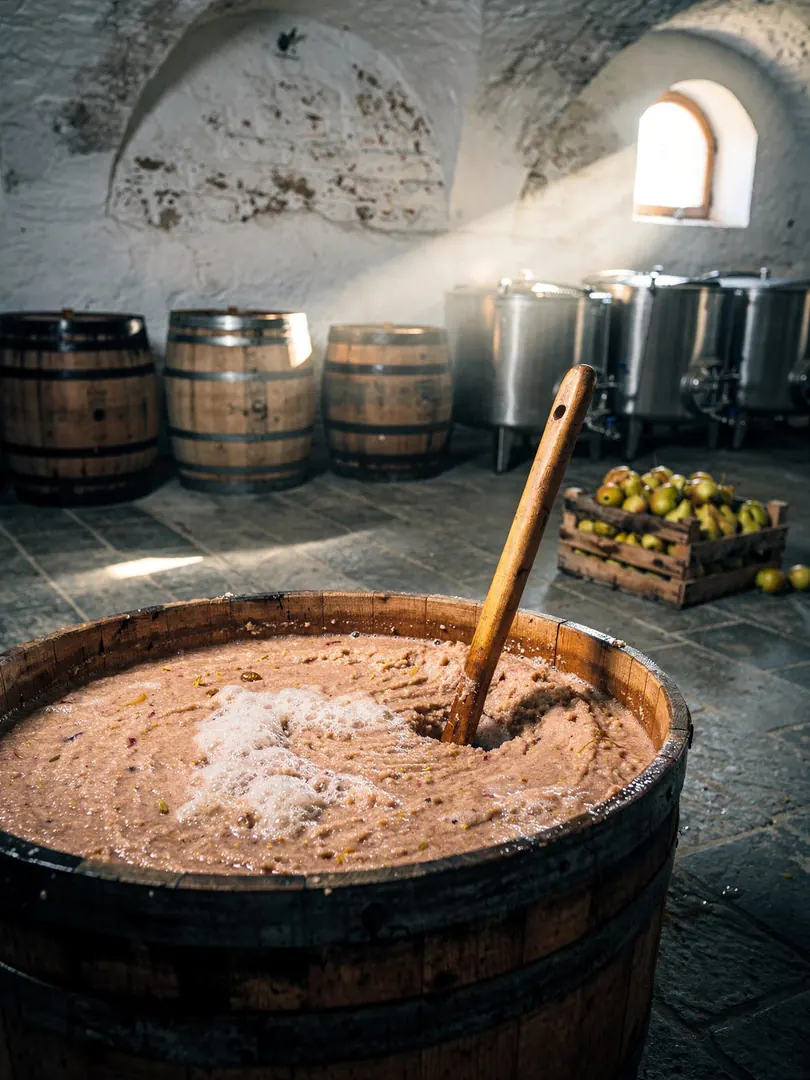
Fermentation without haste
Mash & Fermentation
For the Original Pielachtaler Dirndlbrand, the mash — the crushed, fermenting fruit — is fermented with special yeasts at around 20°C. A moderate temperature generally protects the delicate aroma, while fermentation still gets going promptly.
With perry pears, the process begins with crushing. The fruit is hard and rich in tannin, so it's ground or chopped before mashing in to give the yeast access to the sugar. How long fermentation takes depends on the fruit and the temperature, but it usually runs a few weeks.
After that, the mash can't sit around for long, or it risks turning to vinegar. Under EU spirits regulations, a fruit brandy is produced exclusively through fermentation and distillation of fresh fruit, with no added alcohol and no outside flavoring. So with pear brandy from the Mostviertel, it's the fruit itself sitting in the vessel — not a finished wine.
Grappa works differently. There, already-pressed, fermented grape pomace is distilled, and the regulation has its own category for that.
Fermentation also produces methanol. It comes from the pectin in the fruit and is present in every fruit brandy, which is why the EU sets maximum limits: 1,200 grams per hectoliter of pure alcohol for pears other than Williams, 1,350 for wild service berries, and 1,000 for most other fruits. Adulterated alcohol is dangerous — legally produced fruit brandy stays well below these limits.
With Dirndl and Elsbeere, quantities are small to begin with. A single vat of mash here can easily amount to an entire year's vintage.