Sugar makes the difference
Brandy or liqueur? Marillenbrand and Marillenlikör compared
A Marillenbrand (apricot brandy) is a fruit brandy with at least 37.5 percent alcohol and no more than 18 grams of sugar per liter. A Marillenlikör (apricot liqueur) is sweetened, has at least 15 percent alcohol, and typically at least 100 grams of sugar per liter. Same fruit, completely different drink.
What distinguishes a brandy from a liqueur?
The brandy relies on the distillate. The fruit is fermented and distilled, resulting in a clear, robust brandy that is barely sweet. A fruit brandy may contain no more than 18 grams of sugar per liter, and even that amount serves at most to round off the flavor. Anyone tasting a Marillenbrand gets fruit and warmth, but no sweetness in the sense of a dessert.
A liqueur, by contrast, is a preparation. It's made from alcohol, sugar and flavor-giving ingredients such as fruits, juices, herbs or distillates. The Spirit Drinks Regulation lists it as Category 33. It requires at least 15 percent alcohol and, for most types, at least 100 grams of sugar per liter, calculated as invert sugar. Neutral alcohol often serves as the alcohol base, sometimes a brandy.
The difference, then, is fundamental. With a brandy, the flavor comes from fermenting and distilling the fruit. With a liqueur, sugar and steeped or added fruit shape the drink, and the alcohol acts more as a carrier.
Wachauer Marillenbrand and Wachauer Marillenlikör
The Wachau region along the Danube illustrates the difference especially clearly, since both drinks are protected there. Since Austria joined the EU in 1995, Wachauer Marillenbrand has been protected as an EU geographical indication. The apricots must come from 21 municipalities, predominantly of the Klosterneuburger Marille variety. The brandy must contain at least 38 percent alcohol and no more than 4 grams of sugar per liter—far less than general fruit brandy law would allow. Continuous distillation is excluded.
Wachauer Marillenlikör is also protected, but as a liqueur. It is sweet, noticeably less strong, and used differently: more for dessert, in coffee, or as an ingredient, while the brandy is drunk neat, in a small glass.
A third name adds to the confusion. The third name, Wachauer Marille, protects only the fruit itself as a designation of origin, registered since 1996, and is not a drink name. A bottle is therefore correctly labeled Wachauer Marillenbrand or Wachauer Marillenlikör.
Kirschlikör, Cherry Brandy and other borderline cases
Cherries present a special case. A Kirschlikör (cherry liqueur) whose alcohol comes entirely from cherry brandy needs only 70 grams of sugar per liter instead of 100. For liqueurs flavored solely with gentian or wormwood, the threshold is 80 grams. Even with less sugar, such a Kirschlikör remains a liqueur and does not become Kirschwasser.
The term Cherry Brandy causes confusion. In English, Brandy means a distilled spirit, but in German usage, Cherry Brandy refers to a cherry liqueur. Apricot Brandy, too, appears on many bottles as a name for an apricot liqueur. Anyone looking for a genuine brandy should therefore not go by English names, but by the legal designation: Obstbrand or Likör.
How to tell brandy and liqueur apart in the glass
Even the consistency offers clues. A liqueur feels thicker because of the sugar and clings noticeably to the tongue. A brandy is thin-bodied, smells dry despite its strength, and warms on the finish. In the mouth, the difference is unmistakable: the liqueur tastes sweet, the brandy tastes of fruit, stone and alcohol.
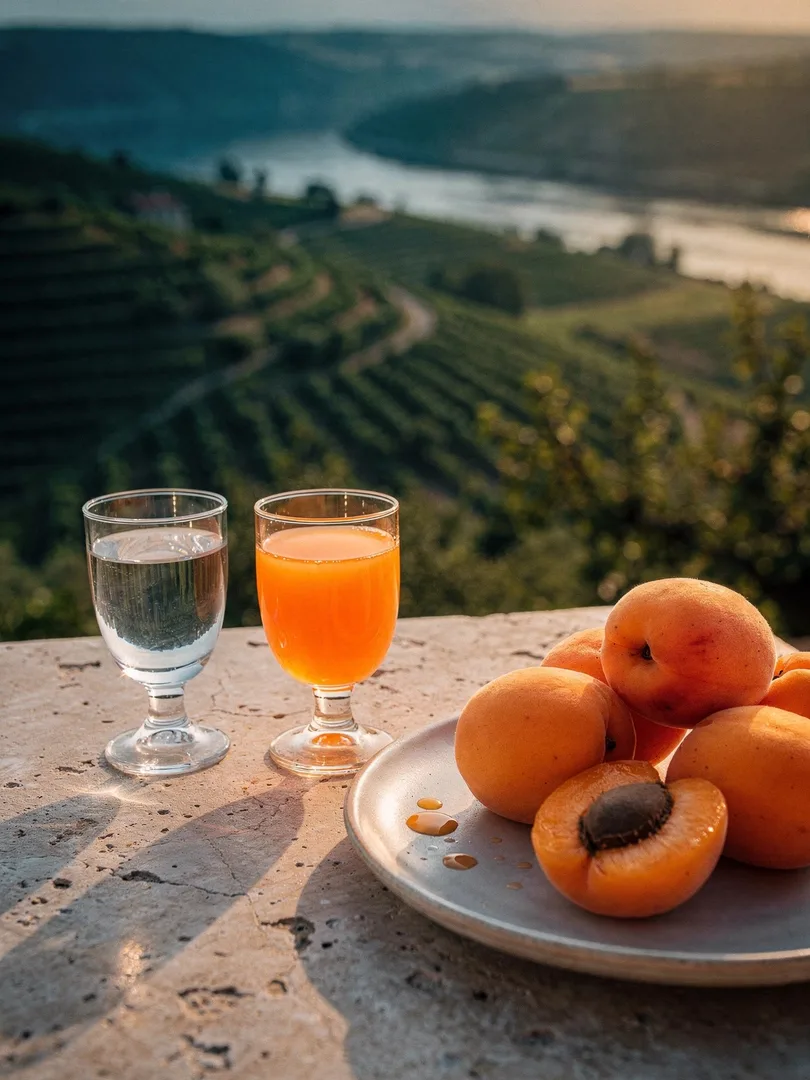
Color helps less. Marillenlikör is often cloudy orange, since it contains fruit pulp or juice. Marillenbrand is usually crystal clear. A brandy aged in wood, however, can be golden yellow, and some liqueurs are colorless. The only sure guide is the label: if it says Likör, sugar defines the drink. If it says Brand, the flavor comes from fermentation and distillation.