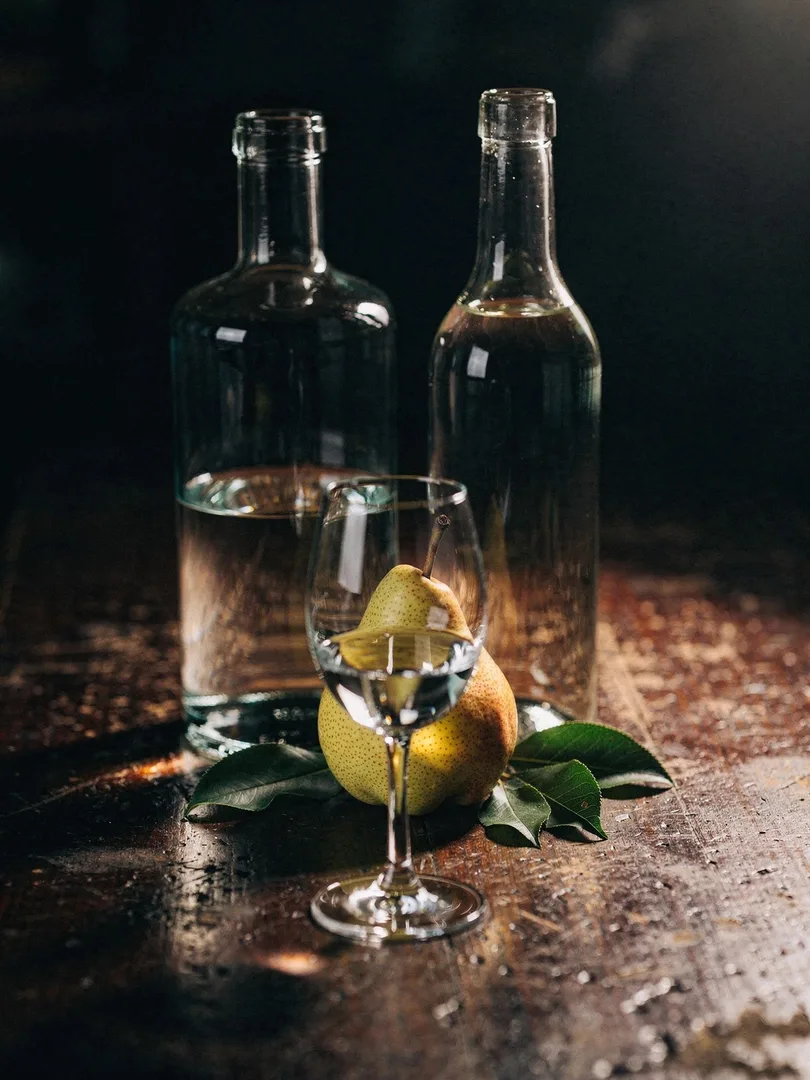
Designation, not imagery
Spirit drink with fruit flavor: spotting cheap products by the name
If a bottle is labeled only 'Spirit Drink,' it contains no fruit brandy, even if a pear is pictured on it. Genuine brandies carry a legal designation such as Obstbrand, Williams or Kirschwasser. If that's missing, what's usually inside is neutral alcohol with flavoring or a diluted distillate.
What does 'Spirit Drink' mean on the label?
The Spirit Drinks Regulation ties every one of its names to specific rules. Anyone wanting to sell a fruit brandy must ferment and distill the fruit, and may add no foreign alcohol, no flavoring and no coloring. If a drink fails to meet the requirements of any category, it's left with only the generic designation Spirit Drink. This applies to anything from 15 percent alcohol upward that doesn't fit anywhere else.
This is permitted and not automatically a bad thing. However, it does indicate that the production doesn't follow the stricter rules. Typical recipes use neutral alcohol with fruit flavoring, or stretch a fruit distillate with grain alcohol. The result can taste decent, but legally and craft-wise it's something different from a true brandy.
The reason for blending is usually economic. A genuine fruit brandy requires large quantities of ripe fruit, plenty of time for fermentation, and careful distillation. Neutral alcohol, on the other hand, is cheap and available in any quantity. A flavoring or a small proportion of fruit distillate is enough to make the drink smell like the fruit depicted on the label. This has little to do with the character of a brandy made from fermented fruit.
Picture, Fantasy Name, Designation: What Actually Counts?
On the front of a cheap bottle, you'll often find a painted pear, a farmhouse, and a name that sounds traditional. Legally, none of that matters. What counts is the legal designation, which is often printed in smaller type near the alcohol content. It must name the drink correctly.
Some phrasings are a warning sign. If the label reads spirit drink with williams flavor, pear spirit drink, or spirit drink with fruit distillate, only part of the alcohol—or none at all—comes from the fruit. For genuine brandies, however, the rule is: if it says fruit spirit, Williams, Kirschwasser, Zwetschgenbrand, or Obstler, the fruit was fermented and distilled without any added neutral alcohol.
Another pitfall is liqueurs. A Williams liqueur or cherry liqueur is not a cheap brandy but a distinct category with lots of sugar and usually less alcohol. Here, too, the legal designation helps: if the label says liqueur, expect a sweet drink. Anyone wanting a dry, clear brandy should reach for a bottle labeled fruit spirit or a fruit name combined with brandy or wasser.
Protected Names Also Apply Against Workarounds
The regulation protects categories and designations of origin even against indirect allusions. Anyone who alludes to a specific brandy in the name or presentation must meet strict conditions; put simply, the alcohol may then only come from that particular brandy. For protected designations of origin like Schwarzwälder Kirschwasser, it explicitly applies: even with additions like style, type, or flavor, a different drink may not use that name.
How finely these lines are drawn is shown by the sloe. Pacharán from Navarra is a spirit drink flavored with sloes and has its own category, number 32. Then there's Schlehengeist, category 17, and Schlehenbrand made by maceration, category 16. Three drinks from the same fruit, three production methods, and three names.
How to Spot Cheap Products on the Shelf
The first thing to check is the legal designation. Spirit drink instead of fruit spirit is a clear red flag. Next, look at the alcohol content: fruit spirits have at least 37.5 percent, while spirit drinks with fruit flavor are often lower. Protected designations of origin are also helpful, since Fränkisches Zwetschgenwasser or Südtiroler Williams are listed in the EU register as fruit spirits and therefore require genuine brandies.
Price alone isn't a reliable indicator, even though genuine brandies need large quantities of fruit and are therefore rarely cheap. An expensive design can package a mere spirit drink, while a plain label might contain an excellent brandy.
The nose often confirms the finding. Flavored blends smell loud and one-dimensional, similar to fruit candy. A brandy smells more layered—of fruit, pit, or stone—and evolves in the glass. But this, too, remains just a clue. The label is reliable: the designation is there because the law requires it, the picture because it sells well.