Pectin and legal limits
Where does methanol in fruit spirit come from?
Methanol in fruit spirit comes from the pectin in the fruit, not from faulty distilling. An enzyme in the fruit breaks it down already in the mash. This is why every fruit spirit contains some methanol, and why the EU permits higher levels for fruit spirit than for brandy.
Where does methanol come from? From the fruit's cell wall
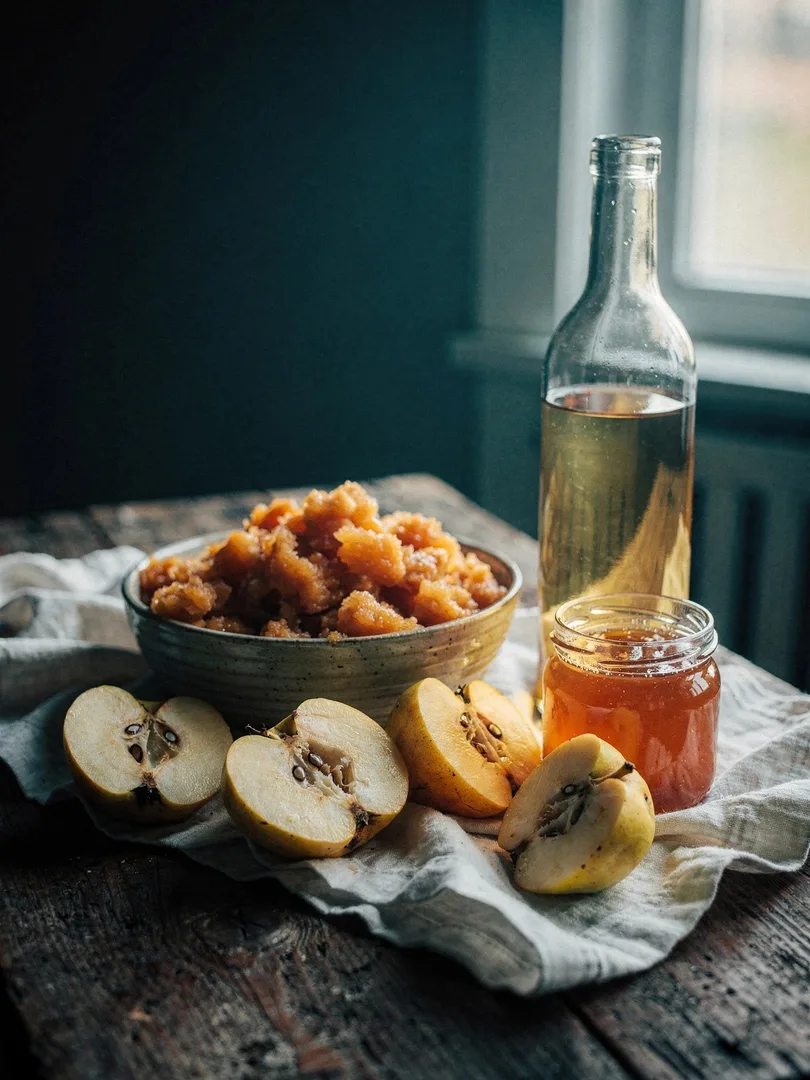
Fruits hold their cells together with a binding substance called pectin. You may know it from the kitchen, since it's what makes jam set. Pectin's building blocks carry small side groups called methyl groups. As soon as the fruit is crushed, an enzyme naturally present in the fruit comes into play, pectin methylesterase. It splits off these groups, producing methanol in the process.
This happens in the mash, long before a drop is distilled. Methanol is therefore not a product of the still and not a sign of poor craftsmanship. Every fermented fruit mash contains it, because the skin and flesh are full of pectin and remain in the vat during fermentation. Distillation then separates the methanol out together with the alcohol and the aromas.
This explains a striking difference. Brandy and Cognac are distilled from wine, which is usually fermented without the skins. This produces comparatively little methanol. Pomace brandy, distilled from grape skins, contains noticeably more, and spirits made from fruit pomace contain even more still. The longer and more intensively pectin-rich fruit matter ferments along with the rest, the higher the methanol content tends to be.
Methanol limits: what the EU allows for fruit spirit
Because methanol is toxic, Spirit Drinks Regulation (EU) 2019/787 sets maximum levels. These are given in grams per hectoliter of pure alcohol, abbreviated g/hl p.a. So the measurement isn't per liter of the bottled product, but relative to the alcohol it contains. This way, the figure stays the same whether a spirit is bottled at 40% or 45% ABV.
For fruit spirit in general, the maximum is 1,000 g/hl p.a. For spirits made from apple, apricot, plum, damson, mirabelle, peach, pear other than Williams, blackberry, and raspberry, the limit is 1,200. It's even higher, at 1,350, for quince, Williams pear, currant, rosehip, elderberry, rowanberry, service tree fruit, and wild service fruit, among others. These fruits naturally bring more methanol with them.
For comparison: brandy and wine spirit may contain no more than 200 g/hl p.a., pomace brandy up to 1,000, and spirit from fruit pomace up to 1,500. These figures aren't quality tiers, but safety limits set according to the raw material. A Williams pear brandy with a high but permitted methanol level is therefore no worse than a brandy with a low one.
Does cutting away the heads help?
Pure methanol boils at 64.7 degrees Celsius, meaning it boils before ethanol does. From this it's often concluded that it ends up entirely in the heads. In the pot still, however, a mixture of water, alcohol, and hundreds of congeners behaves differently from pure methanol in a lab. Methanol is spread across a large part of the distillation run. Cutting away the heads can only partially reduce the level.
What happens before distillation matters more. Healthy fruit, clean and prompt processing, and a controlled fermentation keep the mash in balance. Distilleries also have their spirits tested, to make sure they stay below the legal limits. Simply omitting the heads cannot achieve this on its own.
Is methanol in fruit spirit dangerous?
Methanol is toxic, even in small amounts. The body breaks it down into substances that can damage the optic nerve and metabolism. This is exactly why the legal limits exist, and a legally produced fruit spirit that stays within them is considered safe in this respect. The danger many people associate with schnapps comes from a different source.
According to the medical literature, severe methanol poisoning causing blindness or death almost always traces back to adulterated alcohol, where cheap industrial methanol is mixed into drinks. This has nothing to do with the methanol that comes from the pectin in a cherry. Anyone curious about the myths surrounding schnapps and health will find them in a dedicated Gustofolio feature.
Whether methanol and other congeners make hangovers worse is debated, but not firmly proven. What is certain, though, is that it's mainly the amount of alcohol itself that determines how you feel the next day. So a fruit brandy doesn't become harmless just because it contains little methanol.