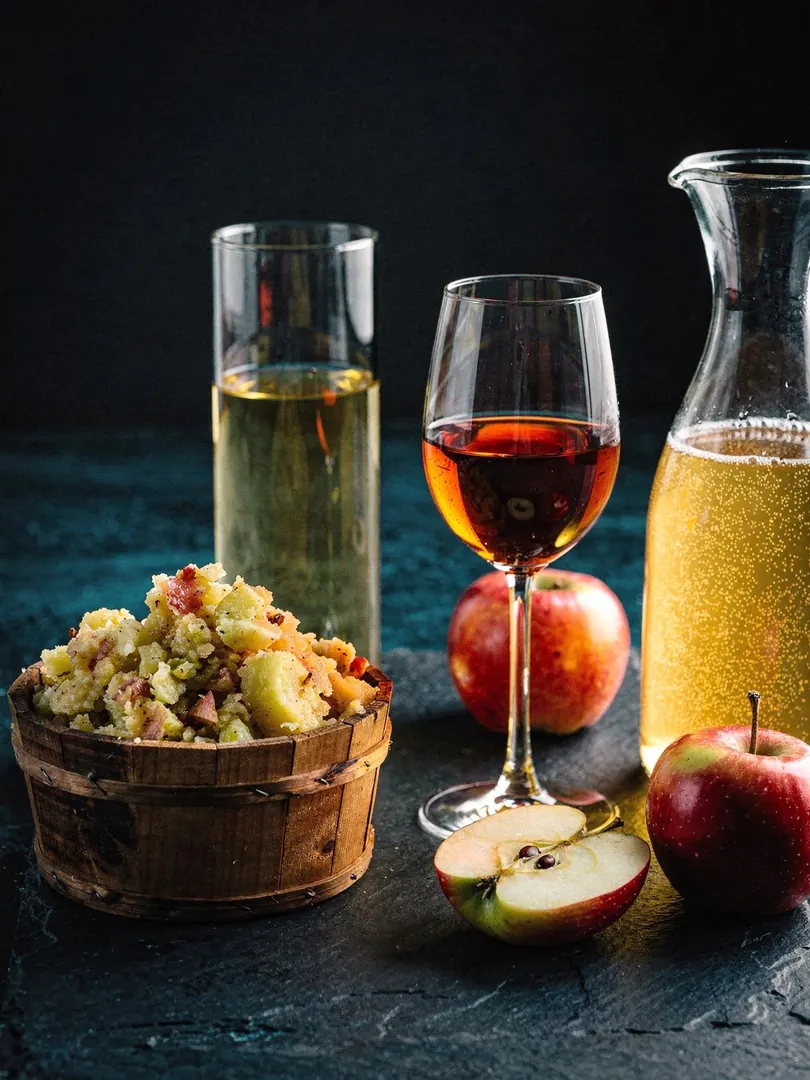
Cider or Mash
The Difference Between Calvados and Apple Brandy
Calvados is distilled from finished cider, while apple brandy is usually distilled from fermented apple mash. This leads to two distinct EU categories: Calvados is a "spirit drink made from fermented apple juice" (Category 10), while apple brandy is a fruit spirit (Category 9). Added to this are differences in origin, the requirement for wood ageing, and a higher minimum alcohol content for Calvados.
Cider or Mash: The Difference Starts in the Fermentation Vessel
For Calvados, the apples are pressed before the yeast gets to work. Skins, seeds and pulp remain behind as pomace, and only the juice is fermented. For apple brandy in German-speaking countries, by contrast, it's usually the whole crushed fruit, the mash, that ferments. This allows more substances from the skin to carry through into the spirit: intense fruit aromas, but also more methanol. This alcohol forms from pectin, a structural component of the fruit, already during the mash stage and can only be partly removed during distillation.
The law takes this into account. For fruit spirit made from apples, EU regulation permits up to 1,200 grams of methanol per hectolitre of pure alcohol, while for cider-based spirit the limit is no more than 1,000 grams. Both are maximum limits that legally produced spirits must stay within; danger arises with adulterated products containing industrial alcohol. In terms of flavour, a mash-based brandy often tastes like biting into a fresh apple, while a cider-distilled spirit resembles apple wine with more depth, slightly tart, with notes of yeast and cellar.
What the Law Separates: Category 9 and Category 10
Both categories require a minimum of 37.5% ABV, distillation below 86% ABV, and prohibit added alcohol and flavourings. The differences lie in the details. A fruit spirit may contain up to 18 grams of sugar per litre, while a cider-distilled spirit is limited to 15. Colouring is forbidden for fruit spirit; caramel colouring may only be used to adjust colour if it has had at least a year's contact with wood. Neither category requires EU-mandated wood ageing.
This is where the appellation comes in. Calvados must mature at least two years in oak and be sold at a minimum of 40% ABV. A German apple brandy, by contrast, usually rests in glass or stainless steel and stays colourless. It's labelled "Apfelbrand," less commonly "Apfelwasser," and may carry a variety name. For brandies made from Golden Delicious, the regulation even permits the short designation "Golden Delicious." A Calvados, on the other hand, rarely names varieties, since it's almost always blended from many cider apple types.
Not Every Cider-Distilled Spirit Is Calvados
Category 10 extends well beyond Normandy. Alongside the three Calvados designations, the EU register lists other cider-distilled spirits: "Eau-de-vie de cidre de Bretagne," often called Lambig in Brittany, "Eau-de-vie de cidre du Maine," and "Eau-de-vie de cidre de Normandie," as well as "Eau-de-vie de poiré de Normandie" made from pear wine. Outside France, "Aguardiente de sidra de Asturias" from northern Spain and "Somerset Cider Brandy" from England are also protected. All share the same raw material, yet none may be called Calvados.
A German distiller, too, is allowed to distil cider. In that case, the product is correctly labelled "spirit drink made from fermented apple juice," not apple brandy. Such spirits are rare, but they show that the category depends on the method, not the map. If you spot "apple brandy in the Calvados style" or similar wording on a shelf, read closely: the protected name may neither be implied nor used with additions like "style" or "type." What matters is always the legal designation printed on the label.
Apple Pomace Brandy, Obstler, Apple Liqueur: Other Relatives
A spirit can also be distilled from the pressing residue left behind at cider mills. It's called apple pomace brandy and falls under Category 7, spirit drink made from fruit pomace. Because skins and seeds dominate, its methanol limit of 1,500 grams per hectolitre of pure alcohol is even higher than that of apple brandy. In flavour it's more rustic, often with bitter, woody notes. It shares little with Calvados beyond the apple itself; the process more closely resembles pomace brandies made from grapes, such as grappa.
Obstler is a fruit spirit in which at least 85% of the mash comes from apples, pears, or both, with other fruits allowed to make up the remainder. An apple liqueur, by contrast, is a liqueur with considerably more sugar and less alcohol, often based on neutral spirit. And a "spirit drink with apple flavouring" is not a distillate at all but usually flavoured neutral alcohol. The difference isn't shown by the picture on the label, but by the small print stating the legal product name.