One fruit, two names
Apricot brandy: Wachau, Valais, Kecskemét
Marillenbrand and Aprikosenbrand are the same thing, since Marille is the Austrian word for apricot. Celebrated origins include Wachauer Marillenbrand, Walliser Abricotine and Hungarian Kecskeméti Barackpálinka, each with its own protected origin.
Marille or Aprikose: one word, one fruit
In Austria and South Tyrol the fruit is called Marille, in Germany and Switzerland Aprikose, in Hungary barack. Botanically it is always the same species. The same rules of Regulation (EU) 2019/787 therefore apply to the brandy: fruit brandy under Category 9, distilled from fermented fruit, with no added flavoring and at least 37.5 percent alcohol. The methanol limit stands at 1,200 grams per hectoliter of pure alcohol.
The apricot is a tricky fruit to distill. Its aroma is delicate and quickly tips over if the fruit is unripe, beginning to rot, or stored too long. At the same time it has a large stone that, if damaged, releases bitter almond notes and hydrocyanic acid. A good apricot brandy smells of sun-warmed, fully ripe fruit, with a hint of almond in the background, and feels soft and juicy on the palate.
Wachauer Marillenbrand: what the protected designation requires
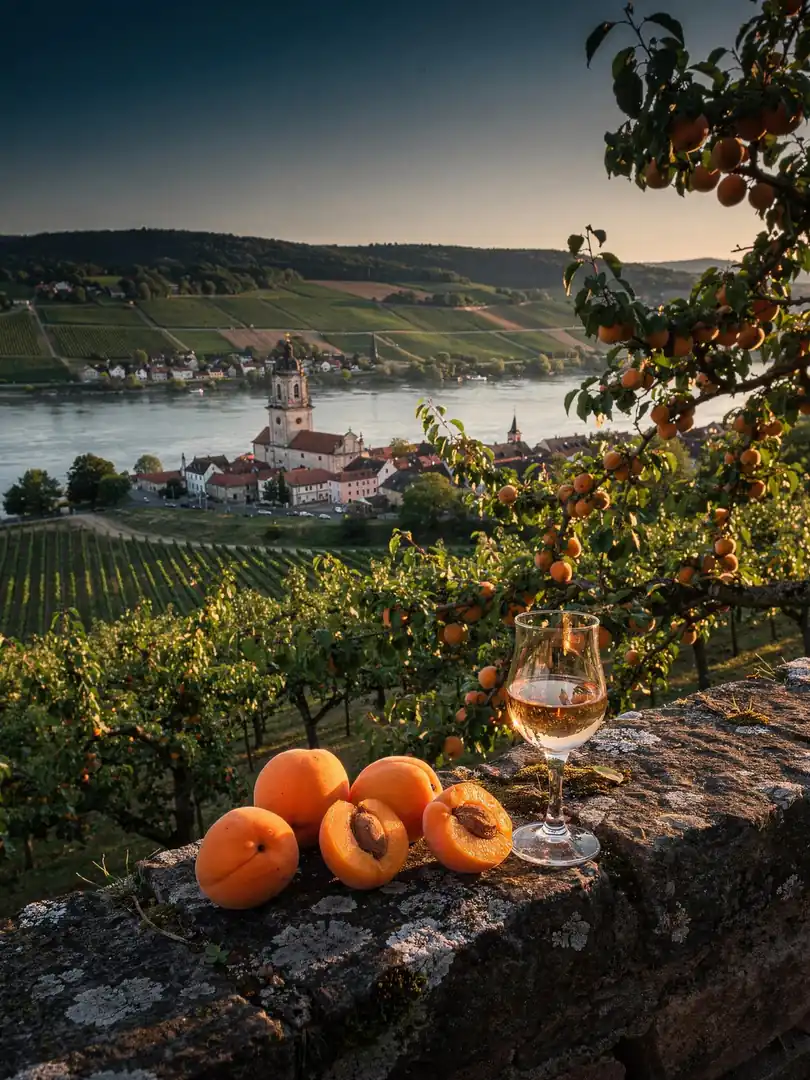
With Austria's EU accession in 1995, Wachauer Marillenbrand was protected as an EU geographical indication. It comes from 21 municipalities along the Danube, including Spitz, Weißenkirchen, Dürnstein, Krems, Mautern and Rossatz-Arnsdorf. It is made predominantly from the Klosterneuburger Marille variety grown in certified orchards. Distillation takes place only in simple pot stills; continuous column distillation, in which mash is fed in constantly, is excluded.
The numbers are stricter here than under general EU law, too. The spirit must contain at least 38 percent alcohol and no more than 4 grams of sugar per liter, while the general fruit brandy limit sits at 18 grams. Apricots have been grown in the Wachau since 1509. Cultivation expanded sharply around 1890, after phylloxera had destroyed many vineyards.
Wachauer Marille, Marillenbrand, Marillenlikör: three products
This is where confusion easily creeps in. "Wachauer Marille" is a protected designation of origin for the fruit itself, registered in 1996. It applies to the fruit in crates at market, not to the bottle. The brandy carries its own name, Wachauer Marillenbrand, and follows its own rules.
Wachauer Marillenlikör is a third product. It's a liqueur, meaning noticeably sweetened, and legally doesn't belong to the brandy category at all. Anyone standing in front of the shelf is best off reading the legal designation on the label. If it says Brand (brandy), sugar is strictly limited; if it says Likör (liqueur), sweetness is allowed. Both can taste great, but they're different drinks.
Abricotine from Valais and Marille from South Tyrol
In Switzerland's Valais, apricots grow on the sunny slopes of the Rhône valley. The brandy made from them has been protected as an AOP since January 6, 2003, under the name Abricotine or Eau-de-vie d'abricot du Valais. That gives Valais two brandy AOPs, since Walliser Birnenbrand (Valais pear brandy) is protected as well. In Switzerland, AOP means the fruit comes from the region and is also processed there.
South of the Alps, the apricot has a tradition of its own, too. In the EU, Südtiroler Marille and Aprikot trentino are registered as geographical indications for brandies, both since 1989. The sites there are sunny, the nights cool, which helps the fruit keep its acidity and aroma. As everywhere, though, what matters most is whether fully ripe, healthy fruit is processed quickly and cleanly.
Barackpálinka: apricot brandy from Hungary
In Hungary, apricot brandy is called Barackpálinka. Pálinka is tightly defined by law there: made only from fruit grown 100 percent in Hungary, with no added sugar, no flavoring, no neutral alcohol, and at least 37.5 percent alcohol. Mashing, distillation, and bottling all take place within the country. Two apricot brandies also carry a regional designation: Kecskeméti Barackpálinka since 2003 and Gönci Barackpálinka since 2008.
Kecskemét lies in the lowland plain between the Danube and Tisza rivers, Gönc in the country's northeast. One particular quirk links Hungary and Austria: the geographical indication Pálinka is jointly registered. Austrian Marillenbrand from certain federal states is therefore also allowed to be called Pálinka. For other countries and other fruits, though, the name stays strictly off-limits.