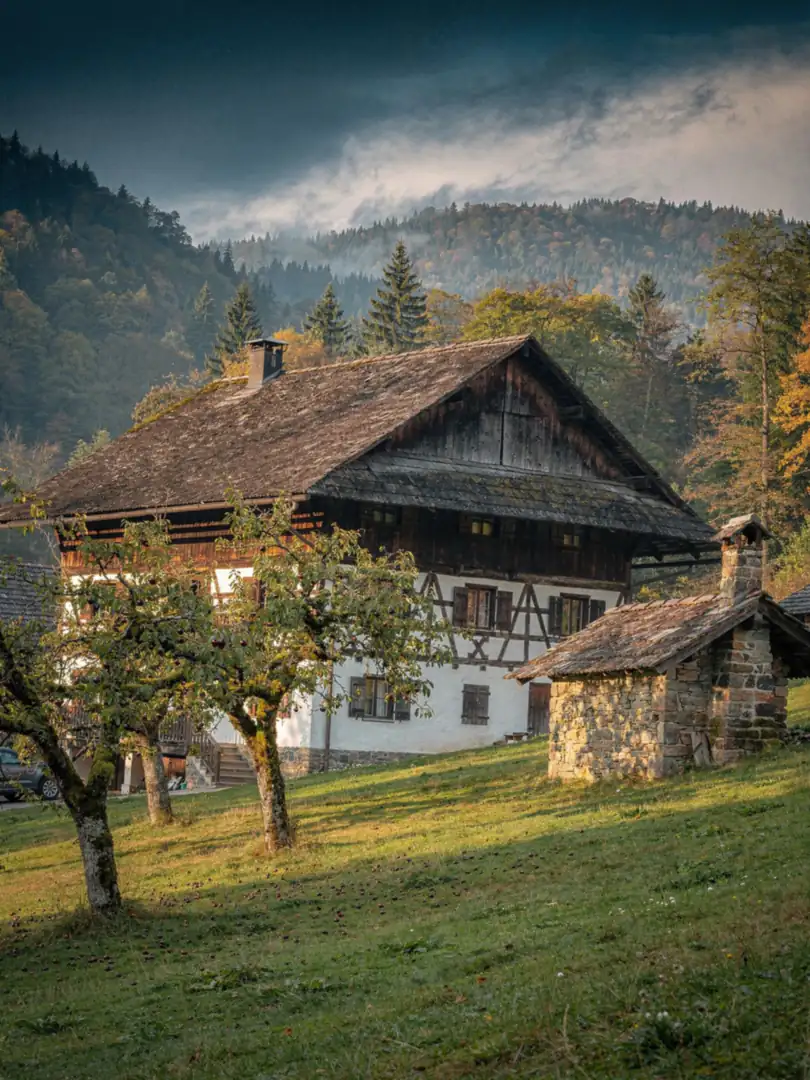
A permit instead of a right
Buying or inheriting a distilling right? What's applied since 2018
Today, a distilling right can be neither bought nor inherited. Since January 1, 2018, the old distilling right tied to the farm has been replaced by a personal permit from the main customs office. Anyone taking over a farm with a flat-rate distillery must apply for their own permit within three months.
What was the distilling right?
For centuries, distilling was a privilege granted by territorial rulers. A well-documented example comes from the Black Forest: in 1726, the Bishop of Strasbourg, Armand Gaston de Rohan, permitted farmers in the area around Oberkirch to distill surplus fruit. In 2026, this distilling right therefore marked its 300th anniversary. Such privileges were tied to the land and the farms, not to individual people.
This link persisted into modern law. Until December 31, 2017, the distilling right of a flat-rate distillery was tied to the farm or the property itself. When the farm was inherited or sold, the right went along with it. In everyday speech, people called it the '300-liter distilling right,' since a flat-rate distillery was permitted to distill a maximum of 3 hectoliters of pure alcohol per year. In property listings for farms, the distilling right was therefore often mentioned as a feature of the property, right alongside the barn and the stable.
What changed on January 1, 2018
With the end of the spirits monopoly, the Alcohol Tax Act came into force. It no longer recognizes a distilling right. In its place is a permit under Section 10, granted to a specific individual. So that nobody lost their distillery overnight, the old rights have, since January 1, 2018, been treated under Section 38(2) as a revocable permit. Anyone who was distilling at that time was therefore allowed to keep going.
The difference only becomes clear when ownership changes. A license isn't an object you can hand down. It belongs to the person who applied for it and meets the requirements. The word Brennrecht (distilling right) is therefore today only correct in a historical or colloquial sense. In conversations in the countryside, it still lives on, and many distillers call their license that out of habit.
For distillers who were already distilling before 2018, little changed in everyday practice. They continue to distill up to 300 liters of pure alcohol per year, report every distilling run, and pay the reduced tax rate. The real break only comes when the business changes hands. That's when it becomes clear that the license is tied to the person, not to the still in the shed.
Inheriting a Distilling License: Farm Succession and the Three-Month Deadline
For family businesses, the farm handover is the delicate moment. The successor takes over the meadows, trees, and still, but not the license. They must apply for their own license at the Hauptzollamt (main customs office) within three months. To do so, they must meet the conditions themselves, meaning running an agricultural operation of at least 3 hectares, or at least 1.5 hectares in the case of intensive fruit or wine growing.
According to the Landtag of Baden-Württemberg, processing times in the past sometimes dragged on for up to a year and a half. In early 2024, the procedure was simplified. For farms that depend on distilling or use it to make the most of their orchard meadows, the deadline still matters: miss it, and you're left without a license, unable to distill until a new one is granted.
Can You Buy a Distilling License?
No, not as a right, in any case. Anyone reading an offer today that uses the word Brennrecht is, at best, buying the farm, buildings, and still. The buyer must apply for the license themselves, and they'll only get it if they meet the agricultural requirements. So a city dweller without a farm doesn't become a licensed small-scale distiller just by buying a used still.
For people without a farm, two paths remain. The simple one is that of the raw-material owner (Stoffbesitzer): having your own fruit distilled at an existing licensed small-scale distillery. The more involved one is the commercial bonded distillery. It requires no farming, but it does require a license, a tax warehouse under customs seal, and a willingness to pay tax on every liter. Many of today's distilleries, producing fruit brandies, geists, or whisky, grew out of this model.
Anyone seriously considering taking over or starting a distillery is best advised to contact the responsible Hauptzollamt early on. That's where the forms are kept, and that's where the decision on granting a license is made.